[Editorial] Use Bipartisan Cooperation to Establish Mid- to Long-Term Measures for Stabilizing Housing Prices
- Input
- 2026-02-02 18:31:40
- Updated
- 2026-02-02 18:31:40
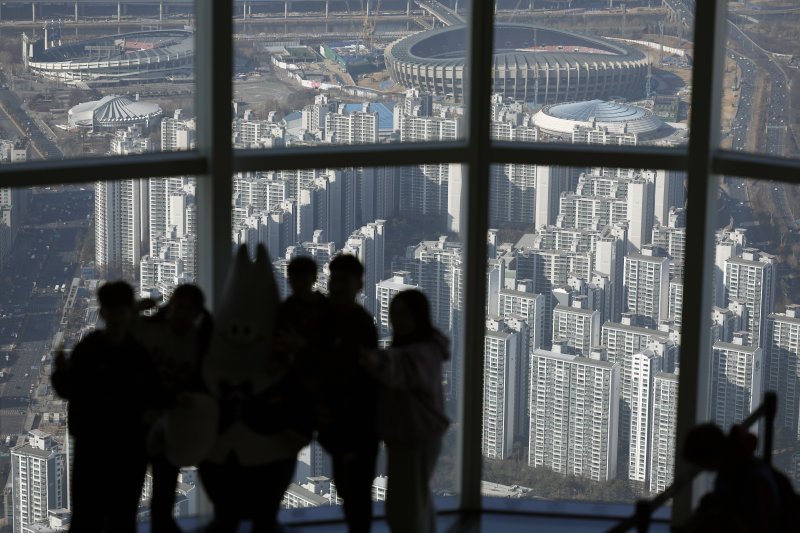
As long as Seoul and Gangnam District in Seoul remain the center and the most desired places to live for anyone, the price of the limited resource called Seoul and Gangnam District in Seoul will not stop its upward climb. Without long-term efforts to ease the problems of concentration and polarization, it will not be easy to solve the issue of housing prices.
Even if the green belt is lifted, land is developed, and homes are continuously supplied, housing prices will not fall if the migration of struggling residents from the provinces to the Seoul Capital Area does not stop.
The housing price issue and the broader real estate problem require comprehensive, mid- to long-term measures to be pursued in parallel with short-term policies. The Five Mega-Regions and Three Special Self-Governing Provinces Policy that the government has proposed for balanced national development can be one such approach. However, any policy must be backed by persistent political will to produce tangible results. Under the bad habit of discarding and halting previous policies whenever administrations change, no meaningful achievements can be expected.
Since the 2000s, successive administrations have largely failed in real estate policy. They tried to solve the problem through regulation instead of the fundamental solution of increasing supply. Policymakers must first examine and analyze why past policies failed, and only then discuss future measures. At the same time, they must recognize the more fundamental causes mentioned above and steadily implement far-sighted policies without interruption.
To do this, the ruling party and the government must join forces with the opposition party and local government. If soaring housing prices are a national malady, then a pan-national consultative body that transcends ideology and party affiliation should be formed to respond. In that regard, the behavior of the opposition party and the Seoul Metropolitan Government, which simply criticize and mock the government’s proposals, is undesirable.
Neither the opposition party nor the Seoul Metropolitan Government can claim success in real estate policy. The Seoul Metropolitan Government lifted the Land Transaction Permit System, opening the door to rising housing prices, and the People Power Party (PPP), when it was the ruling party, also cannot say it contributed to stabilizing prices.
It also remains to be seen whether President Lee Jae Myung’s view that the government should have primacy over the market will hold in a free market economy. In truth, neither side is in a position to blame the other.
Stabilizing housing prices is a policy goal on which the ruling and opposition parties cannot legitimately differ. Faced with such a difficult challenge, they should not waste time criticizing and denigrating each other. Instead, the ruling-opposition-government consultative body must work together to devise the best possible response. They should identify the weaknesses of past policies and, through bipartisan agreement, craft the measures that are likely to be most effective.
Among those measures, there must be long-term plans to ease the concentration in Gangnam District and the Seoul Capital Area. Education is directly linked to the real estate problem. Few people explicitly connect the collapse of education in the provinces with housing prices in the Seoul Capital Area. Only by creating an industrial park in the regions and fostering regional universities can housing prices be stabilized.
It is impossible to supply housing in Seoul and Gangnam District indefinitely. The answer lies in reducing demand. The principle of supply and demand naturally applies to the real estate market as well. Demand must be redirected toward attractive, livable areas outside the Seoul Capital Area. Far more innovative policies for balanced national development are needed.