"Gold sees biggest plunge in 12 years – is this a buying opportunity?" An unexpected outlook emerges
- Input
- 2026-02-03 04:40:00
- Updated
- 2026-02-03 04:40:00
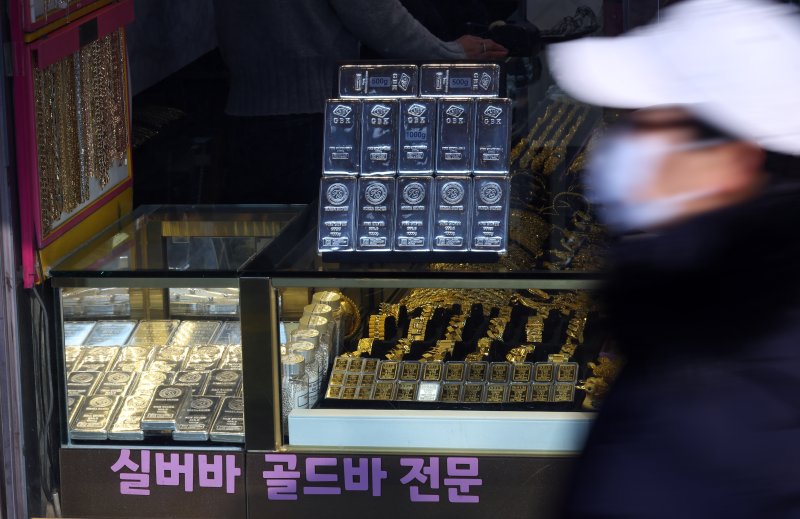
According to Financial News, international gold prices, which had been surging day after day, tumbled on the 30th of last month, marking their steepest one-day drop in 12 years.
According to the Korea Exchange (KRX) on the 2nd, as of 2:30 p.m. that day, the domestic price of 1 kilogram of 99.99%-pure gold bars stood at 227,700 won per gram, down 10.0% from the previous session. This followed a 6.23% plunge on the 30th of last month, with the decline deepening further on the day.
Gold and silver prices, which had repeatedly set new record highs this year, plunged across the board on the 30th of last month. Gold fell to around 4,700 dollars per troy ounce before rebounding to 4,907.50 dollars in after-hours trading. Silver dropped more than 30%, slipping below the 90‐dollar level.
On the 30th of last month, President Trump nominated Kevin Warsh as the next chair of the Federal Reserve (Fed). Warsh is widely viewed as leaning toward the hawkish side, favoring monetary tightening, and analysts say expectations for a stronger dollar prompted investors to pull money out of gold and silver.
However, experts explained that the plunge was the result of several factors acting simultaneously, not just liquidity concerns related to Warsh’s nomination.
An official at an asset management firm said, "Gold and silver prices had risen too quickly in recent weeks," adding, "Profit-taking orders that had been waiting for the right moment coincided with market uncertainty following Kevin Warsh’s nomination as Fed chair and additional margin hikes by CME, causing precious metal prices to drop sharply."
Some analysts also suggested that profit-taking by Chinese investors helped trigger the crash.
Alexander Campbell, who previously headed commodities at the world’s largest hedge fund, Bridgewater Associates, said, "China sold, and now we are dealing with the aftermath."
The most dramatic moves were seen in the silver market. The silver market is worth only about 98 billion dollars, far smaller than the roughly 787 billion‐dollar gold market, which makes it much more volatile.
Spot silver prices plunged 27.7% on the 30th of last month. Even so, silver had already soared more than 150% last year and had continued to surge this year. Despite the latest crash, prices were still up about 17% for January.
Even so, the prevailing view is that it is too early to conclude that the uptrend in gold and silver prices has completely reversed.
Choi Jin-young, an analyst at Daishin Securities, said, "So far, the main buyers of gold and silver have been China, India and Russia," adding, "The central banks of these countries continue to purchase gold and silver, driven less by concerns over the Fed’s independence than by distrust of the U.S. federal government."
Hwang Byung-jin, an analyst at NH Investment & Securities, said, "This phase is merely a short-term adjustment in the pace of gold’s rise, not a shift into a downtrend," and added, "Even if Warsh becomes Fed chair, central banks around the world will keep buying gold to diversify their foreign exchange reserves away from an overreliance on the dollar. That should underpin continued strength in gold prices."
[email protected] Moon Young-jin Reporter