Kim Min-seok: "We will maintain a consistent real estate policy stance... We will employ demand-suppression measures"
- Input
- 2026-02-02 15:28:08
- Updated
- 2026-02-02 15:28:08
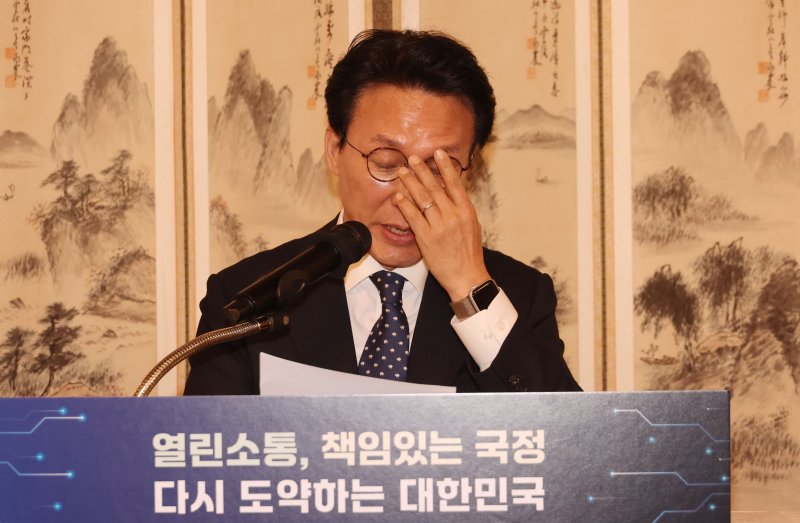
[The Financial News] Kim Min-seok, Prime Minister of South Korea, commented on the 2nd on President of South Korea Lee Jae-myung posting messages about real estate on a social networking service (SNS). He said, "The President of South Korea has reinforced the message that 'the policy stance will remain consistent' and that 'people should not expect the basic stance to change.'" His remarks were an interpretation of the recent series of strong "real estate stabilization messages" issued by the President of South Korea.
At a New Year’s press conference held the same day at Chongni Gonggwan in Seoul, Kim Min-seok was asked about "President of South Korea Lee Jae-myung recently posting messages on SNS regarding real estate speculation." He replied, "At a time when state affairs have been relatively stable, new issues have emerged in the South Korea–United States Tariff Negotiations, and political controversies have also flared up. In this context, there were concerns that the government’s stable focus on state affairs could weaken, and I understand that these messages were given in response to that concern."
Kim Min-seok outlined five key approaches to addressing real estate issues. He said, "First, the real estate problems in the Seoul Capital Area must fundamentally be resolved in the long term through balanced regional development." He continued, "Second, we must maintain a stable and continuous supply. Third, we need to correct the market in a reasonable way, including addressing excessive demand and financial factors that do not align with common sense." He went on, "Fourth, as a general rule, we will refrain from relying on tax measures as a primary tool for real estate policy, although, as with any policy area, we will not categorically rule out any option." He added, "Fifth, we will implement the position we have now set out in a consistent manner."
Kim Min-seok pointed to a lack of consistency as the reason past real estate policies failed to deliver results.
He noted, "Regardless of whether governments in the past were progressive or conservative, one of the main reasons they failed to achieve meaningful outcomes in real estate policy was not only errors in individual measures, but also the failure to uphold the original policy standards as circumstances and trends changed." He added, "At the beginning of this administration, we introduced certain demand-control measures related to finance to curb overheating in the real estate market, and they had a certain effect." He explained, "Because we did not expect those steps alone to solve the problem, we prepared and announced plans to increase solid housing supply in the Seoul Capital Area." He stressed, "We have used appropriate demand-suppression measures in the past, and this was a declaration of our willingness to continue to employ such measures whenever necessary in the future."
[email protected] Reporter Choi Yong-jun Reporter