Xi Jinping: "China’s finance is large but not strong... It must attain reserve currency status"
- Input
- 2026-02-02 14:40:44
- Updated
- 2026-02-02 14:40:44
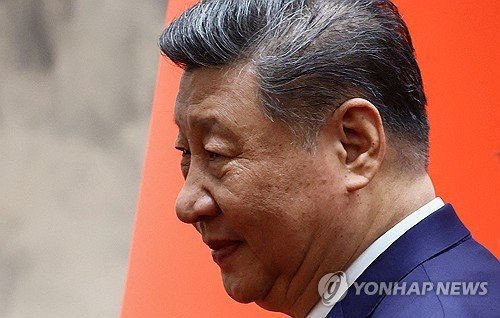
According to Xinhua News Agency on the 1st (local time), Qiushi that day carried the full text of Xi’s speech titled "Stay on the Path of Developing Finance with Chinese Characteristics and Build a Financial Powerhouse," delivered at a major cadres’ meeting in January 2024.
In that speech, Xi said, "At the Central Financial Work Conference, I proposed that we should accelerate the building of a financial powerhouse," adding, "A financial powerhouse must possess a series of key financial elements, alongside world‐leading economic strength, scientific and technological strength, and overall national strength."
Listing those financial elements, Xi stressed, "We must have a powerful currency. It should be widely used in international trade, investment, and foreign‐exchange markets, and it must hold the status of a global reserve currency."
He went on to say, "We must have a powerful central bank. It should be able to conduct effective monetary‐policy adjustments and macro‐prudential management so that systemic risks can be promptly prevented and resolved." He also cited financial institutions, international financial centers, financial regulation and supervision, and financial talent as other essential components.
Xi noted, "China is already a financial powerhouse in terms of size. Our banking sector and foreign‐exchange reserves are the largest in the world, and our bond and stock markets are the second largest. Our insurance sector is also among the top tier." However, he emphasized, "Overall, we are large but not strong. Building a true financial powerhouse will require sustained, long‐term effort."
Xinhua News Agency explained that Xi "first clearly set the goal of accelerating the building of a financial powerhouse at the Central Financial Work Conference in October 2023, elevating financial work to a strategic level."
It added that during The Fourth Plenary Session of the 20th Central Committee of the Communist Party of China held last October, strategic arrangements related to this goal were incorporated into China’s 15th Five-Year Plan (2026–2030), and that the term "financial powerhouse" appeared for the first time in recommendations for a Five‐Year Plan.
Xinhua News Agency also argued that "to move from being a financial powerhouse in size to a true financial powerhouse, China must not only realize hard power in areas such as economic fundamentals, financial institutions, and capital scale, but also rely on soft power—above all, a financial culture with Chinese characteristics—to play a value‐driven role."
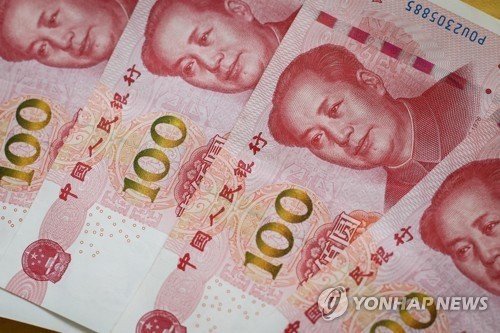
Even so, SCMP pointed out that "despite U.S.–China trade tensions, the value of the RMB has held up relatively well, and some analysts argue that the currency remains undervalued." Goldman Sachs recently suggested that the RMB may be trading about 25% below its fair value against the U.S. dollar.
Meanwhile, the Republic of Zambia began collecting taxes and royalties in RMB from Chinese mining companies operating in the country last month. The government is using these funds to pay for imports from China and to service its debts.
Experts told SCMP that this move by the Republic of Zambia is "a measure driven more by dollar shortages and debt management needs than by geopolitical considerations," while also assessing that "the internationalization of the RMB is making quiet progress."
[email protected] Hong Chae-wan Reporter