Police voice concern over bills to establish Serious Crimes Investigation Agency and Public Prosecution Office: "Overlapping investigative powers"
- Input
- 2026-02-02 12:00:00
- Updated
- 2026-02-02 12:00:00
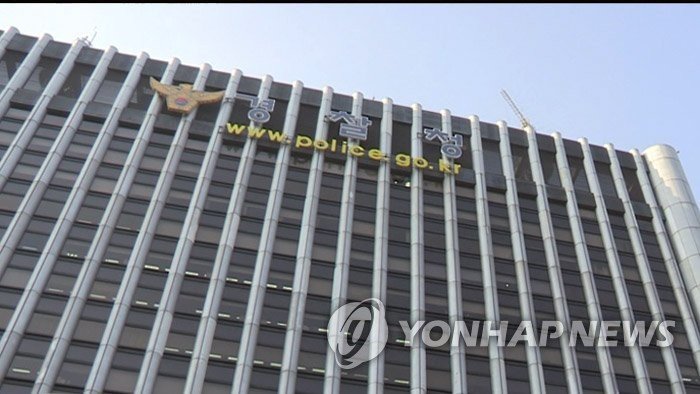
[The Financial News] The police have submitted a written opinion on the draft bills to establish the Serious Crimes Investigation Agency and the Public Prosecution Office, expressing concern about overlapping investigative powers and potential confusion.
Acting Commissioner General Jaesung Yoo of the Korean National Police Agency said at a regular press briefing held on the morning of the 2nd at KNPA headquarters in Seodaemun District, Seoul, "We have submitted our opinion on the draft legislation to the relevant ministry."
On the 12th of last month, the government released draft legislation to create the Public Prosecution Office and the Serious Crimes Investigation Agency. Under the government proposal, the Serious Crimes Investigation Agency and the Public Prosecution Office would separately take over the prosecution service’s existing functions of investigating serious crimes and of filing and maintaining indictments. The plan is to place the Serious Crimes Investigation Agency under the Ministry of the Interior and Safety (MOIS) and the Public Prosecution Office under the Ministry of Justice of the Republic of Korea, thereby institutionally separating investigative and prosecutorial powers and allowing the two bodies to keep each other in check.
However, the Serious Crimes Investigation Agency’s remit has been defined as covering nine categories of serious crime—corruption, economic crimes, crimes by public officials, election crimes, defense procurement crimes, major disasters, narcotics, insurrection, foreign-exchange crimes, and cybercrime. Because this scope is so broad, concerns have been raised that its role could overlap with that of the National Office of Investigation within the KNPA.
Regarding this, Acting Commissioner General Yoo stated, "The Serious Crimes Investigation Agency’s jurisdiction has been broadly set in the draft as the so‐called nine major crime categories, and it overlaps excessively with the police. In that situation, it will be difficult for people to know which investigative body is responsible for which crimes, and I believe this could cause confusion and inconvenience for the public." He continued, "We also submitted the view that if the Serious Crimes Investigation Agency is given the authority to request that cases be transferred to it and to accept discretionary transfers, there is a high risk of 'ping‐ponging' of cases between the police and the Serious Crimes Investigation Agency and of delays in investigations."
The police also said they had submitted an opinion that, from the standpoint of attracting and retaining talent over the long term, it would be more desirable to avoid a dual investigative structure for the Serious Crimes Investigation Agency and instead move toward a unified system.
Responding to concerns that investigative bodies such as task forces and the Special Investigation Headquarters are becoming fragmented, Acting Commissioner General Yoo explained, "There have recently been many pressing investigative issues, so we have been organizing and operating bodies such as the Joint Investigation Headquarters of Prosecutors and Police, the police Special Investigation Headquarters, and various task forces tailored to each case. The personnel assigned to these units are drawn mainly from the investigative departments at police headquarters and at city and provincial police agencies, and we are minimizing the mobilization of frontline investigators," adding, "Therefore, we do not believe there is any gap in investigations related to everyday public safety at the frontline level."
Yoo also announced that, with registration of preliminary candidates for the June 3 Nationwide Local Elections beginning on the 3rd, the police will step up crackdowns and investigations on election‐related offenses.
He said, "Timed with the start of candidate registration, the police plan to set up and operate dedicated teams for investigating election offenses at all metropolitan/provincial police agencies and local police stations," and stressed, "Through these dedicated teams, we will strengthen intelligence gathering on illegal activities related to the elections, and we will respond strictly under a zero‐tolerance policy to major election crimes that seriously undermine the fairness of the electoral process."
[email protected] Jang Yoo-ha Reporter