Average Monthly Pay for High School and Junior College Graduates Is 1.67 Million Won: "About 70% of What Workers in Their 20s Earn"
- Input
- 2026-02-02 08:55:49
- Updated
- 2026-02-02 08:55:49
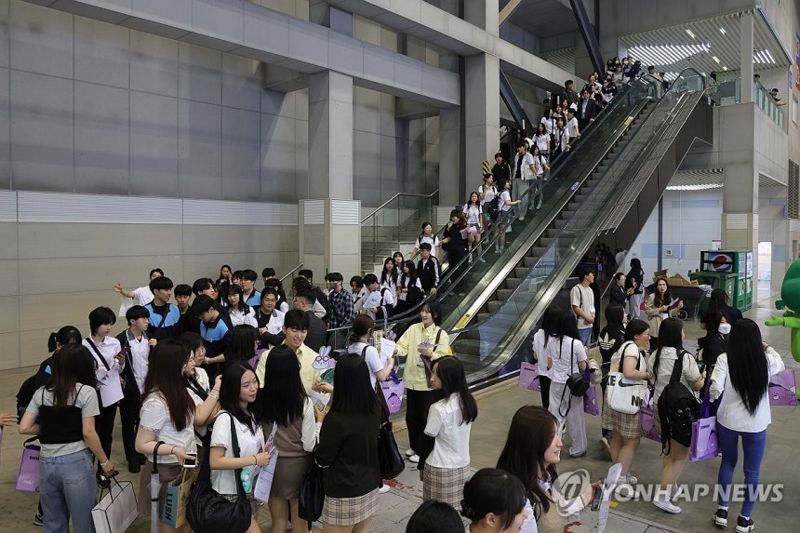
According to The Financial News, a new study has found that the average wage of young workers who graduated from high school or junior college is only in the 70% range of the average wage of workers in their 20s. About half of them are employed at very small workplaces with nine or fewer employees, and a high share are in non-regular positions, leaving them exposed to job insecurity.
They work 33.4 hours a week and earn 11,600 won per hour
According to the education sector on the 2nd, the Korean Educational Development Institute (KEDI) recently released these findings in a report titled "Korean Education Longitudinal Study 2025: Life and Outcomes in Early Adulthood (III)."
The research team analyzed 643 employed young people who were in their third year after graduating from high school, including both high school and junior college graduates. Their average monthly pre-tax wage was about 1.67 million won.
Given that respondents worked an average of 33.4 hours per week, this translates into an hourly wage of about 11,600 won. This is only slightly higher than this year’s minimum wage of 10,320 won.
Compared with the average monthly wage of all employed people in their 20s in Korea, which Statistics Korea puts at 2.34 million won, their pay level is 71.4%.
56% are non-regular workers, and workplaces with 1–4 employees are the most common
In terms of employment status, young workers with high school or junior college degrees were more likely to be non-regular employees (56.6%) than regular employees (43.4%).
By workplace size, the largest share, 27.7%, said they worked at businesses with 1–4 employees. This was followed by workplaces with 5–9 employees (21.8%) and 10–29 employees (14.1%).
Only 46.1% were working full time, which is lower than the share of part-time workers (53.9%). The rate of enrollment in the four major social insurance programs stood at just 60.6%.
Asked, "To what extent does your current job match the level of the job you originally aimed for?" young workers with high school or junior college degrees gave an average score of 2.29 points. This is closer to "it does not really match" (2 points) than to "it somewhat matched" (3 points).
About one in four respondents said they were considering changing jobs. The main reasons cited were "because the pay is low" (25.87%), "because there is no prospect for the company’s growth" (16.17%), and "because my own development prospects are unclear" (10.71%).
The researchers noted, "Young people with high school or junior college degrees have been fostered as an alternative to meet national demand for entry-level technical workers and young industrial talent, and to address problems facing Korean society such as low birth rates, private education costs, youth unemployment, and low growth." They went on to point out, "However, despite their social importance, they are placed in poorer job conditions compared with graduates of four-year universities."
[email protected] Ahn Gaeul Reporter