Second Trump Administration Shutdown Expected to End on Feb. 3
- Input
- 2026-02-02 06:16:04
- Updated
- 2026-02-02 06:16:04
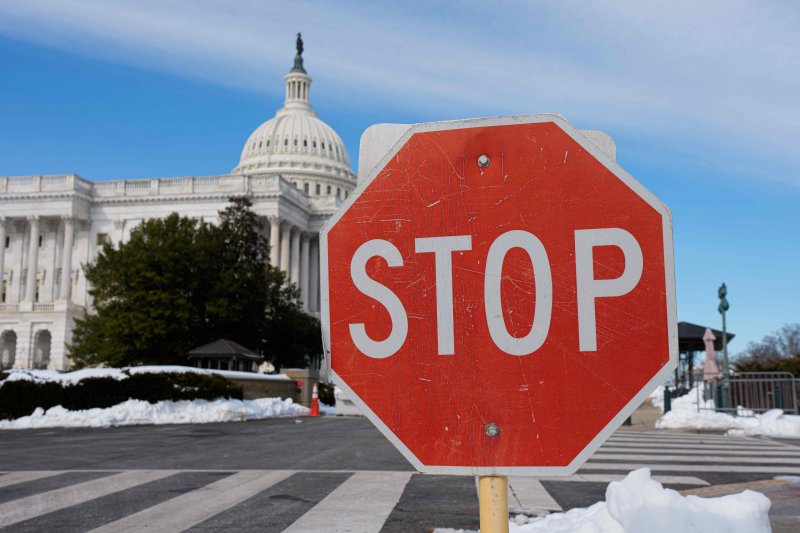
According to The Financial News, the Trump administration, which entered a second temporary government shutdown in October last year due to congressional scheduling issues, is now expected to emerge from the shutdown on Feb. 3 (local time).
National Broadcasting Company (NBC) reported that Mike Johnson, speaker of the U.S. House of Representatives from Louisiana, was asked in an interview on the 1st whether the Republican Party (GOP) could pass the budget bill on its own. He replied, "I am confident that we will get it done by at least Tuesday, Feb. 3." He pointed to the snowstorm that has swept across the United States since last week, noting that lawmakers are having difficulty returning to the Capitol. Because Congress delayed action on the spending bill, several departments in Trump’s second-term administration, including the Department of Homeland Security (DHS), entered a shutdown starting at 12:01 a.m. on Jan. 31.
Trump’s second-term administration, which had been operating under stopgap spending bills after failing to finalize the fiscal year 2026 budget, already went through the longest shutdown in U.S. history in October last year. At that time, the two parties ended the shutdown by passing a temporary funding bill that kept the government financed through Jan. 30, and then continued negotiations. On Jan. 22, the United States House of Representatives approved a fiscal year 2026 budget bill that provides a total of 1.2 trillion dollars (about 1,742 trillion won) to six departments whose budgets had not yet been set. The bill includes funding for the United States Department of Defense, the U.S. Department of Labor, the United States Department of Health and Human Services (HHS), the United States Department of Education (ED), the Department of Homeland Security (DHS), and the United States Department of Housing and Urban Development (HUD). The United States Senate was also scheduled to complete work on this year’s budget by Jan. 30. However, the timetable was derailed after two U.S. citizens were shot and killed last month by immigration enforcement officers under the DHS, which fueled opposition. The Democratic Party of the United States (Democratic Party), the opposition party, demanded reforms of the DHS, which is responsible for immigration policy and enforcement, and opposed passage of the spending bill.
Afterward, United States President Donald Trump and the Democratic Party agreed to pass the necessary budget for all other federal agencies, excluding the DHS, through Sept. 30, the end of fiscal year 2026. For the DHS, they decided first to approve only a two-week stopgap funding bill to avert a shutdown, then negotiate the immigration policy reforms demanded by the Democrats and pass a full-year budget afterward.
The United States Senate passed a spending bill reflecting these changes by the shutdown deadline of Jan. 30, but the United States House of Representatives was in recess at the time and failed to act before the shutdown began. The House currently has 218 Republican seats, a bare majority, and 213 Democratic seats, meaning the GOP can pass the bill on its own as long as there are no defections.
Johnson stated, "We are trying to pass the budget for every federal government agency except the Department of Homeland Security by Feb. 3. Then we will have two weeks of good-faith negotiations to resolve that issue." At present, the Democratic Party is demanding measures such as mandatory body cameras for immigration enforcement officers, a ban on wearing face masks, visible identification badges, and a prohibition on arrests without a court warrant.
Hakeem Jeffries, the House Democratic floor leader from New York State, said in an interview with American Broadcasting Company (ABC) on the 1st, "It is clear that we need to dramatically reform the Department of Homeland Security," urging that the reform process "should begin today, not two weeks from now." By contrast, Republican Mike Johnson argued in an interview the same day that requiring immigration enforcement officers to wear identification badges and banning face masks could endanger their safety and therefore could not be accepted. He described these as "two conditions that would create more danger" and added, "I do not believe the president will approve them, nor should he."
[email protected] Jong-won Park Reporter