[Editorial] Semiconductor Exports Hit $20 Billion a Month; Korea Must Strengthen Its Defenses Against Tariff Risks
- Input
- 2026-02-01 18:39:33
- Updated
- 2026-02-01 18:39:33
This year, the Lunar New Year holidays fall in February, which increased the number of working days in January, and a record boom in semiconductors pushed up overall exports. Semiconductors posted exports in the $20 billion range for the second consecutive month. Compared with the same month last year, they more than doubled, jumping 102.7%. Driven by surging demand for Artificial Intelligence (AI) servers, semiconductors have been setting new all-time monthly records for 10 straight months. Memory prices soared from a year earlier: DDR4 (8GB) rose 8.5 times, and Double Data Rate 5 Synchronous Dynamic Random-Access Memory (DDR5 SDRAM) climbed 7.6 times. Automobiles also played a strong role alongside semiconductors, with orders pouring in from Europe and other regions, pushing auto exports up more than 20%.
It is encouraging that exports, the main pillar of the Korean economy, got off to a brisk start in the first month of the year. Among the 15 key export categories, 13 items, including the biohealth industry, petroleum products, and general machinery, performed relatively well. However, a closer look shows that dependence on semiconductors has deepened, while tariff risks related to the United States of America (US) remain a serious threat. Semiconductors accounted for 32% of total exports last month. Exports to the US rose about 30% year-on-year, but if semiconductors are excluded, they actually declined.
Exports to the US saw semiconductors surge 169%, but most other sectors, including general machinery, struggled. Even automobiles, whose overall exports increased by 20%, posted a decline in the US market. The public and private sectors must move more nimbly and build a stronger coordination framework to navigate these headwinds.
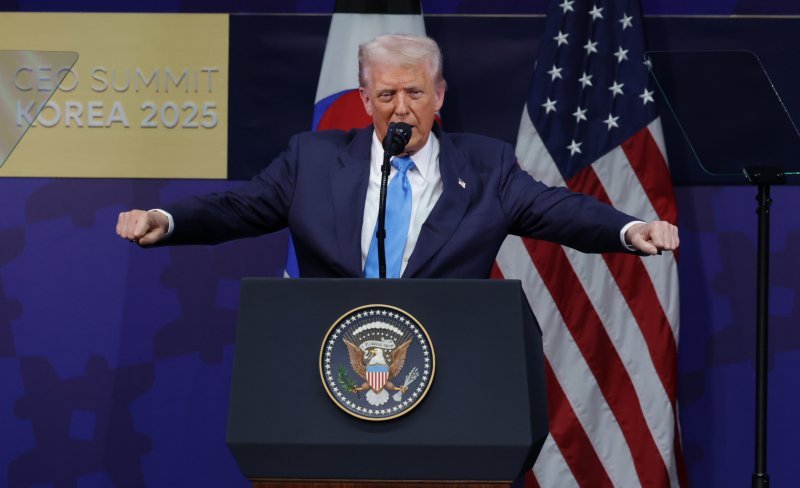
President Donald Trump’s tariff threats are becoming increasingly blunt. Last week, through his personal social media, he announced that he would restore product-specific tariffs and reciprocal tariffs on Korean automobiles, lumber, pharmaceuticals, and other items to the pre-trade-deal level of 25%, and he has repeatedly ratcheted up his rhetoric since. He has boasted that with a single stroke of his pen, tens of billions of dollars will flow into the US, and has referred to countries facing tariffs, including Korea, as "cash machines."
On the surface, he is criticizing the National Assembly’s delay in passing the Special Act for Korea-U.S. Strategic Investment Management, but some observers believe Trump is rushing to show results ahead of a Supreme Court of the United States (SCOTUS) ruling on the legality of reciprocal tariffs. Complaints have also been raised over the Act on Promotion of Information and Communications Network Utilization and Information Protection and the handling of Coupang, yet it is said that the administration still has not clearly grasped his true intentions. A trade team was urgently dispatched to the US last week, but little progress has been made. Kim Jung-kwan, Minister of Trade, Industry and Energy of South Korea, held two consecutive days of intensive talks last week with United States Secretary of Commerce Howard William Lutnick, but they failed to reach common ground, and he returned home over the weekend empty-handed.
Warnings are mounting that US tariff threats could become the new normal. If tariff uncertainty drags on, the burden will ultimately fall on companies. Affected firms will have to reconfigure their production portfolios. The National Assembly must set aside partisan strife and swiftly pass the Special Act for Korea-U.S. Strategic Investment Management to reduce unnecessary conflict. At the same time, the public and private sectors should quickly establish a permanent response mechanism. As large-scale investments in the US move into full swing, tariff threats could grow even more severe. Forming coalitions with countries in similar positions, such as Japan and Taiwan, to strengthen bargaining power with Washington is another option. Tariff risks are not just an issue for President Trump’s term; they could persist well beyond it. Politicians, the government, and businesses alike must pool their wisdom.