Industrial electricity pricing to be overhauled: higher at night, lower during the day
- Input
- 2026-02-01 13:23:00
- Updated
- 2026-02-01 13:23:00
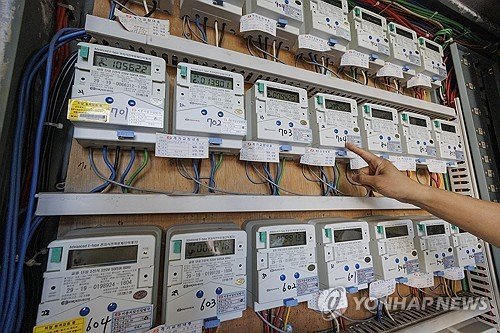
The Ministry of Climate, Energy and Environment plans to reform the industrial electricity tariff system in the first quarter of this year by raising rates for the evening and nighttime hours while lowering daytime rates. The goal is to change electricity consumption patterns in line with the expansion of renewable energy such as solar power generation. In its energy transition work plan released on the 1st, the Ministry of Climate, Energy and Environment announced that it would push ahead with this time-based overhaul of industrial electricity tariffs within the first quarter. The current average industrial electricity rate is around 180 to 185 won per kilowatt-hour (kWh).
At present, industrial electricity at night is about 35% to 50% cheaper than during the day. This structure was designed to encourage companies to use electricity at night instead of during the day, preventing demand from concentrating in one period. However, the government has concluded that the tariff system needs to be revised, given that solar power generation is concentrated in the daytime.
The government intends to lower daytime rates so that industry will actively use electricity produced by solar power generation, while raising evening and nighttime rates to enhance the effect of dispersing power demand.
The government will also present a region-based tariff system within the year. Under this system, transmission costs and other factors are reflected in electricity prices, allowing regions closer to power generation facilities to use electricity at lower rates.
The ministry will accelerate the expansion of renewable energy. It aims to increase renewable energy generation capacity to 100 gigawatts (GW) by 2030. As part of this, it plans to create 500 "Sunlight Income Village" projects this year and a total of 2,500 by 2030, in which local residents participate in solar power projects and share the profits. To this end, a Sunlight Income Village task force will be launched this month.
For wind power, the government will promote a pilot "Wind Income Village" project within the year. For offshore wind power, it will establish a one-stop control tower by launching the Offshore Wind Power Committee in the second quarter, chaired by the prime minister.
To resolve grid connection issues for renewable energy, the government will push in the first half of the year to amend the Electric Utility Act and the Distributed Energy Activation Special Act so that renewable energy projects with high public interest can be given priority access to the power grid. In addition, it will expand "flexible connections," which allow grid access on the condition that output is adjusted during periods of transmission congestion.
Regarding nuclear power, the government reaffirmed its plan to proceed as scheduled with the construction of new nuclear plants included in the 11th Basic Plan for Electricity Supply and Demand, namely two large reactors and one Small Modular Reactor (SMR). It will also develop technology to expand the range of nuclear output adjustment, which is currently possible up to a maximum of 80%, to about 50% by 2032.
In addition, for radioactive waste management, the government will establish the third basic plan for managing low- and intermediate-level radioactive waste within the first quarter and the third basic plan for managing high-level radioactive waste within the year. It will also move forward in earnest with procedures to select a site for a high-level radioactive waste management facility.
To strengthen oversight of the electricity market, the ministry plans to enhance the independence of the Electricity Commission and to create a new Electricity Supervisory Agency dedicated to supervising the electricity market and grid operations. In preparation for structural changes in the power industry stemming from the goal of phasing out coal by 2040, it will commission expert studies in the first half of the year and draw up plans to reorganize and restructure the generation subsidiaries of Korea Electric Power Corporation (KEPCO).
[email protected] Lee Yu-beom Reporter