Korea–U.S. tariff talks find no compromise... Minister Kim says “dialogue will continue”
- Input
- 2026-01-31 00:36:11
- Updated
- 2026-01-31 00:36:11
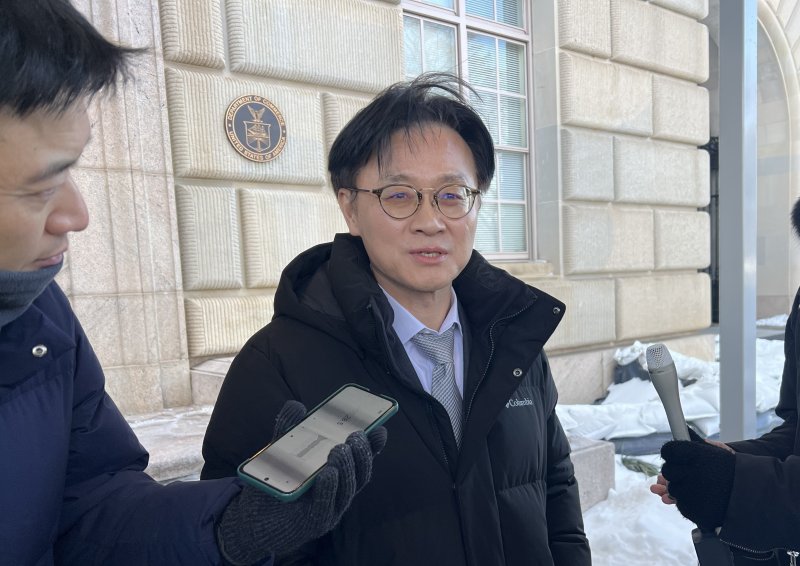
After more than two hours of talks with Lutnick at the Herbert C. Hoover Building in Washington, D.C., on the 30th (local time), Kim told reporters, "We have deepened our understanding of each other’s positions," adding that "there were discussions aimed at finding a compromise." However, he also noted, "More dialogue is needed," and stressed, "No conclusion has been reached yet."
Asked about the likelihood and timing of the United States actually moving to raise tariffs on South Korean imports, Kim replied that "negotiations are ongoing" and avoided giving specifics. Regarding follow-up talks, he explained, "Consultations in the United States during this trip have concluded, and after I return home we plan to continue discussions via videoconference."
Kim also met with Lutnick for more than an hour the previous day, during which he is said to have focused on explaining the progress of Korea’s Special Act on Investment in the United States and Seoul’s commitment to carrying out its investment pledges. The message was that Korea is ready to implement the promised investment plans in the United States and, on that basis, intends to block any move by Washington to restore higher tariffs.
The latest round of talks came together quickly after Donald Trump, on the 26th, used the social media platform Truth Social to criticize delays in the Korean National Assembly’s passage of the Special Act on Investment in the United States. He warned that tariffs on items such as automobiles, lumber, and pharmaceuticals, as well as reciprocal tariffs, could be rolled back to 25%, the level before the current Korea–U.S. trade arrangements. In response, Kim abruptly changed his schedule while on a trip to Canada and flew to the United States on the night of the 28th.
Although the two countries have decided to keep the negotiation channel open and continue additional discussions, tensions remain because the possibility of tariffs being raised again has not been fully removed. With the Trump administration using investment implementation as a bargaining chip, the speed of the Korean government’s legislative process is emerging as a key factor that will shape the course of future talks.
[email protected] Lee Byung-chul Reporter