"Report Voice Phishing and Smishing Damage to 1394"
- Input
- 2026-02-01 09:00:00
- Updated
- 2026-02-01 09:00:00
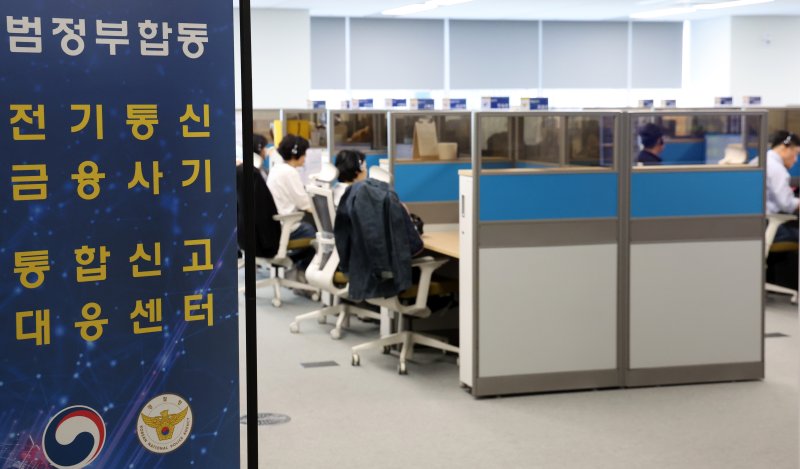
[The Financial News] The police will operate the special number "1394" as the main hotline for reporting damage from voice phishing, smishing, and other related scams.
The Joint Response Team for Telecommunications Financial Fraud at the Korean National Police Agency (KNPA) announced on the 1st that, starting today, it will operate the special number 1394 Anti-Voice Phishing Hotline as a unified reporting number for victims of voice phishing, smishing, and other telecommunications financial fraud, in order to improve public access to reporting and consultation services.
Until now, the Report Response Center of the task force has received consultations and tip-offs through an existing main number. However, because that number resembled those used by private call centers, some people mistook it for spam or advertising calls, and others found it difficult to remember, prompting criticism.
In particular, since last September the operating hours of the Report Response Center were expanded to 24 hours a day, 365 days a year, and the number of consultations has been increasing. To make the hotline easier to remember and to clearly signal that it is an official number run by a government agency, the team obtained the special number 1394 from the Ministry of Science and ICT.
KNPA explained that the new special number 1394 Anti-Voice Phishing Hotline reflects the task force's determination to intervene quickly from the earliest stages of crime and "protect people's everyday lives." The digits 1394 form a mnemonic phrase in Korean that roughly means "people who safeguard daily life."
Through the special number 1394, the Joint Response Team for Telecommunications Financial Fraud plans to provide preventive guidance when there is a risk that someone may become a victim, and to offer immediate blocking measures and follow-up support when damage has already occurred.
In an emergency, such as when phishing damage is in progress, people should call the 112 Police Emergency Number. If telecommunications financial fraud such as voice phishing is suspected, they can call 1394 without an area code at any time, 24 hours a day, 365 days a year, to receive professional support including victim counseling, reporting suspicious phone numbers or websites, and coordination with relevant agencies. Reported phone numbers are analyzed, and if they are determined to have been used for phishing, they are blocked.
To minimize public confusion during the transition to the new main number, the existing numbers will continue to be used in parallel for the time being. Consultations and tip-offs received through the old numbers will be handled in the same way by the Joint Response Team for Telecommunications Financial Fraud, which plans to switch over to 1394 in stages once the new hotline is firmly established.
The head of the Report Response Center said, "By using the main number 1394, we expect that people will be able to seek help more easily and quickly," adding, "We will continue to work closely with relevant ministries and the private sector to block telecommunications financial fraud in advance and do our utmost to protect public safety."
[email protected] Jang Yu-ha Reporter