Diabetes Is No Longer Just a Middle-Aged Disease
- Input
- 2026-01-29 15:27:15
- Updated
- 2026-01-29 15:27:15
[The Financial News] Diabetes has long been regarded as a typical chronic disease of middle-aged and older adults. However, the age of onset is gradually decreasing, and more adults are being newly diagnosed with type 1 diabetes, indicating a shift in disease patterns.
On the 29th, Kwak Soo Heon, a professor in the Department of Endocrinology and Metabolism at Seoul National University Hospital, emphasized, "Diabetes is a disease that can affect people of any age, and early detection and consistent management are more important than anything else."
Diabetes is a chronic condition in which blood glucose levels remain higher than normal over time. It is classified into type 1, type 2, and gestational diabetes.
Type 1 diabetes occurs when the pancreatic beta cells that produce insulin are destroyed, resulting in little to no insulin production. It mainly develops in children and adolescents, but in recent years, diagnoses among adults have also been increasing.
Type 2 diabetes is characterized by insufficient insulin secretion or insulin resistance, and it arises from a combination of lifestyle, environmental, and genetic factors. Gestational diabetes refers to a temporary rise in blood sugar during pregnancy due to hormonal changes. Blood glucose often returns to normal after delivery, but in some women it progresses to type 2 diabetes, so careful follow-up is needed.
Most people with diabetes in Korea have type 2 diabetes, while type 1 diabetes is known to account for less than 2% of all cases.
Family history and obesity are major risk factors
The most prominent risk factors for diabetes are family history and obesity. If one parent has diabetes, the child’s risk of developing the disease is about 30%; if both parents have diabetes, the risk rises to 60–70%. As Westernized eating habits and lack of exercise have led to more obesity, the risk of diabetes is increasing among younger people as well. When weight gain is accompanied by higher blood pressure and cholesterol, the risk of cardiovascular complications also rises.Diabetes often goes undetected for a long time because early symptoms are not obvious. In type 1 diabetes, weight loss, frequent urination, excessive thirst and fatigue, and visual disturbances tend to appear relatively quickly. In contrast, type 2 diabetes is frequently discovered incidentally during routine health checkups without any noticeable symptoms.
Diagnosis is made through blood tests. Diabetes is diagnosed when fasting blood glucose is 126 mg/dL or higher, 2-hour postprandial blood glucose is 200 mg/dL or higher, or hemoglobin A1c is 6.5% or higher.
Treatment goal: preventing complications
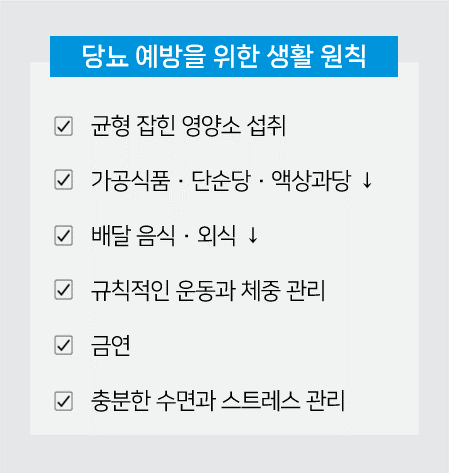
Treatment strategies differ by type of diabetes. For type 1 diabetes, insulin therapy is essential, and artificial pancreas systems that link continuous glucose monitors with insulin pumps are now being used. For type 2 and gestational diabetes, the foundation of treatment is improving diet, exercising, and managing body weight, with medications added when necessary.If blood sugar is not properly controlled, the risk increases not only for acute complications but also for microvascular complications such as retinopathy, nephropathy, and neuropathy, as well as macrovascular complications like myocardial infarction and stroke. This is why regular checkups and management of cardiovascular risk factors are crucial.
People with diabetes need to be especially careful in winter, when colds and flu are common. Infections can raise stress hormone levels, which in turn can elevate blood sugar. In addition, steroid components contained in some cold medicines and fever reducers can interfere with the action of insulin.
It is essential to inform healthcare providers that you have diabetes whenever medications are prescribed. Maintaining good personal hygiene, keeping up with vaccinations, getting enough rest, and eating a balanced diet also help support the immune system.
Kwak Soo Heon said, "Diabetes is a condition that requires lifelong management rather than complete cure, but if it is detected early and managed systematically, complications can be prevented and a healthy life can be maintained." He added, "Regardless of age, everyone should pay attention to regular checkups and improvements in lifestyle habits."
vrdw88@fnnews.com Kang Jung-mo Reporter