Was the 1 Year and 8 Month Sentence for Kim Keon Hee the Result of a Flawed Investigation or a Flawed Judgment? Legal Community Divided
- Input
- 2026-01-29 14:56:11
- Updated
- 2026-01-29 14:56:11
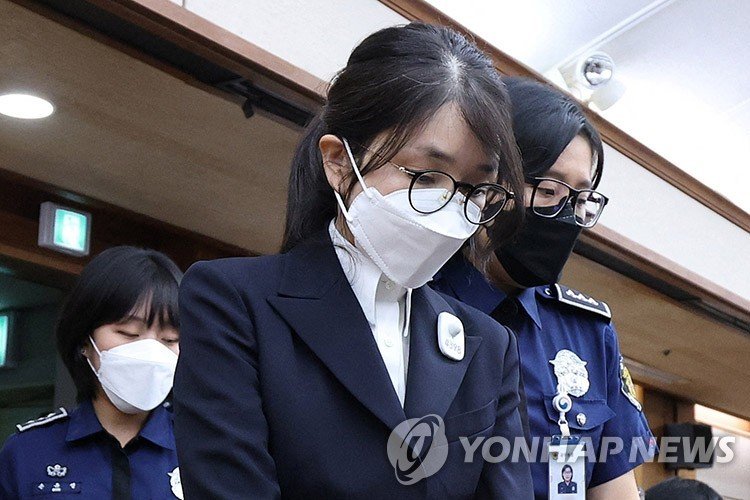
According to The Financial News, First Lady Kim Keon Hee was sentenced to one year and eight months in prison on charges of receiving money and valuables in return for handling pending issues of the Unification Church, and the legal community is split over whether the sentence is appropriate. Some argue that the Kim Keon Hee Special Prosecutor Team led by Special Counsel Min Joong-ki conducted an inadequate investigation and failed in its evidentiary strategy. Others contend that the court stretched to reach not-guilty verdicts in a way that departs from existing precedents. As the special prosecutor has announced plans to appeal, attention is focused on whether the appellate court will reach a different conclusion.
According to legal sources on the 29th, Criminal Division 27 of the Seoul Central District Court, presided over by Judge Woo Inseong of the Seoul Central District Court, the previous day sentenced Kim to one year and eight months in prison on charges including violations of the Capital Markets Act and the Political Funds Act, as well as bribery for brokerage under the Act on the Aggravated Punishment of Specific Crimes. The sentence is roughly one-ninth of the 15-year prison term sought by the Kim Keon Hee Special Prosecutor Team.
Among the charges brought by the special prosecutor, Kim was acquitted on both the Deutsche Motors stock manipulation case and the alleged involvement in securing a party nomination for Myung Tae-kyun, prompting criticism that the special probe had failed. The Yoon Suk Yeol administration’s prosecution service had previously decided not to indict, but the special prosecutor reversed that decision, conducted additional investigations, and proceeded with an indictment, only to fail to prove that Kim was a "co-principal offender." Even though evidence such as recorded phone calls between Kim and a securities firm employee was produced, the team reportedly struggled to persuade the court.
A lawyer who formerly served as a senior prosecutor commented, "The prosecution had already decided not to indict, and the special prosecutor’s investigation still resulted in not-guilty verdicts, so this can only be seen as a failure of the investigation." Another lawyer, also a former prosecutor, explained, "The court separated out the question of intent for each alleged act, and after finding that some counts were time-barred or subject to dismissal, ultimately concluded that the evidence was insufficient."
Critics also pointed out that the special prosecutor’s failure to design a sound evidentiary strategy led to the collapse of its legal arguments in court. Although the team, based on additional investigations, characterized Kim as a joint principal offender, it ultimately failed to establish any decisive "collusive conduct" or conspiracy. Some further argue that, amid intense public calls for Kim’s punishment, the team did not properly consider charging her with aiding and abetting instead.
In addition, legal observers say the special prosecutor’s legal framework regarding the alleged involvement in securing a party nomination for Myung Tae-kyun, as set out in Kim’s indictment, was effectively dismantled by the court. The team had constructed its theory based on statements from Myung and other related figures during the investigation. However, once the court rejected this testimony as evidence, the basic structure of the case collapsed.
A lawyer who previously served as a presiding judge said, "If there had been a conspiracy, they would have communicated with each other about their respective roles, but it appears the proof of that was lacking," adding, "It seems the special prosecutor devised the evidentiary plan incorrectly." Another lawyer, also a former prosecutor, criticized, "After the initial prosecution investigation, there does not appear to have been much genuinely new evidence, and it seems there was no sufficiently rigorous assessment of the probative value of what was obtained."
Some have also raised questions about the court’s reasoning. In the alleged involvement in securing a party nomination for Myung Tae-kyun, critics say the court’s findings on whether there was a "specific written contract" or whether the opinion poll services were provided for "Myung Tae-kyun’s personal gain" are ambiguous. They argue that if the opinion polling had in fact been provided as consideration for a nomination, it would likely have been arranged tacitly without leaving a paper trail such as a contract. In other words, the court failed to take into account the nature of political crimes, where evidence is often sparse. Another lawyer, a former presiding judge, remarked, "In political cases, written contracts are rarely kept, and it seems the court did not sufficiently consider that characteristic."
Kim Tae-hoon of the Daejeon High Prosecutors' Office, who previously investigated the Deutsche Motors stock manipulation case, also criticized the ruling, saying, "The refusal to recognize Kim as a co-principal offender runs counter to established case law, which holds that joint principal liability can be found where there is a division of labor and functional control over the commission of the offense."
However, more cautious views have emerged regarding the controversy over the court’s decision not to rule ex officio on the offense of aiding and abetting in the Deutsche Motors stock manipulation case, or to request an amendment of the indictment. Since there was no adversarial argument over aiding and abetting during the trial, they argue that the defendant’s right to a proper defense should take precedence. Moreover, because a court is under no obligation to order an amendment of the indictment, such a step would not have been easy. A legal community source noted, "If the court were to push for an amendment of the indictment, that in itself would signal an intention to convict," adding, "In a situation where there was no such obligation, it would have been burdensome for the court to make an ex officio determination."
Some observers predict that the appeal trial could produce a significantly different outcome. The question of whether the special prosecutor will seek to amend the indictment to add aiding and abetting remains open, and different appellate panels may interpret the same evidence in different ways. A lawyer who formerly served as a judge predicted, "Depending on which panel hears the appeal, the result could be entirely different."
[email protected] Jung Kyung-soo Reporter