1,400 Trillion Won in Public Pension Funds to Get Extra Incentives for KOSDAQ and Venture Investments, Sparking Concerns Over Policy-Driven Use of Capital
- Input
- 2026-01-29 15:00:00
- Updated
- 2026-01-29 15:00:00
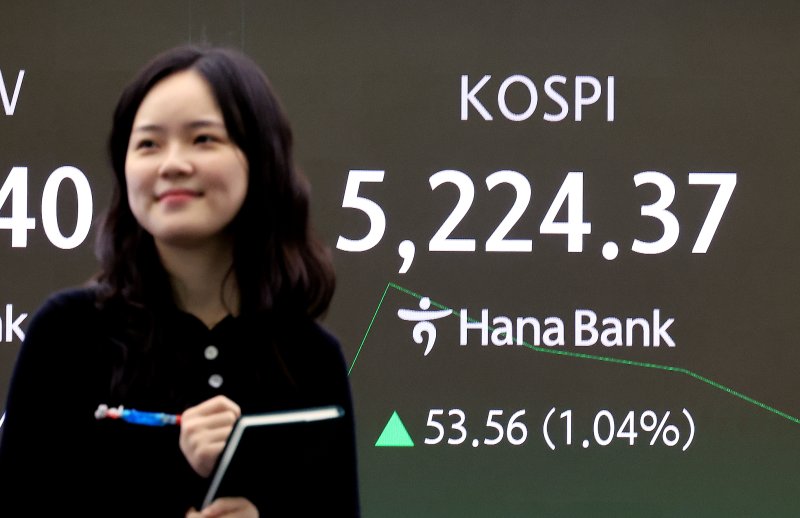
[Financial News] Public pension funds in South Korea, with combined assets of about 1,400 trillion won, will be heavily mobilized to support the Lee Jae-myung administration’s drive for an ultra-innovative economy. The government plans to strengthen their public policy role by newly including KOSDAQ and venture investment performance in evaluation benchmarks. It will also spell out how currency risk must be managed for overseas investments and make such assessments mandatory. However, some warn that funds which are supposed to prioritize returns could be used as tools to advance government policy under the banner of expanding public interest.
On the 29th, the Ministry of Planning and Budget announced that it had convened the first meeting of the Fund Asset Management Policy Committee and approved revisions to the basic direction for fund asset management and performance evaluation guidelines for 2026.
Under the National Finance Act, the government evaluates how funds are managed every year. To do this, it prepares fund management evaluation guidelines each January and notifies the entities that run the funds. These entities manage the funds based on the guidelines and are evaluated comprehensively on returns, appropriateness and efficiency.
Twenty-four funds are subject to evaluation, including the National Pension Service, Employment Insurance (EI), Public Officials Pension, Military Pension, Teachers' Pension, Housing and Urban Fund, Korea Technology Finance Corporation (KOTEC) and Korea Credit Guarantee Fund (KODIT). Only about one-third of them are evaluated in any given year, rather than all at once. Among the 100 points available, asset management performance carries the greatest weight: 30 points for the National Pension Service, which is classified as a "large-scale fund," and 50 points for other large and small funds.
While maintaining the four core principles of asset management—safety, liquidity, profitability and public interest—the revised evaluation framework focuses on expanding public functions and improving currency risk management.
In concrete terms, the priorities include: domestic venture investment to support an innovation ecosystem; sustainable environmental, social and governance (ESG) investing; using a policy fund to identify new growth engines; and expanding domestic equity investments in markets such as KOSDAQ to promote a virtuous economic cycle. The National Growth Fund, which will launch this year with a size of 30 trillion won plus an additional amount, will concentrate on advanced strategic industries such as Artificial Intelligence (AI) and Semiconductor materials, components and equipment, in line with this approach.
It is unusual for the Ministry of Planning and Budget to explicitly spell out the basic direction of fund management in this way. Until now, it had only made partial adjustments to the evaluation guidelines and had not formally presented an overarching direction.
First, from the standpoint of public interest, the government will encourage pension funds to increase their investments in KOSDAQ. It will do so by reflecting the KOSDAQ index at a 5% weight in the benchmark used to evaluate fund performance. Currently, only the KOSPI is included in the benchmark for domestic equity investments.
To create stronger incentives, the government will explicitly state venture investment in the evaluation criteria and grant additional bonus points. The current maximum bonus of 1 point will be doubled, and the minimum investment threshold to qualify for extra points will be raised. For the National Pension Service, the bar will go from 2 trillion won to 3 trillion won, and for other large pension funds, from 100 billion won to 150 billion won.
The government also plans to ensure that funds are not penalized for investing in early-stage ventures. Park Bong-yong, Director General for Fiscal Performance Management at the Ministry of Planning and Budget, said, "We will not evaluate the initial returns of venture funds within three years of their establishment."
The standards for currency hedging will also be brought closer to reality. For overseas assets, relative performance will no longer be assessed based on the currency policy set out in the Investment Policy Statement (IPS), but on the actual hedging carried out in practice. This change is intended to correct distortions in reported returns that arise amid high volatility in foreign exchange markets. Park explained, "If currency policy is adjusted during actual operations, it can lead to an overestimation of returns compared with the benchmark. We are making this change to address that distortion in evaluations."
In addition, a new evaluation item will be introduced: "Efforts to secure appropriate tools and effectively manage the risk of asset value fluctuations due to exchange rate movements." Depending on performance in this area, funds can receive up to 1.5 bonus points.
A total of 67 funds in which the government is involved will be subject to this revised evaluation framework. As of 2024, their combined balance stands at 1,222 trillion won. That is more than double the roughly 575 trillion won recorded in 2015. Thanks to the strong returns of the National Pension Service, the largest pension fund, its own balance has grown even more. Over the same period, the average annual return was 4.57%, higher than the South Korea 3-year government bond yield of 3.11%.
By asset type, roughly 20% of fund assets are managed in short-term instruments and 80% in medium- to long-term instruments. About 81% of short-term assets are cash or cash equivalents with maturities of less than three months. In contrast, around 70% of medium- to long-term assets are in safer, fixed-income products such as bonds, rather than in performance-based assets like equities.
However, as government debt rises and the country faces severe low birth rates and rapid aging, the fiscal crisis confronting public pensions and insurance schemes is becoming increasingly serious.
According to the Ministry of Planning and Budget Long-term Fiscal Projections for 2025–2065, the Teachers' Pension is expected to fall into deficit in two years and to exhaust its fund assets by 2042. Given current trends, depletion could occur even sooner. The deficits of the Public Officials Pension and Military Pension are projected to keep widening, forcing the government to inject more subsidies. The National Pension Service has pushed back its depletion date thanks to strong returns last year, but under the current pace of population aging it is still expected to slip into deficit in the 2040s and run out of assets in the 2060s.
[email protected] Jung Sang-geun and Kim Chan-mi Reporter