Supreme Court Rules Policyholders May Claim Deductibles From Other Driver’s Insurer in Shared-Fault Crashes
- Input
- 2026-01-29 12:04:07
- Updated
- 2026-01-29 12:04:07
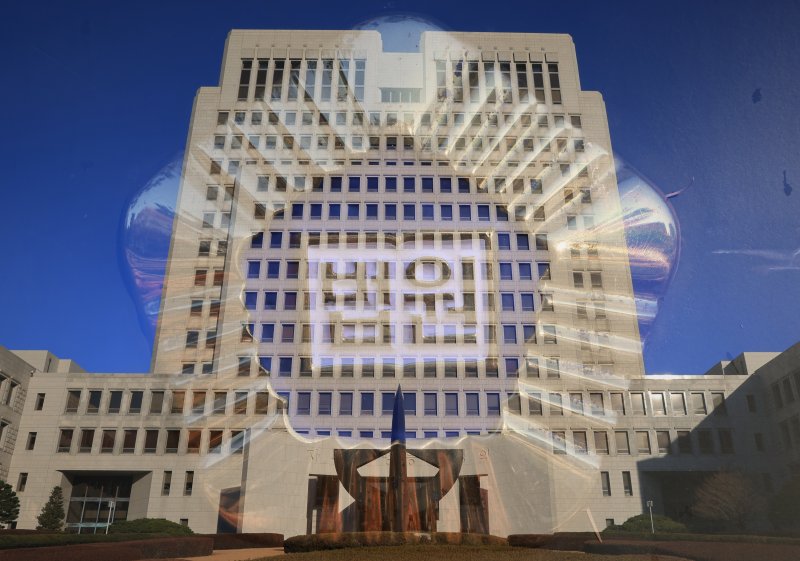
[The Financial News] The Supreme Court of Korea has, for the first time, ruled that in traffic accidents caused by shared fault, policyholders may claim from the other driver’s insurer the portion of the deductible that corresponds to the other party’s share of liability.
On the 29th, the First Petty Bench of the Supreme Court of Korea, presided over by Justice Shin Sook-hee, overturned a lower court ruling that had dismissed a damages claim filed by Kang and nine others against the insurer of the other vehicle involved in the accident, and remanded the case to the Suwon High Court.
Kang and the other plaintiffs were involved in a traffic accident in which both drivers were at fault. They had their vehicles repaired and received payouts under their own comprehensive auto insurance, but the deductible of 500,000 won, which was the policy limit, was not covered. They therefore sought compensation for that amount from the other driver’s insurer.
The key issue in this case was whether the deductible paid by a policyholder under comprehensive auto insurance constitutes "uncompensated loss" that is not covered by insurance. Under existing case law, a victim may claim damages from a third party for any loss remaining after insurance benefits are paid, which left room to interpret the deductible as also being subject to such a claim.
However, the courts of first and second instance held that Kang and the others had entered into comprehensive auto insurance contracts that expressly required them to bear the deductible themselves. On that basis, the courts ruled that they could not seek additional compensation from the other driver’s insurer and dismissed the plaintiffs’ claims.
The Supreme Court of Korea took a different view. It acknowledged that the deductible is an agreed amount that the insured must bear to a certain extent, but it held that the portion of the deductible corresponding to the other party’s share of liability can still be recovered.
The Court stated, "A deductible is an agreement under which the insured, not the insurer, bears a certain amount or percentage of the loss, so at least the amount corresponding to the insured’s own share of liability must be borne directly by the insured." It continued, "There is no reason to conclude that the insured is barred from separately claiming from a third party the portion corresponding to that third party’s share of liability."
The Court also pointed out that if the right to claim damages against the third party were restricted, the third party would in effect be relieved of part of their liability for damages.
It went on to hold, "It is reasonable to interpret the law as allowing the insured to apportion the deductible between their own share of liability and that of the third party, and to separately claim damages from the third party in an amount corresponding to the third party’s share."
The Supreme Court of Korea further recommended that, in relation to the so-called "advance settlement method," under which insurers first pay insurance benefits excluding the deductible, insurance policies should clearly set out procedures for refunding the deductible.
The Court indicated that insurers should recover the deductible from the other driver’s insurer on behalf of their policyholders and refund it to them, and that this process should be specified in detail in the policy terms and conditions. It added that requiring policyholders to file individual lawsuits over relatively small deductibles is undesirable from the standpoint of consumer convenience and protection of insurance consumers’ rights.
This ruling is the first case in which the Supreme Court of Korea has clearly defined how deductibles are to be handled between comprehensive auto insurance policyholders and the other driver’s insurer in traffic accidents involving shared fault. An official at the Supreme Court of Korea described it as "the first decision to protect the legitimate rights and interests of insurance consumers."
Earlier, on the 4th of last month, the Supreme Court of Korea held a public hearing on this case and heard expert opinions supporting the arguments of both the policyholders and the insurers.
[email protected] Choi Eun-sol Reporter