From This Year, Renamed as the 'National Center for the Rights of the Child'... What Are the 8 Major Changes in Child Policy?
- Input
- 2026-01-29 10:57:06
- Updated
- 2026-01-29 10:57:06
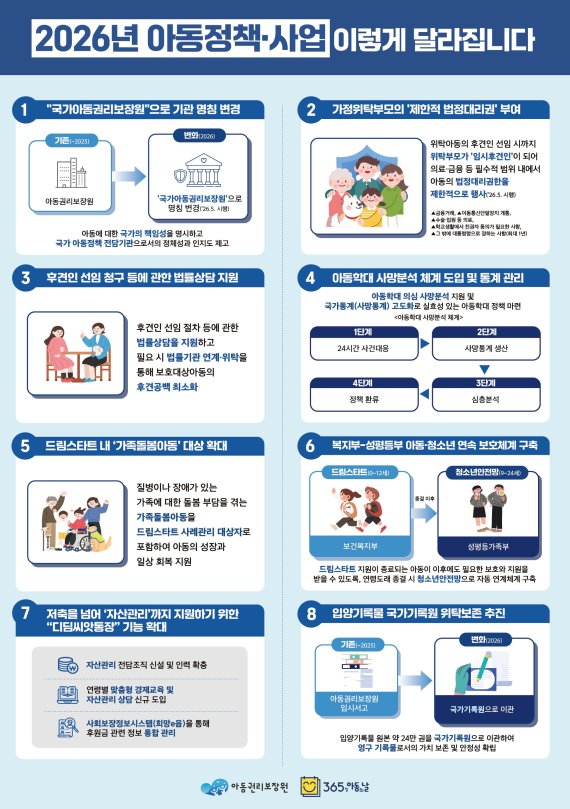
The eight major changes disclosed by the National Center for the Rights of the Child are: a change in the institution’s name; the introduction of a system to analyze suspected child abuse deaths; strengthening the Dream Start support system; enhanced protection of the rights of children in need of care; and a reorganization of the adoption records management system, among others.
The center explained that these changes are being pursued to close gaps between systems surrounding children and to ensure that protection, care, and rights are provided more seamlessly under state responsibility.
First, starting in May, the institution’s name will be changed to the "National Center for the Rights of the Child (NCRC)." The aim is to clearly signal the state’s interest in and responsibility for children, and to elevate the status of the National Center for the Rights of the Child.
In terms of responding to child abuse, a new system for analyzing suspected child abuse deaths will be introduced. Until now, the National Center for the Rights of the Child has worked with the government and the National Assembly of the Republic of Korea to draft legislation on such analysis and to build a corresponding response framework.
With the related bill having passed the plenary session of the National Assembly of the Republic of Korea this month, the center plans to support the establishment of working-level systems and subordinate regulations for in-depth analysis, as well as the advancement of statistical management.
To strengthen the continuity and thoroughness of child care, the Dream Start support system will also be expanded and reorganized. Children caring for family members will be formally included as Dream Start case management beneficiaries, allowing integrated provision of medical and care services for parents and tailored support for children.
The protection of the rights of children in need of care and foster parents will also be reinforced. For children in care who lack a legal representative, the center will support legal counseling, including petitions for the appointment of a guardian. It will also strengthen the guardianship role of foster parents by allowing them, in limited circumstances, to exercise legal representative authority when consent is required for financial, medical, or school-related matters.
To enhance the public nature and accountability of adoption records, approximately 240,000 adoption records currently stored in temporary archives will be transferred to the National Archives of Korea.
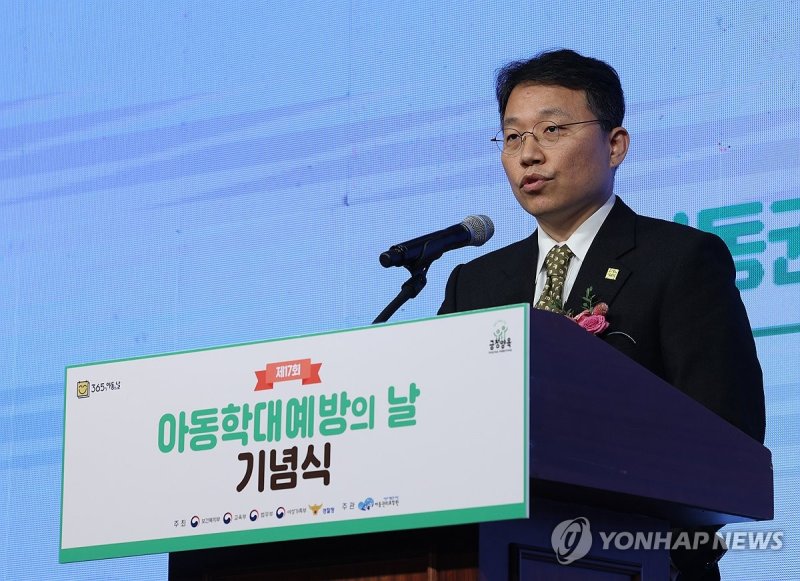
Ick-Joong Chung, head of the National Center for the Rights of the Child, said, "The National Center for the Rights of the Child will actively support the government’s policy of continuously strengthening state responsibility to build a seamless protection system for children throughout their entire life cycle."
[email protected] Yoon Hong-jip Reporter