Supreme Court of Korea Rules Samsung Electronics Bonuses Must Be Reflected in Retirement Allowance
- Input
- 2026-01-29 10:50:40
- Updated
- 2026-01-29 10:50:40
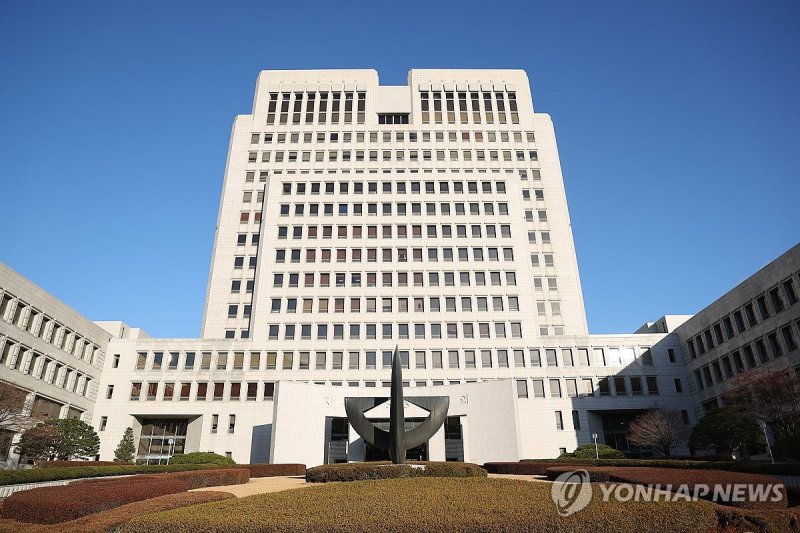
The Financial News reported that the Supreme Court of Korea has overturned the lower court and ruled that certain management performance bonuses paid to employees of Samsung Electronics Co., Ltd. must be reflected in the calculation of their retirement allowance. The lower court had found that performance bonuses could not all be regarded as wages and therefore could not be included in retirement allowance calculations. The Supreme Court, however, distinguished between different types of bonuses and held that some of them can be considered "wages."
On the 29th, the Second Division of the Supreme Court of Korea, presided over by Justice Oh Kyung-mi, set aside and remanded in full the lower court ruling that had dismissed all claims by Mr. Lee and 14 others in their lawsuit against Samsung Electronics Co., Ltd. seeking additional retirement allowance.
The Supreme Court assessed the bonuses by dividing them into "performance incentives" and "target incentives." It agreed with the lower court that performance incentives do not have the nature of wages, but it reversed the lower court by finding that target incentives do. Performance incentives are paid based on ex post evaluations and are closer to discretionary bonuses. In contrast, target incentives can be viewed as contractual wages promised in advance.
The bench stated, "Target incentives (performance bonuses) can be regarded as directly or closely related to the provision of labor and therefore fall within the scope of wages as consideration for work." It added, "The lower court erred in its understanding of the legal principles governing whether management performance bonuses qualify as wages and as part of the average wage."
Unlike performance incentives, which vary depending on management performance, the amount of target incentive bonuses is fixed in advance as a specific figure, such as 120% of base pay. Because the payment amount is predetermined, the court found that target incentives have the nature of wages. It further held that, since the rules of employment set payment criteria in advance and impose a regular obligation to pay, these bonuses constitute wages and must also be included in the retirement allowance.
Previously, Mr. Lee and other former employees of Samsung Electronics filed a lawsuit in June 2019, claiming about 200 million won in unpaid retirement allowance. They argued that the company had excluded bonuses paid upon achieving targets and performance goals from the average wage, which serves as the basis for calculating retirement allowance.
The average wage is the daily amount obtained by dividing the total wages received during the three months immediately preceding retirement. Based on this figure, 30 days’ worth of the average wage is paid as retirement allowance for each additional year of service. When the average wage increases, the retirement allowance rises accordingly.
The court of first instance held that incentives paid according to performance are not included in the average wage. The appellate court likewise ruled that management performance bonuses are not wages that are ordinarily paid.
With the Supreme Court of Korea now recognizing the wage nature of certain performance bonuses, the decision is expected to affect many similar retirement allowance lawsuits involving Samsung Electronics and other companies. If management performance bonuses are included in retirement allowance calculations, the amounts paid to workers will increase significantly, and the ruling is likely to have broad repercussions across business and labor circles and the wider economy.
[email protected] Lee Hwan-joo Reporter