Eyes of the KF-21: AESA Radar "Proves Its Ability to Detect and Track Targets on Land and at Sea"
- Input
- 2026-01-29 11:00:00
- Updated
- 2026-01-29 11:00:00
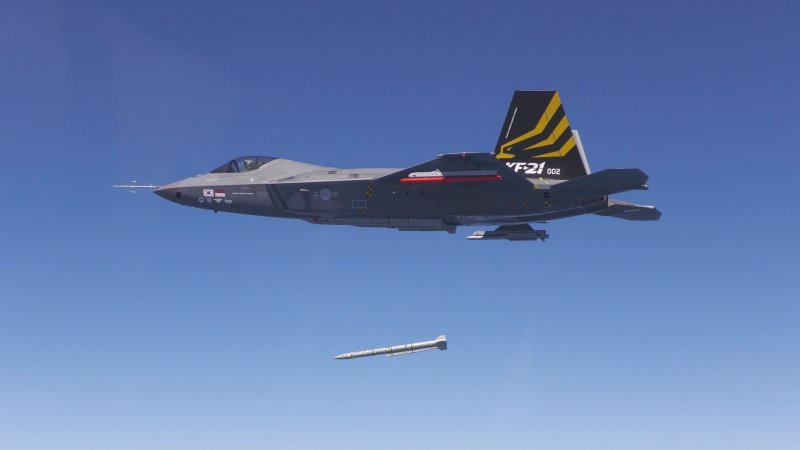
According to the Agency for Defense Development (ADD) on the 29th, it held a kick-off meeting for the “KF-21 Additional Weapons Testing, AESA Radar Development and System Integration” project at its main facility in Daejeon Metropolitan City on the same day.
Officials from the Defense Acquisition Program Administration (DAPA), the Ministry of National Defense of the Republic of Korea, the Republic of Korea Joint Chiefs of Staff (ROK JCS), the Air Force, the Defense Agency for Technology and Quality (DTaQ), Hanwha Systems, and Korea Aerospace Industries (KAI), as well as other related organizations and defense contractors, attended the meeting.
Over the three years through December 2028, this project will be carried out together with Hanwha Systems, KAI, and others. It aims to verify the functions and performance of the domestically developed AESA radar so that, in addition to its proven ability to detect aerial targets, it can also detect and track targets on land and at sea. The project will also validate the radar’s capability to operate air-to-air and air-to-ground modes simultaneously.
Jeong Seong-tae, Principal Research Engineer at the Agency for Defense Development (ADD), who chaired the meeting, said, "Through this project, we plan to secure operational capability across all major modes of the KF-21 AESA radar and dramatically enhance the KAI KF-21 Boramae’s mission performance on future battlefields." He added, "This will contribute to independent performance upgrades of domestically developed equipment, securing the ability to integrate indigenous weapons, and will also have a positive impact on expanding defense exports."
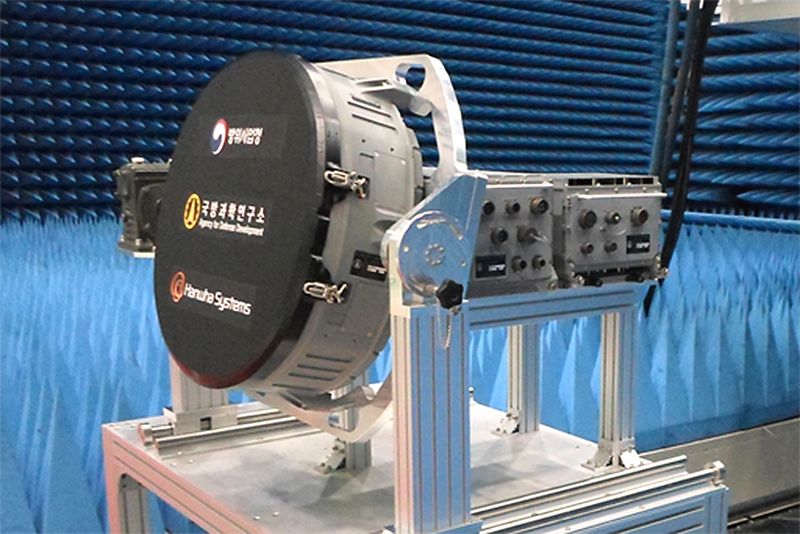
The Active Electronically Scanned Array (AESA) radar is an active electronically scanned phased-array radar. Unlike mechanical radars, it does not move the antenna physically; instead, it electronically controls transmit/receive modules to detect and track multiple targets in real time. It is a core system that effectively serves as the eyes of a fighter aircraft.
The air-to-air mode of the AESA radar installed on the KAI KF-21 Boramae, which will be fielded in the second half of this year, has already proven its performance through development and testing conducted over 10 years since 2016.
Once testing and evaluation of the air-to-ground and air-to-surface modes are completed through this project, the KAI KF-21 Boramae will be able to carry out all-weather, multi-role missions that involve detecting and tracking targets in the air, on the ground, and at sea.
The KF-21’s AESA radar already has the fundamental hardware (H/W) technology needed to detect and track all targets not only in the air but also on land and at sea. However, to operate flawlessly in Korea’s specific terrain and maritime environment, it must further refine its software (S/W) algorithms and secure the reliability required for actual combat use. This project is understood to focus on system integration that links the radar with air-to-ground and air-to-surface weapons such as missiles.
In ground modes such as Synthetic Aperture Radar (SAR) and Ground Moving Target Indication (GMTI), more precise algorithm optimization is needed to identify enemy tanks and Transporter Erector Launcher (TEL) systems without error in the Korean Peninsula’s complex mountainous terrain. In maritime mode, the radar must filter out Sea Clutter caused by waves and complete integration with the Republic of Korea military’s weapon systems and data links.
[email protected] Lee Jong-yoon Reporter