Iranian currency hits record low; U.S. expects "renewed anti-government protests"
- Input
- 2026-01-29 07:10:49
- Updated
- 2026-01-29 07:10:49
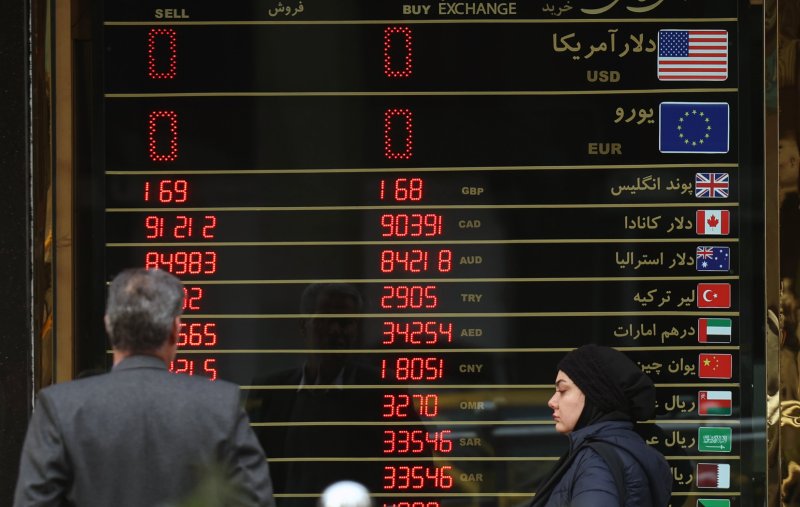
[Financial News] The currency of the Islamic Republic of Iran, which has just gone through about two weeks of large-scale anti-government protests, has fallen to its lowest level on record. The United States of America (U.S.), which has hinted at possible military intervention in Iran, has warned that the protests, now in a lull, could reignite.
According to The Associated Press (AP) and other foreign media on the 28th (local time), the exchange rate on the Iranian foreign currency market climbed above 1.6 million Iranian rials per U.S. dollar, breaking the previous record. When merchants in Tehran launched anti-government demonstrations on the 28th of last month to protest the currency’s collapse and soaring prices, the rial was trading at 1.42 million per dollar. The protests left thousands dead or injured and had largely subsided around the 12th of this month. Despite the pause in demonstrations, the rial weakened to 1.5 million per dollar on the 27th and has continued to slide.
Human Rights Activists News Agency (HRANA), a U.S.-based outlet, reported on the 28th that at least 6,221 people have been killed in the protests so far. It said at least 5,858 of the dead were protesters and 214 were on the government side. The number of people arrested is estimated at about 42,300. Earlier, the Iranian government put the death toll at 3,117, claiming that 2,427 of them were civilians and security forces, while the rest were "terrorists."
Donald Trump, the U.S. president who last year ordered strikes on Iranian nuclear facilities and this month launched air raids on the Bolivarian Republic of Venezuela, warned on the 28th in a post on the social media platform Truth Social that he could use military force against the Islamic Republic of Iran. He wrote, "A massive fleet, powered by great strength, passion, and unwavering resolve, is moving rapidly toward Iran," claiming that the operation would be larger in scale than the attack on the Bolivarian Republic of Venezuela. Trump argued that if Iran refuses to negotiate with the U.S., a situation similar to last year’s bombing of its nuclear facilities could be repeated.
On the same day, U.S. Senator Marco Rubio told a United States Senate hearing that the anti-government protests in Iran "may have subsided for the moment, but they will reignite in the future." He stressed, "The regime is in the most vulnerable state it has ever been." Rubio added, "The core problem they face is that, unlike previous protests over other issues, they have no way to address the demonstrators’ fundamental grievance," noting that "that grievance is that the economy is in a state of collapse."
Rubio also addressed the possibility that U.S. naval forces heading toward the Middle East could launch an attack on Iran, referring to the concept of "preemptive defense." He pointed out that between 30,000 and 40,000 U.S. troops are stationed around Iran and said, "We must be prepared for the possibility that, at some point and for some reason, the Iranian regime may decide to attack our bases where those troops are deployed in the region." At the same time, he emphasized, "The president always retains the option of preemptive defense," and argued that "maintaining a military posture that can respond in that region is a wise and prudent course of action."
[email protected] Park Jong-won Reporter