Hankook’s U.S. Subsidiary Sues Trump Administration for Refund of Reciprocal Tariffs
- Input
- 2026-01-29 06:43:00
- Updated
- 2026-01-29 06:43:00
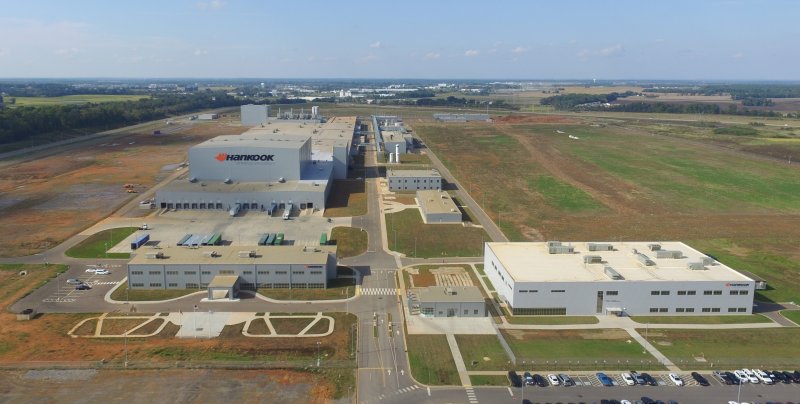
The Financial News reported that Hankook’s U.S. subsidiary has filed a lawsuit demanding a refund, arguing that the “reciprocal tariffs” imposed by U.S. President Donald Trump are unlawful. With this case, the number of Korean-affiliated companies seeking tariff refunds has risen to at least two, following the lawsuit by Taihan Cable & Solution’s U.S. subsidiary.
According to the United States Court of International Trade (USCIT) on the 28th local time, Hankook’s U.S. subsidiary filed suit on the 26th against United States Customs and Border Protection (CBP). Hankook asked the court to rule that the tariffs imposed by the Trump administration under the International Emergency Economic Powers Act (IEEPA) are illegal. At the same time, it requested an order barring CBP from imposing additional tariffs on its imports and directing a full refund of all duties the company has already paid.
In February and March of last year, the Trump administration imposed tariffs of 20% to 25% on Canada, Mexico, and China, claiming they had allowed the production and distribution of the opioid Fentanyl. In April of the same year, it went on to levy so-called reciprocal tariffs of 10% to 50% on 185 countries and territories worldwide, asserting that they were engaging in unfair trade with the United States.
The Trump administration cited the International Emergency Economic Powers Act (IEEPA) as the legal basis for these tariffs. IEEPA allows the U.S. president to declare an economic emergency in response to an “unusual and extraordinary threat” and grants broad powers once such an emergency is declared. Since its enactment in 1977, it has been used to impose sanctions on countries including the Islamic Republic of Iran and North Korea.
In response, five U.S. companies harmed by the new tariffs and 12 state governments, including the State of Oregon, filed a lawsuit against the Trump administration in April last year, seeking to invalidate the Fentanyl-related and reciprocal tariffs imposed under IEEPA. The lower court ruled in favor of the plaintiffs in its first-instance decision in May and again in the appellate ruling in August of the same year. The Supreme Court of the United States (SCOTUS) began hearing the case as a third-instance appeal, starting with oral arguments on November 5 last year.
USCIT has received roughly 1,000 lawsuits from companies around the world, including Hankook, seeking recognition of their right to tariff refunds. Among Korean-affiliated firms, Taihan Cable & Solution’s U.S. subsidiary also filed suit in early last month. The U.S. subsidiaries of Qcells and Samsung Electronics’ U.S. subsidiary Harman likewise submitted complaints, but court records show that both companies later voluntarily withdrew their cases.
In an announcement on December 23 last year, USCIT stated that all new tariff-refund lawsuits would be automatically stayed and would not proceed further until SCOTUS issues its ruling on IEEPA. USCIT argued that there was no need to move forward with individual cases before the Supreme Court’s decision, noting that the Trump administration had said it would not oppose an order for tariff recalculation and refunds if SCOTUS so ruled. Even so, companies that cannot be certain of receiving refunds without filing their own suits, or that fear delays in repayment, continue to bring cases before USCIT.
[email protected] Park Jong-won Reporter