[Editorial] Before Urging Foreign-Invested Firms to Spend More, Korea Must Become Truly Attractive
- Input
- 2026-01-28 19:44:34
- Updated
- 2026-01-28 19:44:34
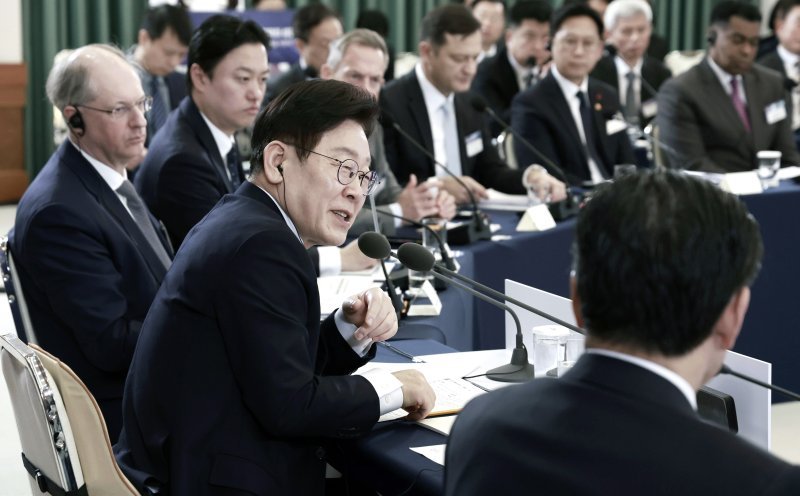
The Lee Jae-myung administration has declared this year the first year of a major national leap forward. It is pursuing a grand transition driven by regional-led growth and shared prosperity. To achieve this, cooperation from foreign-invested companies, in addition to Korean firms, is naturally essential. Under the Foreign Investment Promotion Act (FIPA), a foreign-invested company is one in which a foreign investor holds a certain minimum equity stake. GM Korea, Renault Korea and BASF Korea fall into this category. If these companies expand or build large-scale plants in regional areas and increase their business sites, it would help revive local economies and significantly boost youth employment. It is therefore only right for the government to carefully manage the overall investment environment and devise both tangible and intangible support measures that companies need.
Foreign Direct Investment (FDI) in Korea fell below 30 billion dollars (on a notification basis) in 2021, but has gradually increased, reaching 36.1 billion dollars last year, up 4.3% from the previous year. On a cumulative basis for the third and fourth quarters, the amount was lower than a year earlier, yet on an annual basis it was reportedly the highest on record. Considering the high level of uncertainty last year, some might view this as a relatively solid performance. However, the picture changes when looking at the amount actually remitted after notification. The FDI that was actually executed last year was around 17.9 billion dollars, roughly the same level as in 2021. There have been many cases where investment plans were canceled or postponed indefinitely. This shows there is still a long way to go.
By contrast, the amount of overseas direct investment (ODI) by Korean companies is trending at two to three times the level of FDI into Korea. Higher protectionist trade barriers, tariff risks and other factors play a role, but the core issue is the domestic business environment. The government must listen carefully when companies ask that on-the-ground practices and regulations be aligned with global standards. Incentive schemes to attract foreign-invested companies should also focus on this point.
At the meeting, the government announced that it would sharply increase incentives for companies that invest in regional areas and support them by nurturing tailored talent. It also unveiled plans to improve living conditions for foreigners residing in Korea for business purposes. Cutting taxes in proportion to investment and easing concerns about securing skilled workers are the most basic steps. It is also appropriate to push institutional reforms, such as visa improvements, to help foreign professionals settle smoothly in Korea. Yet these measures are not enough. Far greater effort is needed to bring about a fundamental and innovative improvement in the overall investment environment.
Companies are walking on thin ice every day as they brace for the impact of the Yellow Envelope Law, which is set to take effect in March. GM Korea, seeking to minimize the burden of bargaining with subcontractor unions, terminated its contract with a subcontractor at the end of last year. It is now facing a fierce backlash. The union of the subcontractor whose contract ended has been protesting the decision, occupying a logistics center and staging demonstrations to this day. This is disrupting the supply of parts and could even bring the company’s after-sales service operations to a complete halt. If the situation drags on, General Motors (GM) could suffer irreparable damage to its credibility.
Foreign-invested companies consistently cite Korea’s extreme labor–management relations as the biggest obstacle to doing business here. They have repeatedly called for improvements, yet instead of progress, even tougher pro-union legislation has become a reality. The government and ruling party did not budge in response to petitions and appeals from foreign-invested firms to reconsider the Yellow Envelope Law. The same goes for flexible working arrangements. The authorities must demonstrate clear resolve not only in providing incentives commensurate with investment, but also in reforming labor-related laws and regulations. This time, things must change.