Court Acquits Kim Keon Hee of Alleged Stock Price Manipulation in Deutsche Motors Case, Bolstering Earlier Non-Indictment by Prosecution Service?
- Input
- 2026-01-29 06:00:00
- Updated
- 2026-01-29 06:00:00
According to legal sources on the 28th, Criminal Division 27 of the Seoul Central District Court, presided over by Judge Insung Woo, sentenced Kim in the afternoon of the same day to one year and eight months in prison on charges including violations of the Financial Investment Services and Capital Markets Act, receiving brokerage fees under the Act on the Aggravated Punishment, etc. of Specific Economic Crimes, and violating the Political Funds Act. This stands in sharp contrast to the special counsel’s request for a 15-year prison term.
The court in particular did not accept the allegation that, from October 2010 for about two years and two months, Kim participated in Deutsche Motors stock manipulation as a "money provider" and obtained illicit gains of about 800 million won, a charge brought under the Financial Investment Services and Capital Markets Act.
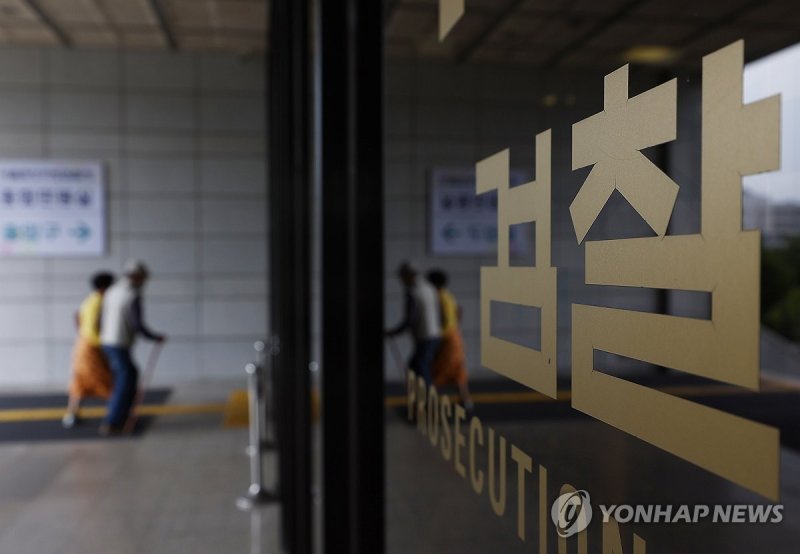
The allegation first surfaced in 2013, when the issue of the first round of prosecutorial and police investigative power adjustment was being debated, and the police opened an investigation targeting then–senior prosecutor Yoon Suk Yeol. The probe gained momentum in April 2020, when Yoon, as prosecutor general, was clashing with the then-ruling camp of the Moon Jae-in administration over the so-called Cho Kuk scandal, and the Open Democratic Party filed a complaint with the Seoul Central District Prosecutors’ Office over the Deutsche Motors allegations. The Prosecution Service, however, did not reach a conclusion during the Moon Jae-in government. In October 2024, under the Yoon Suk Yeol administration, prosecutors indicted nine related individuals but, after only a single face-to-face questioning of Kim, who was suspected of being a "money provider," they decided not to indict her, citing lack of evidence. The Prosecution Service concluded that there was no proof Kim knew of the stock manipulation and joined the scheme, and therefore found her not guilty of any offense.
The non-indictment decision by the Prosecution Service triggered a political backlash. In October 2024, the Democratic Party of Korea filed a complaint with the Corruption Investigation Office for High-ranking Officials (CIO) against three officials responsible for the investigation: then–Seoul Central District Prosecutors’ Office chief Chang Soo Lee, then–Fourth Deputy Chief Prosecutor at the Seoul Central District Prosecutors’ Office Cho Sang-won, and then–Head of the Anti-Corruption Investigation Division 2 at the Seoul Central District Prosecutors’ Office Choi Jae-hoon. In December 2024, the National Assembly went so far as to pass an impeachment motion against these three prosecutors.
The court explained that it acquitted Kim of the stock manipulation allegations because there was insufficient evidence to regard her as a co-principal offender who shared profits with the stock-rigging group and committed the crime together with them.
The court stated, "The fee the defendant promised to pay the price-rigging group was higher than is usual, she was concerned about the recording of her phone calls with securities firm employees, unlike in normal transactions, and her statements to investigative authorities were inconsistent," adding, "There is some room to believe that the defendant had at least a conditional awareness of the stock manipulation and accepted it."
However, the court went on to say, "Even if the defendant was aware of the price-rigging conduct, for a joint principal offense to be established, there must be a meeting of minds among the co-offenders," and continued, "The defendant was treated as an outsider, that is, a counterparty to the transactions existing outside any conspiracy, and therefore was not in a conspiratorial relationship with the price-rigging group." As grounds for treating Kim as an outsider, the court explained, "When the profits were settled, they were calculated only on the basis of the gains, but if there had been a conspiracy, the settlement would not have been based solely on the gains generated in the defendant’s account; the trading gains in other accounts would also have been taken into account in the settlement."
A lawyer who previously served as a presiding judge commented on the ruling, saying, "My understanding is that much of the evidence presented by the prosecution consists of testimonial and circumstantial evidence," and added, "In a situation where there is no clear physical evidence, it is difficult to hand down a guilty verdict based solely on testimony or circumstantial evidence."
The court did note, however, that while Kim’s conduct could potentially be viewed as aiding and abetting stock manipulation rather than as a joint principal in stock manipulation, this aspect was not addressed in the trial because it was not included in the charges brought by the special counsel team. Given this caveat, it is expected that the special counsel team will seek to amend the indictment in the appellate proceedings.
Regarding the ruling, the special counsel team said in a press notice issued in the afternoon, "The court’s reasoning is extremely difficult to accept, as it is a logic that is hard to understand both legally and in terms of common sense, and the sentencing on the counts of conviction is also very inadequate in light of the seriousness of the case," adding, "We plan to appeal in order to correct this."
[email protected] Reporter Kim Dong-gyu Reporter