National Health Insurance Finances Show Consecutive Surpluses, but Shrinking Margins and Soaring Medical Costs Flash Warning Signs
- Input
- 2026-01-28 12:00:00
- Updated
- 2026-01-28 12:00:00

The finances of the National Health Insurance Service (NHIS) posted a surplus again in 2025, but the size of that surplus is shrinking sharply while spending driven by greater use of medical services is rising rapidly. As a result, concern is mounting over a potential deterioration in the system’s finances. According to the National Health Insurance Service (NHIS) on the 28th, the National Health Insurance recorded a current-account surplus of 499.6 billion won in 2025 on a cash-flow basis. This means the National Health Insurance has remained in the black for five consecutive years, with accumulated reserves increasing to 30.2217 trillion won.
However, experts warn that despite the headline surplus, the underlying fiscal structure is weakening quickly. The current-account surplus plunged from 1.7244 trillion won in 2024 to around 500 billion won in just one year, a sharp drop of 1.2248 trillion won.
As the contraction in the surplus becomes more pronounced, concerns are growing that risks to the long-term sustainability of the finances are starting to materialize.
The current surplus is therefore closer to a final buffer period before expenditure growth fully accelerates, rather than evidence of structural stability. With the contribution base weakening and medical use increasing at the same time, a comprehensive review of how the system is managed financially has become unavoidable.
Slowing revenue growth highlights weakening contribution base
Total National Health Insurance revenue in 2025 reached 102.8585 trillion won, up 3.7715 trillion won, or 3.8%, from the previous year. Contribution income came to 87.2776 trillion won, a 4.0% increase, while government subsidies rose 2.7% to 12.4913 trillion won.Yet the growth rate of total revenue has been slowing each year, from 10.3% in 2022 to 6.9% in 2023, 4.4% in 2024, and 3.8% in 2025. Contribution income is also stuck in a long-term trend of weaker growth.
In particular, employee health insurance contribution income has lost momentum, as the number of enrolled workers grew by only 0.5% and the increase in monthly wage bases slowed to 2.7%, pulling contribution growth down to 3.5%. With low growth becoming entrenched and the working-age population shrinking in earnest, analysts say the contribution base is being structurally eroded.
By contrast, spending is rising faster than revenue. Total National Health Insurance expenditure in 2025 reached 102.3589 trillion won, an increase of 4.9963 trillion won, or 5.1%, from a year earlier. Of this, benefit payments totaled 101.665 trillion won, surging by 7.8965 trillion won, or 8.4%, year-on-year.
This jump reflects higher reimbursement rates, expanded support for emergency care, and funding for restructuring projects at tertiary hospitals, on top of an overall increase in the volume of medical services used. The fact that the growth rate of benefit payments, which had slowed in recent years, has spiked again is adding significant pressure to the finances.
However, the overall expenditure growth rate was temporarily eased in 2025 because 1.4844 trillion won that had been paid in advance to teaching hospitals struggling with management difficulties during the 2024 trainee doctor walkout was fully repaid. Excluding this one-off factor, the upward pressure on spending remains strong.
"We are in surplus, but it is not a stage for complacency" — mounting medium- to long-term fiscal burdens
The NHIS has maintained a surplus for five straight years, but it assessed that the rapid decline in the surplus size calls for measures to strengthen the long-term sustainability of its finances.While low growth and a shrinking working-age population are eroding the capacity to raise contribution income, a series of policies expected to require massive funding over the medium to long term are lined up, including expanding essential medical services, implementing healthcare reform tasks, extending National Health Insurance coverage to caregiving costs, and institutionalizing a sickness benefit scheme.
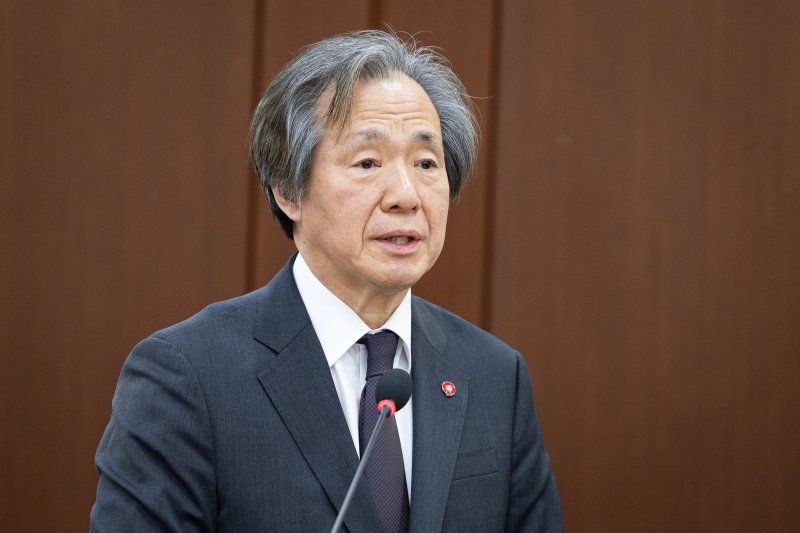
Jung Ki-seok, president of the NHIS, stated, "There is a possibility that the National Health Insurance current account will shift into deficit in 2026," adding, "As this is the time when the government must push ahead in earnest with its key policy agenda, we will work to strengthen fiscal soundness through meticulous expenditure management and by promoting a culture of appropriate use of medical services."
The NHIS has been reviewing its entire benefit expenditure management system, with the Task Force for Appropriate Care at the center, by conducting evidence-based analyses of covered services. To prevent financial leakage from the National Health Insurance caused by low-quality care and illegal practices at unlawfully established medical institutions, it is also pursuing the introduction of a special judicial police authority system.
In addition, when a person’s annual number of outpatient visits exceeds 365, a 90% coinsurance rate will be applied to the excess visits. By tightening controls on excessive outpatient use to encourage appropriate utilization of medical services, the NHIS also plans to gradually strengthen preventive, personalized health management services.
[email protected] Kang Jung-mo Reporter