Trump Warns: "If al-Maliki Returns, U.S. Will Cut Iraq Aid"
- Input
- 2026-01-28 06:31:12
- Updated
- 2026-01-28 06:31:12
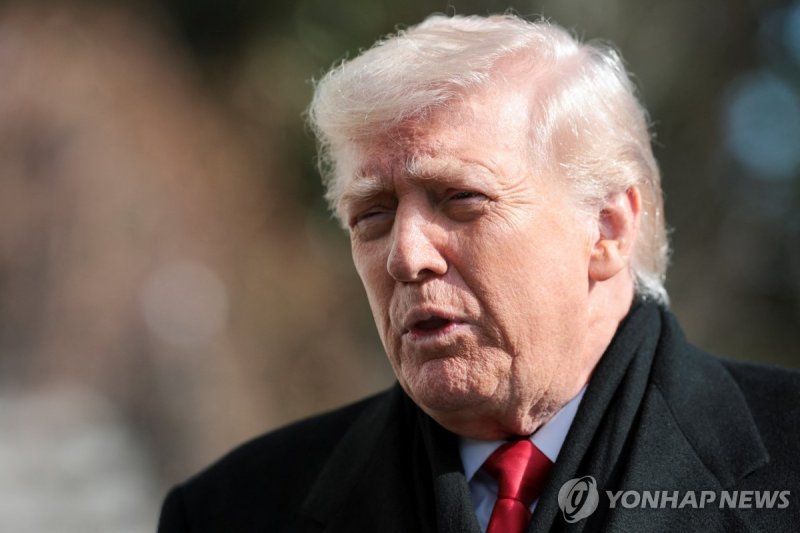
[The Financial News] U.S. President Donald John Trump warned on the 27th (local time) that if former Iraqi Prime Minister Nouri al-Maliki, who led the Iraqi government for eight years after the fall of Saddam Hussein’s regime, returns to power, the United States of America (U.S.) will suspend its support for Iraq.
Trump stated on his social media platform Truth Social that he had "heard that Iraq may make the very bad choice of putting Nouri al-Maliki back in as prime minister."
He argued, "The last time Maliki was in power, Iraq became poorer and descended into complete chaos," adding, "We must not allow that to happen again."
He went on to say, "If Maliki is chosen, because of his policies and ideology, the U.S. will no longer help Iraq," and declared, "Without U.S. support, Iraq has no real prospect of success, prosperity, or freedom."
Iraq is now on the verge of forming a new government. Since the U.S. invasion of Iraq in 2003 and the collapse of Saddam Hussein’s regime, the country has maintained a power-sharing system in which a member of Shia Islam serves as prime minister, a member of Sunni Islam serves as speaker of parliament, and a member of the Kurds serves as president.
According to Agence France-Presse (AFP), Shia Islam selected former Prime Minister Nouri al-Maliki as its candidate for prime minister on the 24th. The Trump administration has consistently taken a negative view of al-Maliki’s return to office, after he stepped down as prime minister in 2014 under U.S. pressure.
The U.S. also fears that the new Iraqi government could tilt toward the Islamic Republic of Iran. According to the United States Department of State (DOS), on the 25th Secretary of State Marco Rubio spoke by phone with Iraqi Prime Minister Mohammed Shia al-Sudani and said, "A government under the control of the Islamic Republic of Iran cannot put Iraq’s interests first."
Observers note that Trump’s ability to exert strong influence over the formation of Iraq’s new government stems in part from how Iraq’s oil revenues are managed. Most of Iraq’s crude export earnings are deposited in an account of the Central Bank of Iraq (CBI) at the Federal Reserve Bank of New York (FRBNY). If the U.S. restricts dollar transfers from this account, Iraq’s public finances could be directly and severely affected.
Al-Maliki became prime minister in 2006 with U.S. backing, but he later pursued policies centered on Shia Islam. Washington pressured him to step down in 2014, arguing that his approach had deepened sectarian conflict. The U.S. has assessed that during this period of escalating sectarian strife, the Sunni extremist militant group Islamic State (IS) rose to prominence.
#Trump #Iraq #alMaliki #USDiplomacy #MiddleEast
[email protected] Kim Kyung-min Reporter