North Korea resumes ballistic missile provocations after 23 days: A response to the new U.S. defense strategy?
- Input
- 2026-01-27 16:45:05
- Updated
- 2026-01-27 16:45:05
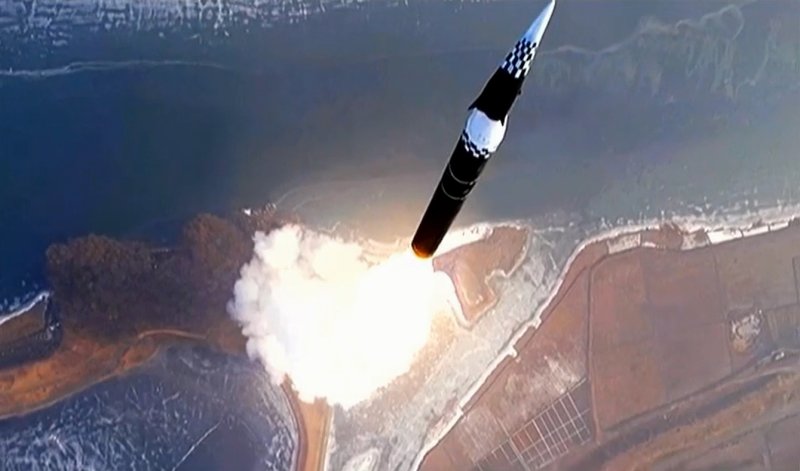
On the 27th, the Republic of Korea Joint Chiefs of Staff (ROK JCS) announced that at around 3:59 p.m. that day, North Korea fired an unidentified projectile toward the East Sea. The ROK JCS later stated that the South Korean military detected several unidentified ballistic missiles launched toward the East Sea from an area north of Pyongyang at approximately 3:50 p.m.
The ROK JCS noted that the South Korean military has strengthened surveillance and vigilance in preparation for additional launches by North Korea, while maintaining a full readiness posture. It added that Seoul is closely sharing information related to the "North Korean ballistic missiles" with the United States of America (U.S.) and Japan.
The ROK JCS is analyzing detailed specifications of the North Korean projectiles, including their characteristics and range, under the framework of Republic of Korea–United States combined defense and coordination.
On January 4, in its first provocation of the year, North Korea launched multiple ballistic missiles, believed to be the hypersonic missile "Hwasong-11Ma," from near Pyongyang toward the East Sea. These missiles reportedly flew approximately 900 to 1,000 kilometers.
Regarding that launch, the ROK JCS said, "The South Korean and U.S. intelligence authorities tracked the launch activity in advance and closely shared relevant information with the U.S. and Japan." Since then, the military authorities have reinforced surveillance and vigilance in preparation for additional launches by North Korea.
North Korea’s last ballistic missile provocation prior to this year took place on November 7, 2025, when it fired a short-range ballistic missile (SRBM) from the area of Daegwan, North Pyongan Province.
The latest missile provocation by North Korea coincides with the announcement of the United States’ new defense strategy (National Defense Strategy (NDS)) and the visit to South Korea by Elbridge Colby, a key security figure and Under Secretary of War for Policy at the United States Department of War. As a result, it is being interpreted as a show of force linked to these developments.
The new NDS centers on a division of roles in which South Korea takes the lead in deterrence against North Korea, while the U.S. focuses on countering China. Observers assess that North Korea likely conducted this show of force to send a message of strategic rejection toward such alliance modernization discussions. North Korea has typically staged shows of force when it believes its threats are being downplayed or when it seeks to undermine efforts to strengthen military cohesion between Seoul and Washington.
Experts also analyzed that, amid a strategic shift based on the America First policy emphasized by Elbridge Colby, North Korea intended to underscore that it remains the top security threat to the U.S.
[email protected] Lee Jong-yoon Reporter