Why Is Trump Doing This? Behind the ‘500 Trillion Won, LNG, Coupang’ Tariff Bomb Are Three Poison-Pill Demands
- Input
- 2026-01-27 14:04:31
- Updated
- 2026-01-27 14:04:31
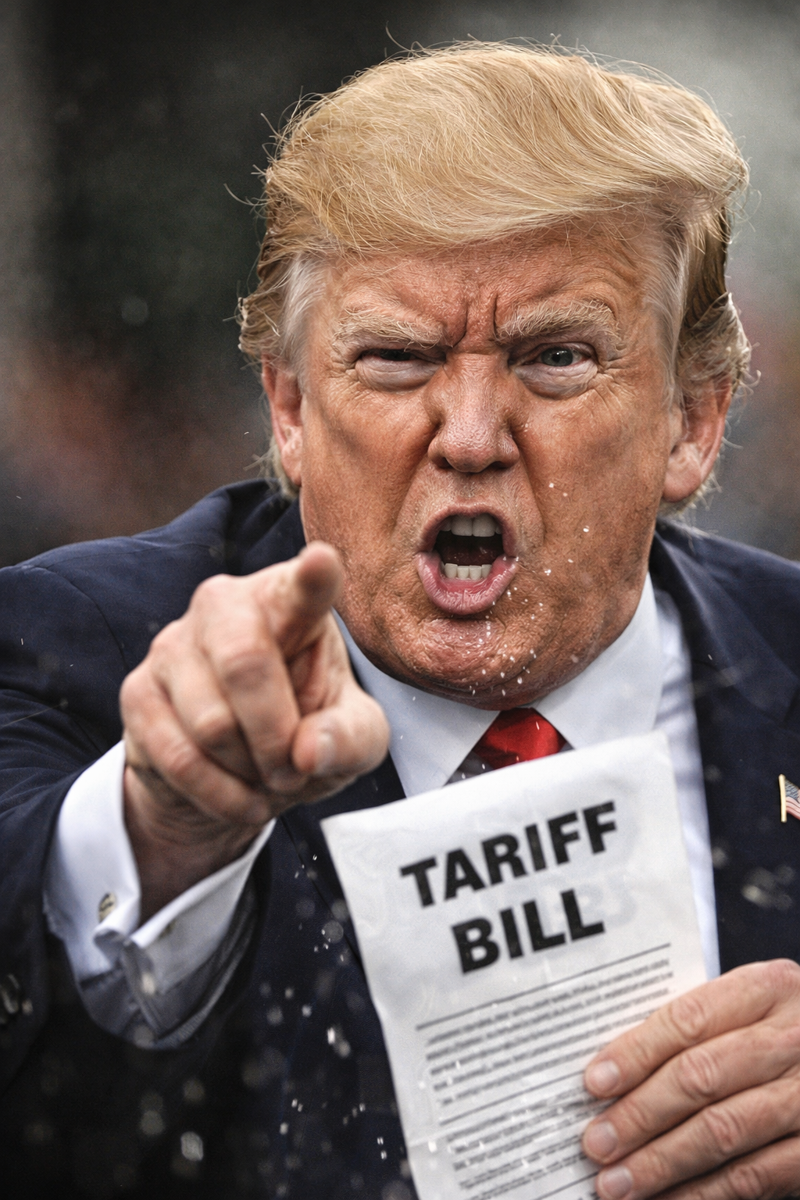
[Financial News] Analysts say that behind President of the United States (POTUS) Donald Trump’s decision to overturn, in just two months, the tariff rates agreed upon by the leaders of Korea and the United States and to restore a punitive 25% tariff, lie three carefully crafted “poison-pill demands” that could shake the very foundations of the Korean economy. Washington has cited delays in ratification by the National Assembly of the Republic of Korea as its justification, but making another country’s parliamentary decision a condition for implementing a trade agreement is a highly unusual move. It is being interpreted as an attempt to structurally bind Korea’s assets, energy, and policy sovereignty under U.S. influence.
1) A ‘cash machine’ that would drain 82% of Korea’s foreign exchange reserves
On the 26th (local time), Trump wrote on the social media platform Truth Social, "The United States has immediately lowered tariffs by executive order, so why is the National Assembly of the Republic of Korea not passing the promised investment law for the United States?" He then declared that he would raise tariffs on Korean products back up from 15% to 25%.
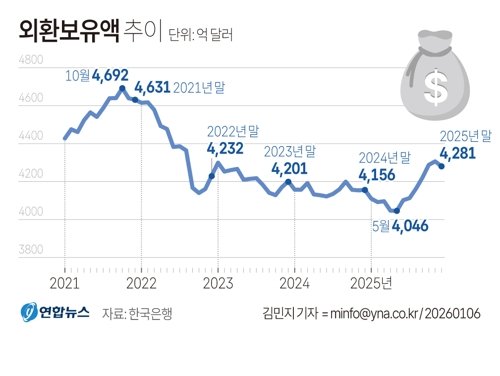
At the core of the special investment law Trump is demanding is the forced allocation of 350 billion dollars (about 500 trillion won) of Korean capital into strategic industries inside the United States. This astronomical sum is equivalent to about 82% of Korea’s foreign exchange reserves as of the end of last year (428.05 billion dollars). The key issue is how tightly the funds would be locked in. Ordinary overseas investments can be withdrawn or reallocated depending on market conditions, but the investment structure Washington is seeking would keep capital parked long term in specific supply chains—such as Small Modular Reactors (SMR) and semiconductors—effectively draining liquidity.
Particularly problematic, observers note, is that Trump is demanding this scheme be finalized in the form of a law ratified by the National Assembly of the Republic of Korea. The aim is seen as locking in the capital so that the money cannot be retrieved even if administrations change. While an intergovernmental memorandum of understanding (MOU) or policy agreement can be revised when governments or circumstances change, once the commitment is enshrined in statute, the room for policy flexibility shrinks dramatically. If foreign exchange reserves—the last line of defense in a crisis—are tied up as long-term investments, Korea’s ability to respond to financial market volatility could be sharply weakened.
Shin Won-gyu, a senior research fellow at The Federation of Korean Industries (FKI), stated, "Trump’s tariff pressure appears to be a strategy to force actual implementation of the agreement and send a warning message to allies more broadly," adding, "Rushed responses that heighten uncertainty could end up simply increasing the burden on Korean companies."
2) ‘Alaska LNG’ traded for auto tariffs
The second bill is energy dependence that would hand Washington effective control over Korea’s energy costs for decades. Trump is using relief from auto tariffs as leverage to force Korea into the controversial Alaska LNG (liquefied natural gas) Project, whose commercial viability has long been questioned. Because of its high development and transport costs, the project has been widely viewed as lacking competitiveness in the global market. Yet the United States is wrapping this still-unproven project—whose feasibility study has not even been completed—in the rhetoric of strengthening the alliance and is effectively trying to shift the burden onto Korea.
If this demand is accepted, Korea could end up pouring astronomical amounts of taxpayers’ money into a U.S. energy project with uncertain economics, while tying its energy supplies to a single source for decades to come. Some warn that, in trying to protect auto tariffs, Korea risks entering into a submissive deal that effectively mortgages its entire energy security architecture, reducing itself to a junior partner shoring up U.S. energy hegemony.
3) Coupang has triggered the blade of Section 301 retaliation
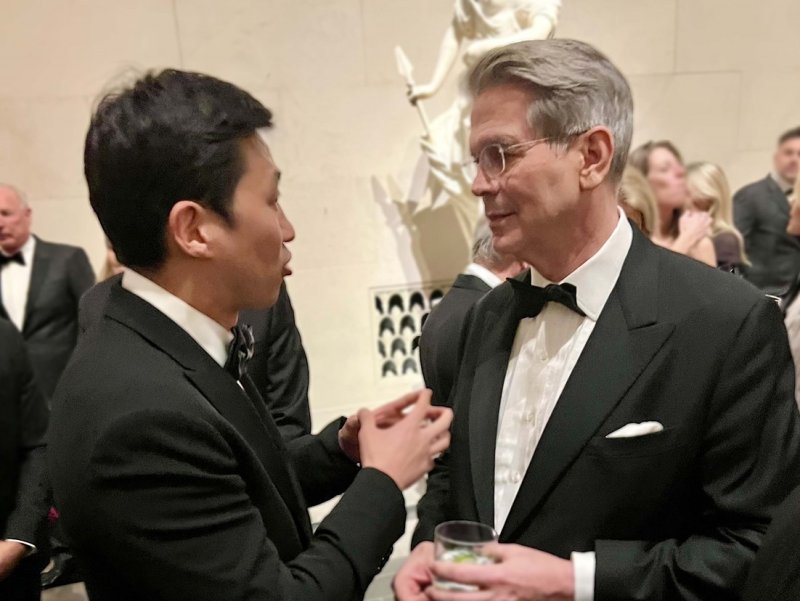
The sharpest threat is Section 301 of the Trade Act of 1974, which is now squarely targeting Korea’s policy sovereignty. Major U.S. investors in Coupang, Inc. have recently petitioned the U.S. government, arguing that Korea’s proposed Online Platform Act and related regulations amount to discrimination against American companies. On this basis, a Section 301 investigation is now being formally discussed.
Section 301 of the Trade Act of 1974 is a powerful tool that allows the United States to impose retaliatory tariffs when it deems another country’s policies to be unreasonable. Washington is moving to use this as a pretext to label Korea’s independent digital regulations, fair-competition rules, and consumer-protection policies as discrimination against U.S. firms. This is being read as a signal that even Korea’s legislative and judicial actions are to be brought under U.S. trade pressure.
In the end, tariffs are being wielded as a tool to neutralize Korea’s digital sovereignty, and critics argue that the Republic of Korea-United States Alliance (ROK-US Alliance) is being stripped of its “blood alliance” veneer and forcibly transformed into a purely transactional partnership measured only in numbers. Jee-Hyeong Park, a professor at the Department of Economics, Seoul National University, explained, "Using tariffs to pressure another country’s legislation and policy choices is a signal that the alliance is being treated not as a community bound by shared norms, but as a relationship to be bargained over."
[email protected] Kim Kyung-min Reporter