"South Korea's gold holdings among world's lowest"... Why has the BOK stayed on the sidelines for 13 years as gold prices soar?
- Input
- 2026-01-27 13:51:42
- Updated
- 2026-01-27 13:51:42
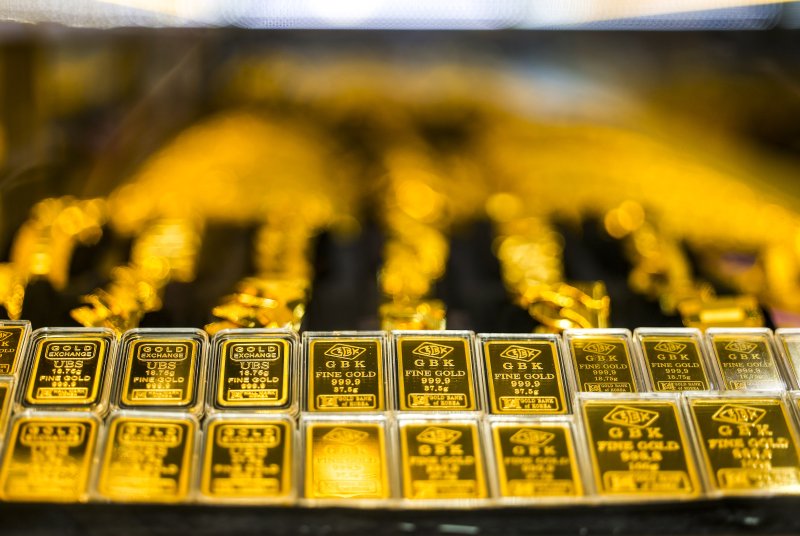
[The Financial News] As international gold prices continue to hit fresh record highs day after day, the Bank of Korea (BOK) has seen its ranking in terms of gold holdings slip from 38th to 39th in the world over the past year.
BOK ranks 39th among central banks in gold holdings
According to a World Gold Council report released on the 27th, the Bank of Korea (BOK) held 104.4 tons of gold as of the end of last year, placing it 39th among the world’s central banks. When the International Monetary Fund (IMF, 3rd) and the European Central Bank (ECB, 14th) are included, its ranking falls further to 41st.
Gold accounted for only 3.2% of South Korea’s total foreign exchange reserves, putting the country near the bottom globally, behind Hong Kong (0.1%) and Colombia (1.0%), among others.
This stands in stark contrast to the overall size of South Korea’s foreign reserves, which amounted to 430.7 billion dollars as of the end of November last year, the ninth-largest in the world.
The BOK has not made any additional gold purchases since 2013.
As a result, the BOK’s ranking in gold holdings has steadily declined, from 32nd in the world at the end of 2013 to 33rd at the end of 2018, 34th at the end of 2021, 36th at the end of 2022, 38th at the end of 2024, and 39th at the end of 2025.
Looking only at last year, Poland purchased the largest amount of gold among central banks, adding 95.1 tons. It was followed by Kazakhstan with 49.0 tons and Brazil with 42.8 tons.
Central banks' 'gold rush' behind price surge
This "gold rush" by central banks is often cited as one of the factors driving gold prices higher.
The international spot price of gold climbed above 5,100 dollars per ounce during intraday trading the previous day, setting a new all-time high. It jumped 65% last year after rising 27% in 2024, and the rally has continued this year.
However, the BOK continues to take a cautious stance on further gold purchases, pointing out that gold is less liquid and more volatile than assets such as bonds or stocks.
It also downplays the significance of other central banks’ gold buying, arguing that many are motivated by political considerations to reduce reliance on the U.S. dollar or are concentrated in regions where demand for safe assets is high due to nearby conflicts.
As of the end of last year, the United States of America (USA) held the largest gold reserves at 8,133.5 tons, followed by Germany (3,350.3 tons), Italy (2,451.9 tons), France (2,437.0 tons), and Russia (2,326.5 tons).
[email protected] Moon Young-jin Reporter