Advance notice strengthened for YouTube traffic route changes...DPK lawmaker Cho In-cheol proposes ‘Network Stabilization Act’
- Input
- 2026-01-27 08:45:22
- Updated
- 2026-01-27 08:45:22
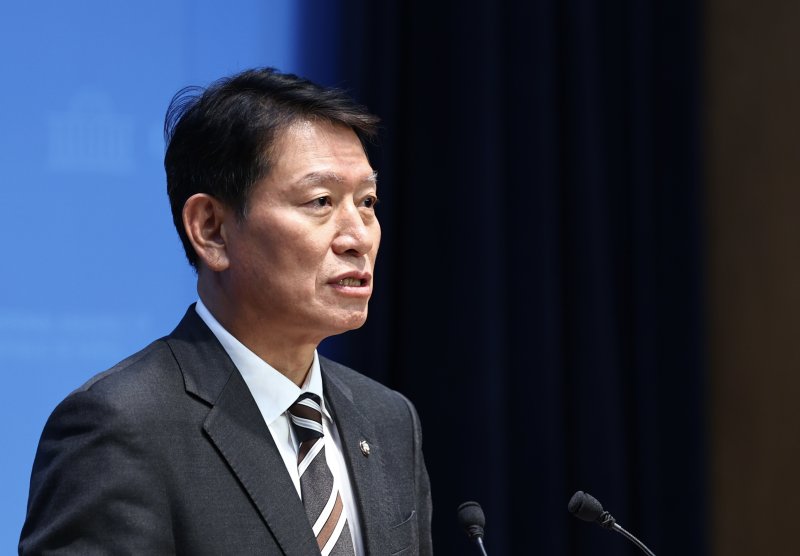
On the 27th, Cho In-cheol, a member of the Science, ICT, Broadcasting, and Communications Committee of the National Assembly from the Democratic Party of Korea (DPK), announced that he had introduced a bill to partially amend the Telecommunications Business Act. The bill would legally guarantee sufficient lead time for relevant telecommunications carriers to respond when large value-added telecommunications providers take actions that significantly affect domestic telecommunications services.
The amendment was drafted out of concern that, amid surging data traffic driven by the spread of artificial intelligence (AI) and digital transformation, unilateral actions by major value-added telecommunications providers could have an increasingly serious impact on the stability of domestic telecommunications services and on service quality for users.
Under current law, value-added telecommunications providers above a certain size are required to give prior notice when they take actions such as changing traffic routes that may significantly affect telecommunications services. However, because the timing and procedures for such notice are not clearly defined, domestic backbone telecommunications carriers (ISPs) and others have been criticized for not having enough practical time to prepare necessary measures such as network expansion or technical adjustments to protect users.
In 2017, for example, Facebook changed its traffic transmission routes without prior notice, overloading the submarine cable between Hong Kong and the Republic of Korea and causing large-scale access delays for domestic users. The case is widely cited as a clear example of how unilateral decisions by major value-added service providers can threaten the stability of the domestic telecommunications ecosystem.
While the burden from deteriorating service quality falls mainly on domestic network operators and users, the value-added telecommunications providers that make such decisions often do not bear substantial responsibility for the consequences.
This structural imbalance has also been pointed out as a key institutional limitation.
To close this regulatory gap and better protect domestic users, the amendment proposed by Cho In-cheol would require large value-added telecommunications providers to notify the Minister of Science and ICT and the relevant telecommunications carriers of the details and reasons for any action that could significantly affect telecommunications services at least 30 days in advance. It also specifies that, when necessary, the minister may request additional measures to ensure service stability. The core aim is to give all parties sufficient time to prepare in advance and establish risk-mitigation measures.
If the amendment passes, operators will be able to prepare in advance for unilateral traffic route changes, which is expected to enhance the stability of telecommunications services. It is also projected to reduce the likelihood that large value-added telecommunications providers will use changes in service quality as a bargaining tool, thereby contributing to a fairer environment for network-use agreements.
Once enacted, the amendment is expected to allow prior preparation for unilateral traffic route changes by major value-added telecommunications providers, such as in the past Facebook case, thereby further improving the stability of telecommunications services. In addition, by reducing the possibility that large providers such as YouTube and Netflix will use service quality changes as a negotiation tactic, it is expected to help create a more predictable and fair environment for network-use contracts among stakeholders in the telecommunications sector.
Cho In-cheol stated, "Decisions such as traffic route changes by major value-added telecommunications providers are directly linked to the stability of domestic networks and the quality of communications services available to the public," adding, "We must go beyond simple prior notification and, through legislation, guarantee enough time to respond to risks in a meaningful way so that we can establish at least a minimum safety mechanism for user protection."
He continued, "This bill is not intended to protect any particular company, but to ensure that, in a reality where the influence of major value-added telecommunications providers such as YouTube and Netflix has grown, the damage from network instability is not shifted onto users," and added, "It will help preemptively prevent unexpected large-scale service disruptions."
[email protected] Jang Min-kwon Reporter