"Never Wear a Seat Belt Over a Thick Puffer Jacket": Expert Issues Chilling Warning [Health Talk]
- Input
- 2026-01-27 06:22:56
- Updated
- 2026-01-27 06:22:56
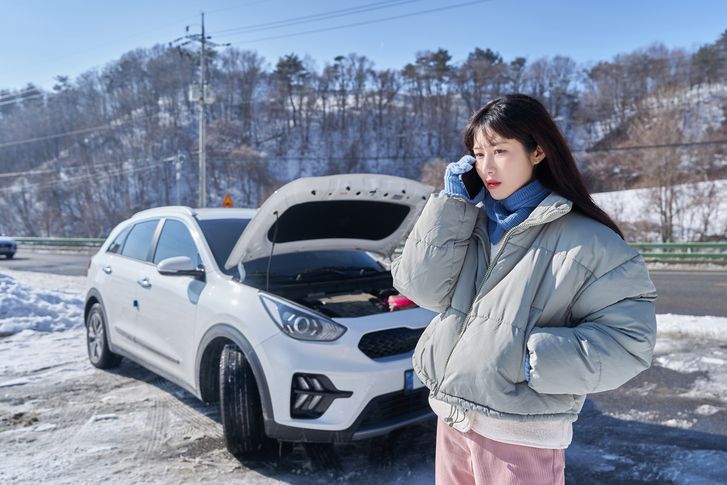
[The Financial News] A warning has been issued that wearing a seat belt while sitting in a car with a thick winter coat on can significantly increase the risk of injury or death in the event of a crash.
According to Health Chosun on the 27th, Allgemeiner Deutscher Automobil-Club (ADAC) recently conducted a crash test in which a car carrying adult and child dummies dressed in winter clothing was driven into a barrier at about 16 km/h.
The test showed that the thick clothing pushed the seat belt upward onto the abdomen, where it strongly compressed the internal organs.
The research team stated, "In real-world crashes, this can translate into a higher risk of abdominal injuries," adding, "The bulk of thick clothing makes the belt looser, which reduces posture control during a collision and increases the likelihood of injury."
Seat belts are designed to hold the body firmly in place at the moment of impact and distribute crash forces. However, when someone wears a thick puffer jacket or heavy winter coat, a gap forms between the belt and the body, which can greatly reduce the belt’s protective performance.
The team explained, "If a crash occurs, the belt first spends time compressing the clothing, and during that time the occupant’s body moves forward more than it should, which raises the risk of serious injuries such as damage to abdominal organs, spinal injuries, and head trauma."
Reduced belt contact lowers protective effect
Overseas safety agencies are also warning against thick winter clothing in vehicles. The American Automobile Association (AAA), the National Highway Traffic Safety Administration (NHTSA), and the American Academy of Pediatrics (AAP) have all noted that wearing a seat belt or using a car seat over a bulky coat can reduce belt contact with the body and weaken its protective effect.
They point out that for children in particular, the risk of being thrown out of the seat or car seat at the moment of impact can increase.
Experts recommend that in winter, passengers should remove their coats and fasten the seat belt first. If extra warmth is needed, they suggest placing a blanket over the lap or draping the coat over the belt.
A seat belt is a lifeline that protects you in a crash. It prevents you from being thrown from the vehicle and thereby reduces the risk of serious injury. A study found that in 2004 in the United States, seat belt use saved 15,200 lives in traffic accidents and reduced the social cost of crashes by 50 billion dollars.
Seat belts must be worn correctly
However, if a seat belt is worn incorrectly, it can actually cause severe injuries.
It is important to make a habit of checking that the belt is fully untwisted. If the belt is twisted, it must be straightened out. When the belt is twisted, its width narrows and it cannot absorb impact properly, which can lead to major injuries such as fractures or internal organ rupture.
The shoulder belt should run across the middle of the shoulder, not the neck, and the lap belt should sit low across the hips, not over the stomach. If the belt feels tight, you can gently pull it out a little after fastening to adjust it, but if it is loose enough that one or two hands can easily fit between the belt and the body, it may not function properly in a crash.
In particular, without a seat belt, an airbag itself can become a deadly weapon. If an airbag deploys while the occupant is unbelted, it can cause fatal injuries to the neck and face.
moon@fnnews.com Moon Young-jin Reporter