Dollar Sinks to Four-Month Low on Yen Carry Trade Unwind Fears as Gold Tops $5,100
- Input
- 2026-01-27 02:55:08
- Updated
- 2026-01-27 02:55:08
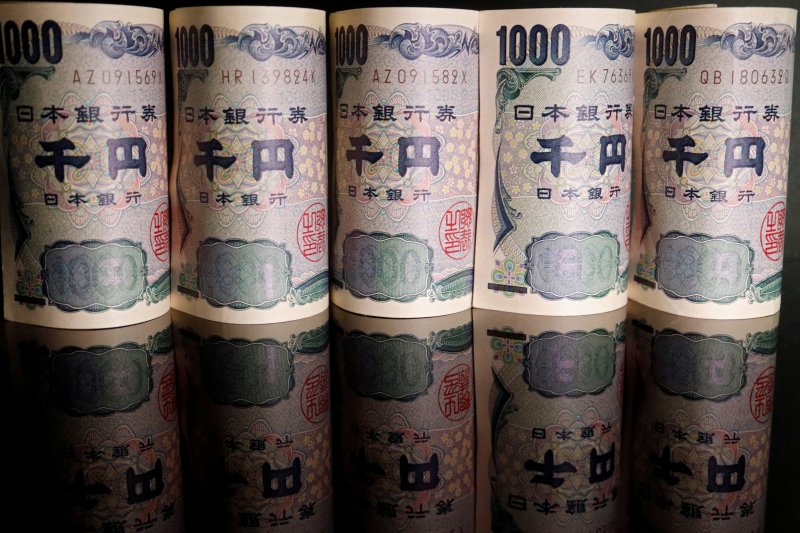
The USD on the 26th (local time) plunged to its lowest level in four months. Gold prices, meanwhile, broke above $5,100 per ounce for the first time on record.
On expectations that the United States and Japan will act together to prevent a further decline in the value of the yen, the Japanese yen jumped while the USD tumbled.
Against this backdrop, fears are mounting that the so-called "yen carry trade"—borrowing cheap yen and investing in markets such as the United States—may now be in the process of being unwound.
Dollar at four-month low
According to the Financial Times (FT) and other foreign media, the yen jumped 1.1% against the dollar on the day, soaring to 154 yen per dollar.
The yen’s rally, which began after reports on the 23rd that the Federal Reserve Bank of New York (FRBNY) had issued a strong warning to markets about yen strength through a so-called "rate check," accelerated further.
A rate check is simply when a central bank calls commercial banks to ask for current exchange rates, but it is regarded as a powerful signal that authorities may step into the market at any time to buy or sell foreign currency and steer exchange rates.
Beyond the FRBNY’s rate check, several other factors combined to drive the USD sharply lower.
Concerns about another federal government shutdown were reignited after a hardline operation by U.S. Immigration and Customs Enforcement (ICE) in Minneapolis left two U.S. citizens dead. Geopolitical jitters stemming from the Trump administration’s claim over Greenland’s sovereignty also weighed on the dollar.
First U.S.–Japan joint move in 15 years
The yen’s rise has been gaining speed amid speculation that the United States and Japan may jointly intervene in the foreign exchange market for the first time since the Great East Japan Earthquake in 2011.
Evan Brown, head of multi-asset strategy at UBS Asset Management, said, "The message this time is that the U.S. administration does not want a meaningfully stronger dollar," adding, "If that happens, the message is that they will cap the dollar’s upside and turn it toward a decline."
Brown added that as institutional investors are expected to step up hedging against dollar volatility, the confirmation of this willingness to intervene in markets is intensifying downward pressure on the USD.
Gold breaks above $5,100
Gold prices jumped more than 2% on the day, surpassing $5,100 per ounce for the first time in history. According to Consumer News and Business Channel (CNBC), spot gold surged 2.4% from the previous session to as high as $5,102 per ounce. It later gave back part of those gains to trade at $5,086 per ounce. February gold futures also climbed 2.2% to $5,089 per ounce.
Silver, often dubbed "the poor man’s gold," also soared, with spot prices jumping 4.9% to $107.9 per ounce. March silver futures skyrocketed 13.5% to $115.
"Prepare for the yen carry unwind"
Michael Burry, the investor who accurately predicted the U.S. subprime mortgage crisis that sowed the seeds of the 2008 global financial crisis and gained wealth and fame as a result, urged investors on the night of the 25th to prepare for the unwinding of the yen carry trade.
Burry, the real-life protagonist of the film "The Big Short," told his paid subscribers that the yen carry unwind "should have happened a long time ago" and that it would not be surprising if it occurred at any moment.
On his paid Substack channel "Cassandra Unchained," Burry said that market intervention by the FRBNY and verbal intervention by Japanese authorities would be the trigger for the yen carry trade to be unwound.
Burry warned that once this money starts to flow out, the U.S. market could turn into a complete bloodbath and advised investors to brace for such a scenario.
The yen carry trade refers to borrowing yen at low interest rates in Japan and investing the funds in markets such as the United States, where interest rates are relatively higher.
The exact size of these funds is unknown, but estimates suggest it is substantial.
The most aggressive estimate comes from Deutsche Bank AG, which puts the figure at as much as $20 trillion. Morgan Stanley, by contrast, argues that funds have already been pulling out for some time and estimates the remaining ununwound exposure at about $500 billion.
Burry said that between $200 billion and $300 billion of this money is highly sensitive to interest rate changes, warning that if these funds rush for the exit simultaneously over a short period, a wave of carnage will sweep through the New York financial market.
Given that even a 1% move in the yen can shift tens of trillions of won in capital under the yen carry trade, some fear that U.S.–Japan coordination could become the starting gun for a fundamental reshaping of the global financial system.
[email protected] Song Kyung-jae Reporter