"Horrific Pain" Man in His 60s Suffers Shoulder Bone Destruction [Health Talk]
- Input
- 2026-01-27 06:00:00
- Updated
- 2026-01-27 06:00:00
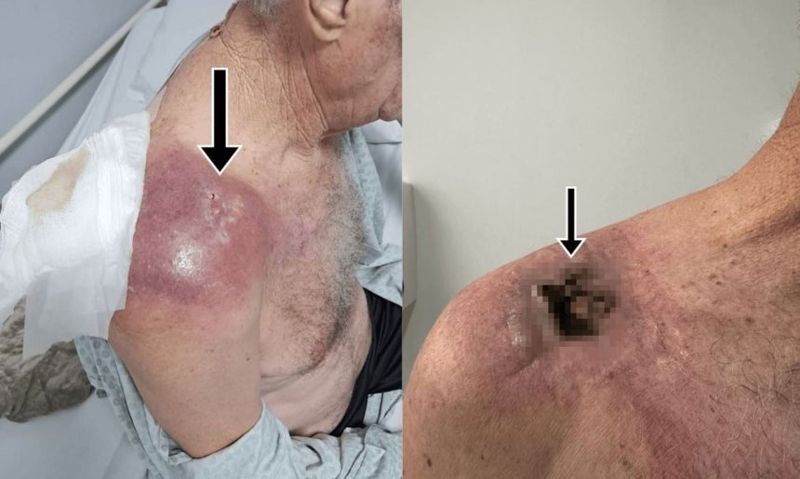
According to The Financial News, a man in his 60s who received ozone therapy to relieve shoulder pain developed a severe infectious complication, which has now been reported in the medical literature. His condition deteriorated rapidly after the treatment, and he ultimately required emergency surgery.
Orthopedic specialists at Mackenzie Evangelical University Hospital in Curitiba, Brazil, reported that a 65-year-old man, who had been managing hypertension and Human Immunodeficiency Virus (HIV) with medication, visited a physical therapist for right shoulder pain that had persisted for two years. He underwent just one session of ozone therapy, but about 15 days later his pain worsened significantly, prompting a visit to the emergency room.
Septic arthritis: bacteria invading the joint
When he arrived at the hospital, his shoulder was red and swollen, and he could barely move his arm. Ultrasound imaging revealed a 60 mL abscess, and X-rays showed signs of bone resorption and degenerative changes in the clavicle and scapula. He was diagnosed not with a simple side effect, but with septic arthritis, a condition in which bacteria invade the joint space. If not treated promptly, this medical emergency can cause bone destruction and permanent disability. The medical team immediately performed debridement to remove the abscess and necrotic tissue, and culture tests identified Staphylococcus aureus.
The physicians concluded that bacteria had likely been introduced deep into the joint through the needle or other instruments used during ozone therapy. They noted, "The patient's HIV was well controlled, but HIV infection itself is known to be a risk factor for infectious complications," and added, "Although he was not in a state of severe immunosuppression, we cannot completely rule out the possibility that his susceptibility to infection was somewhat increased."
The patient recovered after four weeks of antibiotic treatment and six months of follow-up. Some degenerative joint changes remained, but his pain disappeared, and his shoulder range of motion returned to normal, allowing him to resume daily activities.
Concerns over side effects such as cell damage and death
Ozone therapy uses ozone gas in an attempt to relieve pain and promote wound healing, but its mechanism of action and safety have not been clearly established, and controversy continues. The Federal Council of Medicine of Brazil has stated that there is insufficient evidence to support the effectiveness of ozone therapy and warned that it may cause adverse effects such as cell damage and cell death. In 2019, the U.S. Food and Drug Administration (FDA) also issued a warning against the use of ozone-based treatments, classifying ozone as a toxic gas whose safety and efficacy have not been proven.
The medical team stated, "We observed a temporal association between ozone therapy and the onset of symptoms, but this single case is not enough to establish a causal relationship." They continued, "However, this case shows that inappropriate use of ozone therapy can lead to severe and difficult-to-treat complications. Given that ozone therapy has limited scientific backing and raises regulatory concerns, it should be approached with extreme caution."
The case report was published on the 20th in the journal Cureus.
hsg@fnnews.com Han Seung-gon Reporter