[Editorial] With Two New Reactors Approved, Stop Throwing Tantrums Over Phasing Out Nuclear Power
- Input
- 2026-01-26 19:36:56
- Updated
- 2026-01-26 19:36:56
Recent nationwide opinion polls commissioned by the government from two polling agencies show that ordinary citizens are strongly voicing the need for nuclear power. More than 80% said nuclear power is necessary. Over 60% responded that the new nuclear projects included in the 11th Basic Plan for Electricity Supply and Demand should go ahead. President Lee Jae Myung of South Korea instructed at last week’s State Council meeting that the decision on nuclear construction should be made after fully reflecting public opinion. This is a clear departure from his stance last year, when he expressed a negative view by saying it takes at least 15 years to build a nuclear plant.
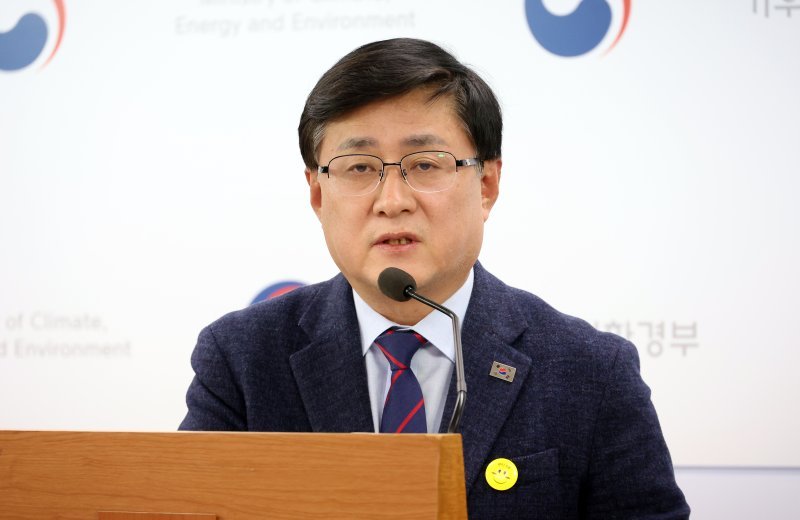
The same goes for Kim Sung-hwan. He had previously argued that phasing out nuclear power was an irreversible global trend and emphasized renewable energy, but his tone has changed this year. He even remarked that South Korea’s short east–west span means there are far fewer hours of sunlight available for solar power generation. He has not hesitated to criticize the Moon Jae-in administration for refusing to build nuclear plants at home while trying to export them abroad, calling that stance untenable.
The government’s U-turn on nuclear power likely stems from the judgment that, in the era of artificial intelligence (AI), it is impossible to meet surging electricity demand without nuclear energy. Ordinary citizens also acutely feel the need for nuclear power in the AI era, and the government could not simply close its eyes to reality because of pressure from its political base. It is no exaggeration to say that the success or failure of AI hinges on electricity. Only with a stable power supply system can AI devices run and Research and Development (R&D) move forward. A data center, a "power-hungry monster," can grind to a halt if it relies solely on intermittent renewable energy. When it comes to combining low cost, stable supply, and carbon neutrality, no energy source matches nuclear power.
It is in this same context that Denmark, a leading country in renewable energy, has recently halted its nuclear phase-out and begun research into nuclear technology. Denmark had maintained a ban on nuclear power generation for 40 years. It produced about 90% of its electricity from renewables such as wind and solar. However, it suffered severe energy supply instability due to the Russo-Ukrainian War and shifted course as the world entered a major AI-driven energy transition. Globally, we have already entered a nuclear renaissance period. The United States has announced large-scale plans to expand nuclear capacity, and Japan, which experienced the Fukushima Daiichi nuclear disaster, is also increasing nuclear plant operations.
We have wasted time on unnecessary public debates. Precisely because of that delay, we must now move faster and accelerate the development of next-generation technologies. If site selection for the two new reactors begins now, they are expected to receive construction permits in the early 2030s and be completed around 2038. Many experts also argue that two new reactors will not be enough to meet AI-driven electricity demand.
Moreover, after 2040 we will need an energy source to replace coal-fired power generation. There is a need to build more nuclear plants. President Lee Jae-myung has said that nuclear power is not an ideological issue. He is absolutely right. The government must push ahead from a pragmatic and economic standpoint.