Bitten by a venomous snake and nearly facing necrosis: how to safely stop the spread of venom [Health Talk]
- Input
- 2026-01-27 04:20:00
- Updated
- 2026-01-27 04:20:00
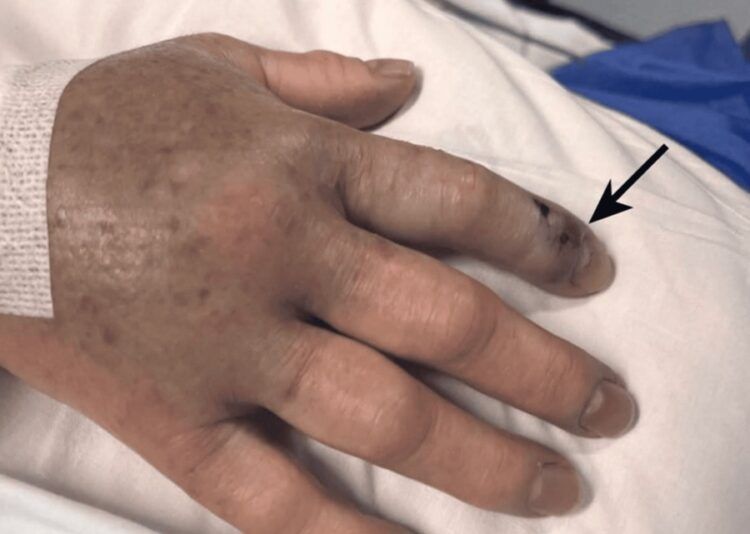
[The Financial News] A case has been reported of a woman in her 50s whose hand and arm became severely swollen and deteriorated to the brink of necrosis after a venomous snake bite.
According to a paper released on the 23rd by the General Hospital Center in the Douro Vouga region of Portugal, a 57-year-old woman came to the emergency room after being bitten by a venomous snake. On arrival, she was suffering from nausea and vomiting, and her blood pressure had dropped to 34 mmHg.
Hemorrhagic blisters from the snake’s fangs observed
On the index finger of her right hand, doctors observed hemorrhagic blisters caused by the snake’s fangs, and the entire hand was swollen. The swelling then spread beyond the hand to the forearm and shoulder. The medical team explained, "The bite site became discolored and showed early necrotic changes."
Rapidly progressing swelling from the hand to the forearm is a typical pattern triggered by proteolytic enzymes and inflammatory mediators contained in snake venom. The medical team added, "Low blood pressure is also a well-known symptom caused by snake venom."
The doctors administered antivenom and transferred the woman to the intensive care unit for treatment. Although various laboratory values improved, they gave additional antivenom when the swelling in her limbs worsened. As persistent fever raised concerns about secondary infection, they started antibiotics and provided supportive care, including elevating the swollen arms and legs above heart level.
"It can lead to serious complications and requires caution"
As treatment progressed, her fever subsided and inflammatory markers decreased, and she gradually recovered. On the 10th day of hospitalization, she was transferred to a home hospitalization unit, and after a further 14 days of antibiotic therapy, she was declared fully recovered.
The medical team stressed, "Snakebites are rare, but when systemic toxicity develops, they can lead to life-threatening complications and must be taken seriously."
Globally, the Republic of Korea is considered relatively safe from venomous snakes. Only three venomous species inhabit the country: the Mamushi, the Amur mamushi, and the Ussuri mamushi. They carry little of the highly lethal neurotoxins that cause paralysis or respiratory arrest, and instead mainly induce bleeding, tissue necrosis, and coagulation disorders. As a result, the mortality rate is low, but severe swelling and necrosis can occur, and recovery often takes a long time.
A key feature of venomous snakes is the shape of the head. Their heads are triangular, broad, and flat, with a clearly defined neck, unlike non-venomous snakes. Ordinary snakes have round pupils, whereas Mamushi species have vertically elongated, cat-like pupils.
The more the muscles move, the faster the venom spreads through the body
If you are bitten by a venomous snake, you must minimize movement. The more the muscles move, the faster the venom spreads throughout the body. People nearby should prevent the victim from walking and transport them using a stretcher or vehicle. If no tools are available, the victim should be carried on someone’s back.
The bitten area should be kept below heart level, and tight items such as rings, watches, and shoes must be removed. As the venom spreads, swelling can progress rapidly, and constricting objects can block blood flow, increasing the risk of necrosis or even amputation. Using tourniquets or tying the limb with cords, as well as trying to suck out the venom by mouth, should be strictly avoided. Completely cutting off blood flow can cause tissue death, and once the constriction is released, the accumulated venom may suddenly flood the entire body. A rescuer who sucks the wound can also be poisoned. Above all, the victim must be transported to a hospital as quickly as possible.
hsg@fnnews.com Han Seung-gon Reporter