"Homeowners don't care what the president says": Gangnam landlords brace for a full-on fight
- Input
- 2026-01-27 06:00:00
- Updated
- 2026-01-27 06:00:00
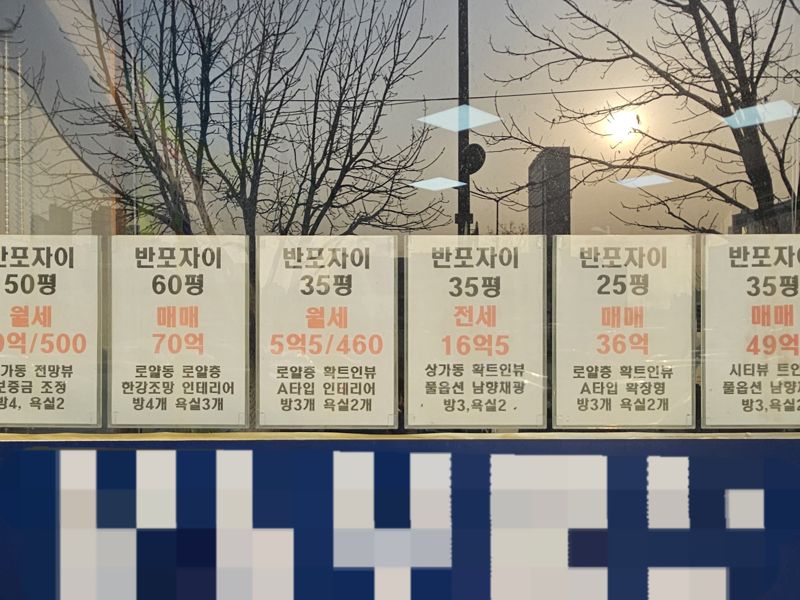
President Lee Jae-myung of South Korea effectively declared an all-out war on the housing market, saying, "No market can win against the government." Even so, the mood in Seoul and the broader Seoul metropolitan area is that people were already prepared for this. Landlords who went through heavy capital gains tax on multiple home owners under the Roh Moo-hyun and Moon Jae-in administrations have learned that their capital gains can far exceed the tax burden. Many now say they fully expected the government to push ahead with tougher capital gains taxes.■ In Seoul, it's a waiting game... In the southern Seoul area, it's "holding out and gifting"A survey by The Financial News on the 26th of key districts in Seoul and the Seoul metropolitan area found that a wait-and-see mood largely prevails. At Olympic Park Foreon in Gangdong District, Seoul, the country's largest apartment complex with 12,032 units, only one distress sale by a multiple home owner appeared over the past weekend. A real estate agent inside the complex said, "One 109m2 unit owned by a cooperative member and currently leased out has been listed for 3.4 billion won." Considering that the same size unit recently set a record at 3.6 billion won and asking prices have since climbed to 3.7 billion won, the listing is about 300 million won below market. A nearby agent added, "Some cooperative members who received 1+1 allocation are inquiring about selling, but titles have not been issued yet, and there are conditions such as a three-year resale ban and staggered sales, so transactions will not be easy."
In the so-called Mayongseong area — Mapo District, Yongsan, and Seongdong District — the dominant mood is to watch how the market reacts. In Ahyeon-dong, Mapo District, agents said, "The possibility that the grace period for easing heavy capital gains tax would not be extended was already priced in," and, "This is not triggering a rush to sell." There are a few cases where landlords are offering moving allowances to tenants to negotiate early move-outs, but experts say it is hard to see this as a trend spreading across the market.
A real estate agent in Oksu-dong, Seongdong District, commented, "Some listings may come out around the Lunar New Year holidays, but there are more buyers waiting than properties for sale, so it will be hard for prices to adjust by more than 100 million won." In the Yongsan area as well, consultations continue with owners considering selling before May 9, but the actual increase in listings remains limited.
The southern Seoul area is even quieter. A representative of a real estate office near Raemian One Bailey in Banpo-dong, Seocho District, said, "This is an area where prices tend to rise whenever a new policy is announced, so while there is talk of gifting homes to family members, there are absolutely no distress sales." Another agent likewise drew a line, saying, "Homeowners don't really care what the president said."
An industry insider noted, "Wealthy property owners either already restructured their holdings during the Moon Jae-in administration or have set themselves up to keep two or three homes for the long term," predicting that the increase in listings in the southern Seoul area will remain limited.■ Outer Seoul and the wider metropolitan area are "watching the situation"Outer districts of Seoul and key areas in the Seoul metropolitan area, which had recently been on an upswing due to a spillover effect from the October 15 Housing Market Stabilization Measures, are also expected to see only limited direct impact from the heavy capital gains tax on multiple home owners. The Nodogang area — a portmanteau of Nowon District, Dobong District, and Gangbuk District in Seoul — is currently in a phase of watching how the market responds.
A real estate agent in Chang-dong, Dobong District, said, "There has been strong demand, so most properties that needed to be sold by the end of April have already changed hands," adding, "The listings now coming out are mostly from single-home owners, so they are not very meaningful in terms of market impact." An agent in Sanggye-dong, Nowon District, also expressed concern, saying, "The market in Nowon is only just starting to recover, so if distress sales appear in other areas, we could be affected."
The mood is similar on the outskirts of the Seoul metropolitan area. In Suji District, Yongin, Gyeonggi Province, which has ranked first nationwide in apartment price growth for six consecutive weeks, agents report, "We are getting almost no consultations from multiple home owners saying they are thinking of selling because of the tax." One agent explained, "Because this is a Land Transaction Permit Zone under the Land Transaction Permit System, only properties whose jeonse leases are expiring can be traded, so the chances of distress sales emerging are low."
In Gwacheon City, there have been some inquiries about selling, but price cuts are mostly in the range of 30 million to 100 million won. In Cheolsan-dong, Gwangmyeong, many agents said, "There have been a few inquiries about cutting prices by 100 to 200 million won, but not enough to shake overall home values." One agent pointed out, "The structure of the market is such that even those who want to sell often cannot," adding, "Regulations may actually deepen the shortage of listings and end up pushing prices even higher."
[email protected] Choi Ga-young, Lee Jong-bae, Jang In-seo, Jeon Min-kyung, Kwon Jun-ho, Choi Ah-young Reporter