KFTC blocks merger of Lotte Rental and SK Rent-a-Car, citing serious concerns over restricted competition
- Input
- 2026-01-26 12:00:00
- Updated
- 2026-01-26 12:00:00
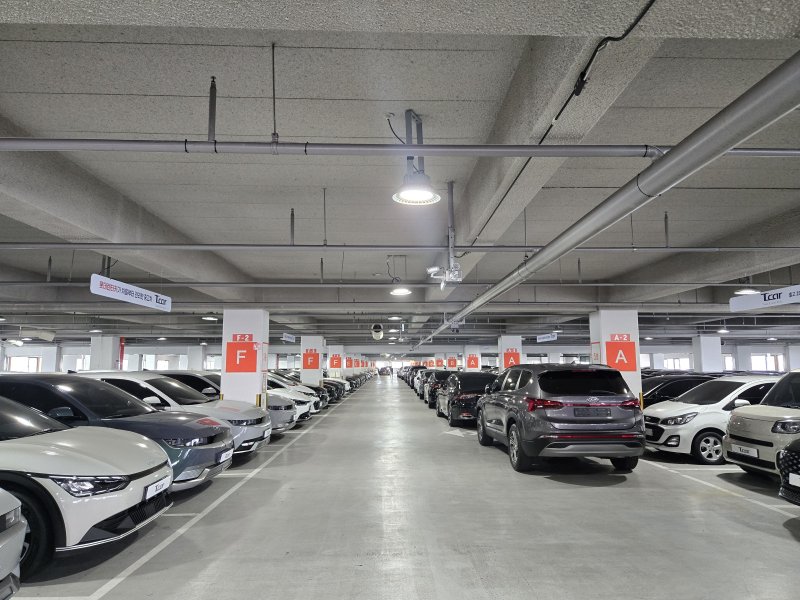
The Korea Fair Trade Commission (KFTC) has rejected a proposed business combination between Lotte Rental and SK Rent-a-Car, the No. 1 and No. 2 players in the domestic rental car market. The authority judged that the deal would significantly deepen market dominance and create a high risk of price hikes and consumer harm.
On the 26th, the KFTC announced that it had decided to prohibit the proposed merger in which private equity fund manager Affinity Equity Partners would acquire a 63.5% stake in Lotte Rental, stating that there was "a high likelihood of substantially restricting competition."
Affinity Equity Partners acquired SK Rent-a-Car in August 2024 and then moved to acquire Lotte Rental in March 2025. If the transaction had gone through, both the No. 1 and No. 2 companies in Korea’s rental car market would have come under Affinity Equity Partners’ control. This is the first time a private equity fund has sought merger review in order to own the top two firms in the same industry at the same time.
The KFTC analyzed the potential restriction of competition by dividing the market into short-term rental cars, with contracts of less than one year, and long-term rental cars, with contracts of one year or more.
In the short-term rental car market, Lotte Rental and SK Rent-a-Car are the No. 1 and No. 2 players, respectively, with a combined market share as of the end of last year of 29.3% on the mainland and 21.3% in Jeju. Most of the remaining companies are small and medium-sized operators with shares of only 1–3%, meaning the two firms have effectively formed a direct duopoly.
The two companies are also seen as having overwhelming advantages over smaller rivals in areas such as financing capacity, brand recognition, nationwide sales networks, IT infrastructure, and capabilities in vehicle maintenance and used car sales. In Jeju, where a rental car quota system limits new entry and fleet expansion, the KFTC concluded that the weakening of competition from the merger would be even more pronounced.
The situation is similar in the long-term rental car market. Lotte Rental and SK Rent-a-Car have a combined share of 38.3%—21.8% and 16.5% respectively—approaching 40%. Major competing finance companies face regulatory limits on the proportion of their core business, which constrains expansion, and they also lag in key competitive factors such as vehicle maintenance and used car disposal. This, the KFTC found, gives the two firms a clear structural advantage.
Given these conditions, the KFTC opted for a structural remedy by blocking the merger outright, rather than granting conditional approval. It determined that the restriction of competition would be substantial, that institutional entry barriers make the emergence of new competitors unlikely, and that, given the nature of private equity funds, the strong incentive to exit investments in the short term would undermine the effectiveness of any behavioral remedies.
Lee Byung-geon, Director General of the Merger Review Bureau, explained, "If two large rental car companies that are in direct competition were to merge, there is a high likelihood that effective competition would virtually disappear," adding, "We decided on the structural measure of prohibiting the merger because we judged that it would be difficult for new competitors to emerge in the short term and discipline the market."
The KFTC stated that it will continue to closely monitor anti-competitive mergers and acquisitions and actively work to prevent the deepening of monopolies and the resulting harm to consumers and smaller competitors.
[email protected] Kim Chan-mi Reporter