"With everything blocked, what are tenants supposed to do?"... 1,800 Jeonse Listings Vanish in Seoul in Just One Month
- Input
- 2026-01-26 08:17:26
- Updated
- 2026-01-26 08:17:26
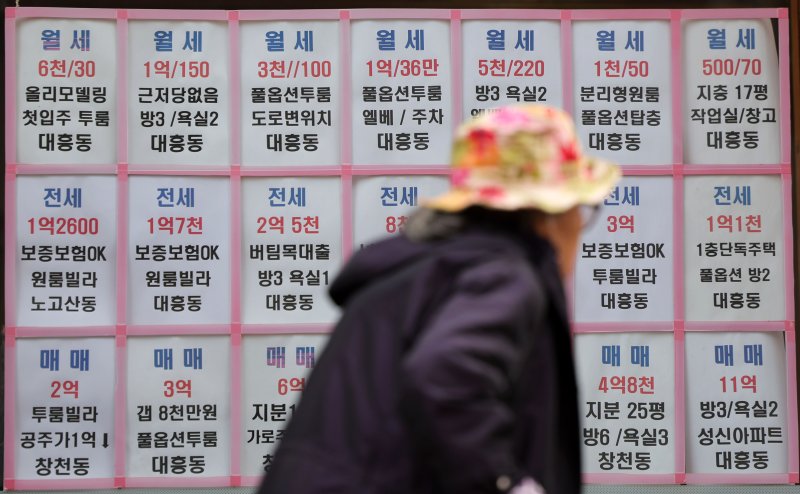
[Financial News] Jeonse listings are rapidly disappearing from the Seoul real estate market. As loan regulations weaken households’ ability to buy homes, concerns are mounting that tenants are facing worsening housing difficulties. In addition, the scheduled resumption of heavier capital gains tax on multiple-home owners from May 10 is expected to further lock up supply and increase upward pressure on jeonse prices.
According to real estate big data firm Asil on the 26th, there were 22,179 apartment jeonse listings in Seoul as of the 24th. This is a decrease of 1,769 units, or 7.4%, from the previous month’s 23,948 listings, and more than a 27% plunge compared with the 30,495 listings recorded a year earlier.
Industry officials say the October 15 Real Estate Policy strengthened owner-occupation requirements and effectively blocked gap investment by multiple-home owners, which in turn has dampened moves to convert jeonse units into properties for sale. They also analyze that loan regulations, including tighter Loan-to-Value Ratio (LTV) rules, have made it harder for genuine homebuyers to purchase, pushing them into the jeonse market and worsening the supply-demand imbalance.
With listings in short supply, prices are on the rise. Data from the Korea Real Estate Board (KREB) show that Seoul’s apartment jeonse supply-demand index stood at 104.7 on the 19th of this month, up 0.2 points from 104.5 a week earlier. An index above the baseline of 100 indicates that demand exceeds supply, and over the same period, the Seoul apartment jeonse price index also climbed from 103.64 to 103.78.
As the jeonse crunch deepens, some say "regulations must be eased to boost supply"
The concern is that this trend is likely to continue. The volume of new apartment move-ins in Seoul this year is expected to drop by more than 30% from last year, and move-ins across the wider Seoul metropolitan area, including Gyeonggi Province and Incheon, are also projected to decline, reducing the market’s capacity to absorb jeonse demand.
Another factor behind the worsening jeonse shortage is the confirmed resumption of heavier capital gains tax from May 10. The basic capital gains tax rate currently ranges from 6% to 45%, depending on the taxable base. In Areas Subject to Adjustment, however, an additional 20 percentage points are imposed on owners of two homes and 30 percentage points on those with three or more homes. When a 10% local income tax is added, the maximum effective tax rate for a three-home owner can reach as high as 82.5%.
After the October 15 Real Estate Policy last year, all of Seoul and 12 areas in Gyeonggi Province were designated as regulated zones—either Areas Subject to Adjustment or Speculative Overheating Districts. With the heavier capital gains tax now set to resume, multiple-home owners will inevitably face a much heavier tax burden when they sell their properties.
An employee at a real estate agency in Mapo District, Seoul, said, "Multiple-home owners are highly likely to choose to hold on, taking into account the medium- to long-term appreciation of their assets." The person added, "In the process, landlords may try to cover their tax burden by raising jeonse deposits or opt for gifting properties, which could further reduce jeonse supply."
Some observers are calling for regulatory easing. Kim Hyosun, Chief Real Estate Expert Commissioner at KB Kookmin Bank, noted, "Heavier capital gains tax could bring multiple-home owners’ properties onto the market, but under the current regulatory environment, transactions may not be easy." Kim stressed, "To generate a real supply effect, it is necessary to ease loan regulations and other restrictions."
[email protected] Kim Heesun Reporter