Where did Jerome Powell’s hardened leadership under Trump’s pressure come from? [Reading America]
- Input
- 2026-01-26 07:13:52
- Updated
- 2026-01-26 07:13:52
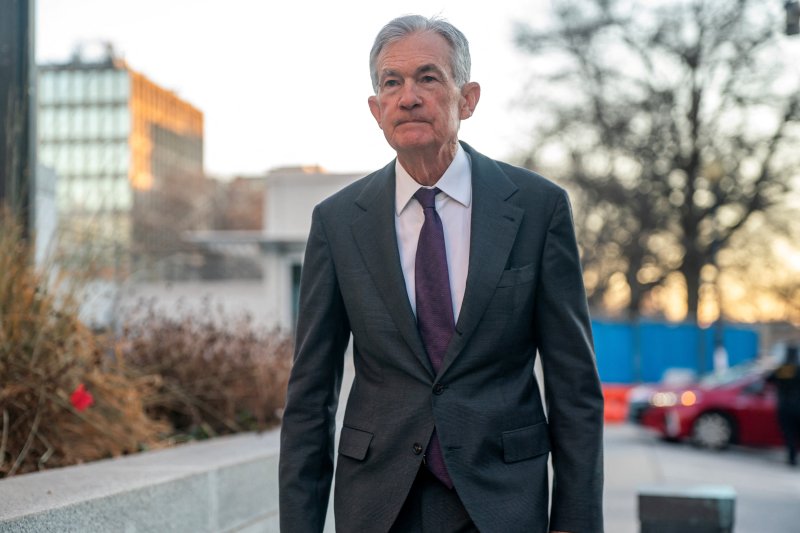
#. "When it comes to meeting with members of Congress, I will walk the halls of the Capitol and meet with lawmakers until the carpet wears thin. I think that is one of the really important things a chair can do. I want them to know that we are listening to their concerns and their views, and that we are here to explain things as clearly as we can."(Jerome Hayden Powell, chair of the Federal Reserve System (the Fed), in a 2018 radio interview)#. Summer 2024. During a congressional hearing, Republican Senator Thom Tillis turned to Powell and said:"Our office dog Gus asked me to say hello. You’ve met our office dog before, Chair Powell."Powell replied with a laugh, "Please say hello to Gus for me, and tell him I remember him as a very good dog."
"Until the carpet wears thin": Powell’s Capitol-focused leadership
Jerome Hayden Powell, chair of the Federal Reserve System (Fed), is widely seen as exercising firm, steady leadership inside the Fed. Analysts note that even as the Donald Trump administration repeatedly tried to shake the Fed and to exert influence by appointing an ally, Stephen Miran, Powell’s position and authority only became more solid. Opinions may differ over Powell’s values and policy choices. Yet assessments of Powell as a person are strikingly consistent. People who have worked with him almost uniformly describe him as "a principled yet respectful leader you can trust."
David Rubenstein, co‐founder of The Carlyle Group, where Powell worked from 1997 to 2005, offered this assessment."He does not brag about how good he is. He doesn’t try to lord it over anyone. He is a calm, likable person. He doesn’t have a Ph.D. in economics, but he has a Ph.D. in how to get along with people."Doug Rediker, former U.S. representative to the International Monetary Fund (IMF), struck a similar note. He said,"Powell has an exceptional ability to build consensus, which is a huge asset for a chair," adding, "This is a highly competitive environment, but you would be hard‐pressed to find anyone who has worked with him or been close to him who speaks ill of him."
Patrick Joseph Toomey Jr., former senator from the Commonwealth of Pennsylvania and former Republican ranking member of the United States Senate Committee on Banking, Housing, and Urban Affairs, highlighted Powell’s popularity on Capitol Hill. Toomey said,"Powell is highly respected and very popular in Congress," and added, "Even people like me, who strongly opposed his monetary policy, hold him in very high regard."
Jeremy C. Stein, who was nominated to the Fed Board alongside Powell in 2011, recalled his first impression this way: "When I sat down for the onboarding orientation and looked to my side, I thought he looked like someone from a private equity firm. His suit, his shoes, even his haircut were sharper than mine. But he shattered that stereotype almost immediately.He was not the least bit arrogant. He was curious, he communicated well with colleagues, and he had a real eagerness to learn."
No Ph.D. in economics—so why does Washington trust Powell?
Powell does not hold a doctorate in economics, nor is he the type to invoke grand theories to persuade markets. In that sense he differs from predecessors like Janet Yellen, Ben Bernanke, and Alan Greenspan, who led the central bank with a kind of "intellectual charisma." That naturally raises a question. Why has the United States vested Powell with such authority? Why does Washington, D.C., rally behind him? Why does Congress, despite frequent clashes, ultimately accept his leadership?
A look at Powell’s life offers clues. He grew up in a relatively stable environment on the East Coast. Born in 1953 in Washington, D.C., he was one of six children in a highly educated Catholic family. His mother was a statistician and mathematician, and his father was a lawyer for a steel company. Powell attended Georgetown Visitation Preparatory School, then went on to Princeton University and later Georgetown University Law Center. His hobbies have included playing the guitar and golf, and at one point he was an avid cyclist.
Powell’s first job was at the law firm Davis Polk & Wardwell. After two years as a lawyer, he left the profession and began his long association with Wall Street. The starting point of his "Wall Street–style" leadership was the investment bank Dillon, Read & Co. Dillon, Read specialized in large corporate mergers and acquisitions. Unlike big commercial banks that relied on sheer size and capital, it was a lean firm where personal networks and reputation on Wall Street mattered greatly.
Powell gained two crucial things there. One was meeting Nicholas F. Brady, who would later become Treasury secretary. The other was internalizing a culture of caution and strict confidentiality.
Catherine Austin Fitts, who served as a director at the firm when Powell worked there, recalled, "The corporate culture was extremely secretive. It felt like being part of the Hanseatic League, the guild of northern European merchants from the 1300s." The firm’s motto was "Serious business with longstanding partners." Fitts said, "They did their work quietly, and confidentiality was everything. They also placed enormous value on long‐term relationships."In that environment, Powell naturally learned how to build networks and maintain relationships in a way that was quiet yet very durable.
The 1991 Salomon scandal: how Powell learned to manage crises
Nicholas F. Brady was chairman of Dillon, Read & Co. He was appointed Treasury secretary in the Reagan administration in 1988 and continued in that role under the George H. W. Bush administration. Powell was brought into the George H. W. Bush administration as assistant secretary for domestic finance at the U.S. Department of the Treasury (Treasury Department).Brady had publicly pledged not to bring people from his former bank into government. Powell was the exception.A pivotal episode in Powell’s career unfolded in 1991.
The Treasury Department discovered that Wall Street investment bank Salomon Brothers had used shell companies to rig Treasury auctions and had illegally bought up large quantities of Treasury bills (T-bills) in an attempt to corner the market. Salomon trader Paul Mozer had pushed trades so aggressively that he controlled about 94% of the supply of certain T-bills.
When the scandal broke, Treasury Secretary Nicholas F. Brady considered stripping Salomon of its status as a primary dealer. Because primary dealers enjoy the privilege of bidding directly in Fed Treasury auctions, losing that status would have posed an existential threat to the firm.
At the center of the Treasury Department’s response was Powell, then assistant secretary for domestic finance. Salomon argued that if the firm collapsed, the shock could spread across Wall Street, and it launched an all‐out lobbying effort. Stephen Bell, who headed Salomon’s Washington office, later recalled that the Treasury official he spent countless nights on the phone with was Powell.
In the end, the Treasury Department allowed Salomon to retain its primary dealer status, and Bell identified Powell as the key figure behind that decision. With his Wall Street background, Powell understood the argument that "a Salomon collapse could trigger a chain reaction of crises," and he played a decisive role in shaping Brady’s final judgment.
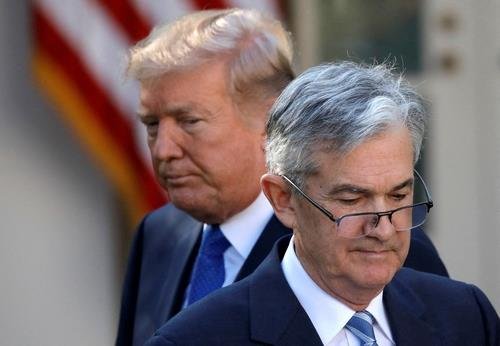
A private equity firm in Washington, not Wall Street: the Carlyle years that sharpened his deal instincts
In 1997, Powell left government and became a partner at The Carlyle Group, leveraging his public‐sector experience. Unlike traditional Wall Street private equity firms based in New York, The Carlyle Group was headquartered in Washington, D.C. It was known for buying companies that depended heavily on government spending, investing in them, and then selling them. To do that, Carlyle aggressively recruited former government officials and tapped into their networks and knowledge. Powell’s job was to review investment proposals and pick out deals with strong potential.
During his time at The Carlyle Group, Powell worked on the acquisition of Rexnord, experiencing firsthand the classic private‐equity model of buying companies, building them up, and then exiting. Carlyle bought Rexnord in 2002 for about $900 million, expanded the business, and sold it to Apollo Global Management in 2006 for roughly $1.8 billion.
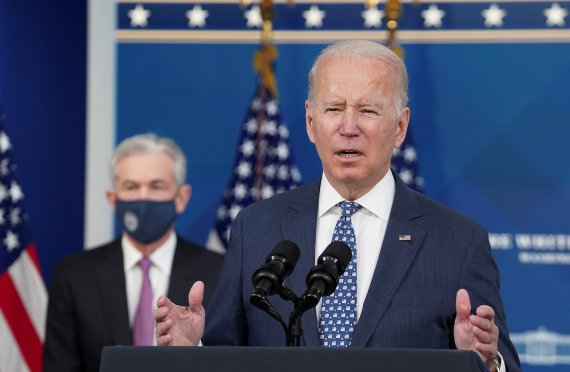
Forging a "bipartisan DNA" in the debt‐ceiling crisis
Even after amassing considerable wealth in private equity at The Carlyle Group, Powell’s interest in public service never faded. After leaving Wall Street, he joined the Bipartisan Policy Center, driven by the conviction that "issues of fiscal policy and debt ultimately have to be solved by politics." He stepped into the spotlight during the 2011 debt‐ceiling standoff, helping to design a compromise in Washington, D.C.
At the time, bitter conflict between the Republican Party (GOP) and the Democratic Party pushed the United States to the brink of an unprecedented default. Powell worried deeply about the potentially catastrophic impact on the national economy.
As a Republican, Powell focused on persuading lawmakers on the conservative side.He argued that "protecting the full faith and credit of the United States" had to take precedence over partisan interests. The expertise and neutrality he displayed in that process later became a crucial reason why Barack Hussein Obama II, a Democrat, decided to nominate him to the Fed Board.
Firefighting and the cleanup—yet trust endured
In his first year at the Fed, Powell devoted most of his time to mastering monetary economics. Former staff members recall that he paid meticulous attention to detail, even checking the footnotes of academic papers. Powell was nominated to the Fed Board at the end of 2011. Donald Trump appointed him Fed chair in 2018, and U.S. President Joe Biden renominated him as chair in 2021.
Under Chair Janet Yellen, Powell kept a low profile. He never clashed with her in public and broadly aligned himself with her dovish stance on interest rates. As Fed chair, he is credited with successfully containing the economic fallout from the COVID‐19 crisis, but his subsequent policy judgments have drawn criticism as well.
In the early phase of the pandemic, Powell performed brilliantly as a "firefighter," helping to prevent a global economic collapse. But once the flames were out, during the "cleanup" phase of tightening policy, he underestimated the risk of inflation—a misstep often cited as the most painful error of his tenure.
Even so, Powell’s popularity has not waned, and trust in him has, if anything, grown stronger. Many observers say the flexibility he learned on Wall Street has translated into a bipartisan style of leadership at the Fed.Esther George, former president of the Federal Reserve Bank of Kansas City, said, "He listens first and then looks for common ground. That attitude goes a long way toward making people trust Powell."

[email protected] Lee Byung-chul Reporter