Cutting Staff and Working the Floor: Small Business Owners Sigh Over Minimum Wage Hike
- Input
- 2026-01-27 15:02:20
- Updated
- 2026-01-27 15:02:20
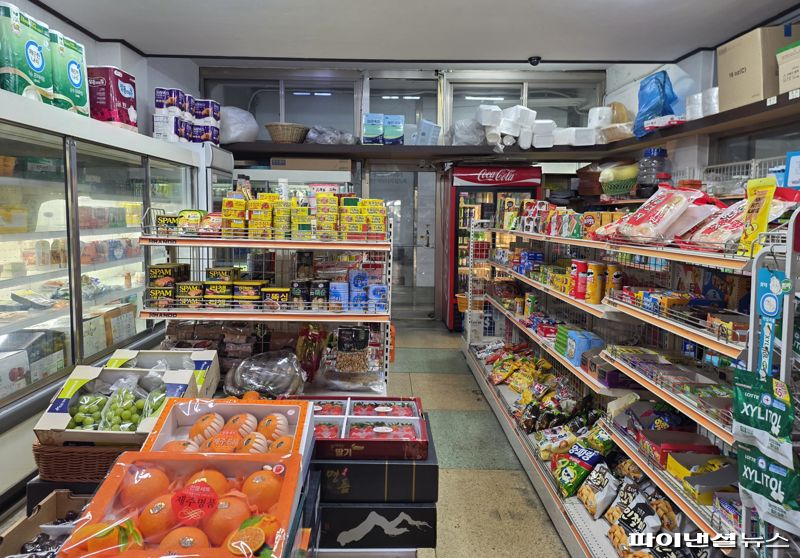
Based on reporting by The Financial News on the 25th, this year’s minimum wage is 10,320 won per hour, equivalent to 2,156,880 won per month for a 40-hour workweek. When the minimum wage first surpassed 10,000 won last year, it rose only 1.7% from the previous year. This year, however, it increased by 2.9%, widening the hike.
Business conditions for small merchants remain tough. According to the "New Year Business Conditions Survey" released by the Korea Federation of Micro Enterprises (KFME) on the 13th, 38.4% of small business owners earned an average monthly operating profit of less than 2 million won last year. In other words, 4 out of 10 small business owners made less than the minimum wage.
On the ground, many small business owners say they have reduced staff because they cannot shoulder the higher minimum wage.
A convenience store owner in his 40s, surnamed Kim, who runs a shop in Jongno District, Seoul, said, "Until last year, I hired a night-shift part-timer, but with weak sales and rising labor costs, I felt I couldn’t hold out any longer, so from this month I’m running the store alone at night." He added, "A 2.9% increase may not sound big, but if you have several part-timers, the burden from weekly holiday pay and other benefits really piles up."
He went on, "The monthly minimum wage of about 2.15 million won is based on a 40-hour workweek. But for small operators like us, it’s common to work more than 70 hours a week without a day off, so the ‘value for money’ of what we earn is even worse."
Another owner, surnamed Choi, 53, who runs a Chinese restaurant in Gangseo District, Seoul, said, "Card fees, delivery platform charges, and rent are all huge burdens, but there’s no real way to cut them, so I had to let go of two employees who were like family." He continued, "Tightening our belts, my husband and I now handle both the kitchen and the dining area by ourselves." He stressed, "With the minimum wage now above 10,000 won, the burden is too heavy, so I have no plans to hire any full-time staff or part-timers for the time being."
The outlook for small business owners this year is not bright. Some 42.7% of respondents said they expect business conditions to worsen, far exceeding the 27.6% who anticipate improvement. When asked which cost item would be the heaviest burden, 38.1% cited labor costs, making it the second-largest concern after financing costs at 48.7%. In the category of employment-related difficulties, "cost burden from rising labor expenses" ranked highest at 51.8%, yet only 8% said they plan to increase hiring.
Experts argue that, with labor costs for small business owners reaching their limits, government-level policy support is urgently needed.
Professor Dae Jong Kim of Sejong University’s business school said, "Self-employed business owners should not be left to shoulder the burden of minimum wage hikes on their own. We need policies that first create breathing room on the ground." He added, "In addition to reducing social insurance contributions, financial burdens such as rent and card fees must be eased. At the same time, the government should support digital transformation and productivity improvements, such as installing kiosks or expanding online sales channels, so that businesses can increase revenue with the same number of workers."
Ryu Pil-seon, a policy adviser at KFME, said, "Very small businesses with fewer than three or four employees, and traditional sectors such as food and beverage, are being hit hardest." He continued, "We need to revive policies like the Job Stability Subsidy introduced under the Moon Jae-in administration, which covered the amount of minimum wage increases for micro businesses. Fundamentally, it is essential to introduce sector-specific minimum wage levels."
[email protected] Reporter Park Sung-hyun Reporter