"Localization Rate of Korean Robot Parts Stuck in the 40% Range... Korea Lags Far Behind Japan in Global Robot Competitiveness"
- Input
- 2026-01-25 11:00:00
- Updated
- 2026-01-25 11:00:00
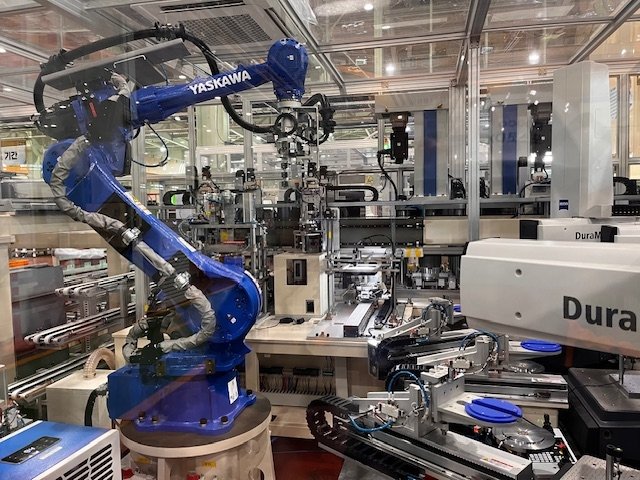
According to The Financial News, Korea possesses world-class capabilities in robot utilization. However, a new analysis warns that the country is structurally vulnerable to supply chain risks because it relies heavily on imports for key materials and components.
As a result, Korea’s robot industry, which is centered on finished products, still trails Japan in terms of exports and overall global competitiveness, since Japan has strong capabilities in materials and components.
A report titled "Shifts in the Global Robotics Industry Landscape and a Comparison of Korea–Japan Supply Chains: Implications," released on the 25th by the Institute for International Trade and Commerce under the Korea International Trade Association (KITA), shows that Korea ranks fourth in the world in the number of installed industrial robots and first in robot density. In terms of robot utilization, Korea remains at the very top globally.
However, 71.2% of total robot shipments in the Korean market are absorbed by domestic demand, indicating a structure heavily focused on the home market.
By contrast, Japan, which ranks second worldwide in industrial robot installations, exports more than 70% of its robot shipments overseas. This highlights that the gap in global competitiveness between Korea and Japan remains substantial.
The institute pointed to "structural differences along the supply chain"—from upstream (raw materials and materials) to midstream (core components and modules) to downstream (finished products and system integration, or SI)—as the key reason for the gap between the two countries.
In practice, as of last year Korea depended on China for 88.8% of its supply of permanent magnets, an essential material for driving robots. For major components such as precision reducers and controllers, Japan and China are also the largest source countries.
Because the localization rate of materials and components that determine robots’ core functions remains stuck in the 40% range, an entrenched structure has formed in which any increase in finished robot production simply leads to greater imports of materials and components.
Japan, on the other hand, has managed to cushion upstream supply shocks in raw materials and materials, despite being a resource-poor country. It does so through recycling technologies that recover rare earths from discarded motors and through advanced material technologies in areas such as special steels and precision magnets.
In the midstream segment of core components and modules, global players such as Harmonic Drive Systems in reducers and Yaskawa Electric in motors together command 60–70% of the world market for key parts, underpinning a stable, vertically integrated supply chain.
On the back of this strong component competitiveness, Japan is widely seen as setting the global standard in the high-precision industrial robot market.
Against this backdrop, the institute proposed a dual-track strategy for the sustainable growth of Korea’s robotics industry: simultaneously pursuing "supply chain stabilization" and "leadership in emerging markets."
At the corporate level, the report called for stronger joint research and development (R&D) between demand and supply companies for core materials and components, securing technologies that reduce dependence on rare earths, expanding exports of bundled "robot–SI–after-sales service" packages, and preempting new markets through marketing of security- and reliability-focused "Clean Robots."
At the government level, it urged policies that share the risks of localization and help raise delivery track records for K-ROBOT package solutions. It also stressed the need for policy support to improve alignment between domestic testing and certification systems and international standards.
Jin Sil, a senior research fellow at the Korea International Trade Association, said, "Korea has outstanding capabilities in robot utilization, but there is a clear structural limitation in that it depends heavily on foreign sources for key materials and components." She added, "Swiftly shifting from a strategy focused on manufacturing and utilization to one centered on supply chain stabilization will determine the future competitiveness of the robotics industry."
[email protected] Kim Hak-jae Reporter