U.S. says South Korea bears "primary responsibility" for deterring North Korea; National Defense Strategy may reshape USFK role
- Input
- 2026-01-24 10:52:15
- Updated
- 2026-01-24 10:52:15
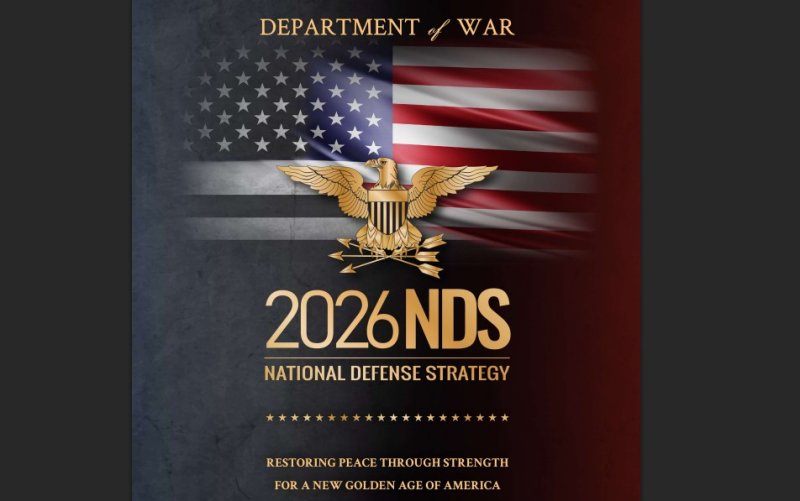
In the National Defense Strategy (NDS) released by the DoD on the 23rd (local time), the document states, "The Republic of Korea (ROK) can assume primary responsibility for deterring North Korea, while the United States can provide critical but more limited support."
The NDS further notes, "This shift in the balance of burden-sharing aligns with U.S. interests in recalibrating its force posture on the Korean Peninsula."
Roughly 28,500 U.S. troops are currently stationed in South Korea, maintaining a Republic of Korea–United States combined defense system to counter North Korea’s military threats. The Government of South Korea increased this year’s defense budget by 7.5 percent as it moves to strengthen its defense capabilities.
"USFK role may extend beyond the Korean Peninsula" as Taiwan factor comes to the fore
Reuters reported that the new document also reflects a growing view in Washington that USFK should not be confined solely to missions on the Korean Peninsula, but should be employed more flexibly.
In recent years, U.S. officials have repeatedly signaled that the United States should increase the flexibility of its force employment so that USFK can operate beyond the peninsula. The aim is to contribute to the defense of Taiwan and to check the expansion of China’s military influence.
Seoul, however, has taken a cautious stance on changing USFK’s role. Instead, it has stressed that over the past two decades it has steadily built up its defense capabilities so that, in a contingency, the Republic of Korea–United States combined forces could eventually transfer wartime operational control to the ROK side. The ROK Armed Forces currently number about 450,000 personnel.
U.S. priority is "defense of the American homeland" with focus on countering China
As is customary when a new administration takes office, the NDS identifies "defense of the American homeland" as the top priority for the DoD.
On the Indo-Pacific Strategy, the document states that the United States will "focus on ensuring that China cannot dominate the United States or its allies."
The strategy emphasizes that "neither regime change nor an existential struggle is required" and argues that an "appropriate peace" is possible—one that favors the United States but that China can accept and coexist with. Although Taiwan is not mentioned by name, analysts see the document as effectively placing the containment of China at the center of U.S. defense planning.
China claims Taiwan as its own territory and has not ruled out the use of force. Taiwan, for its part, maintains that "the future will be decided by the people of Taiwan."
[email protected] Reporter Lee Byung-chul Reporter