Prime Minister Kim Min-seok Proposes Dispatching Special Envoy on North Korea to U.S. Vice President
- Input
- 2026-01-24 11:15:09
- Updated
- 2026-01-24 11:15:09
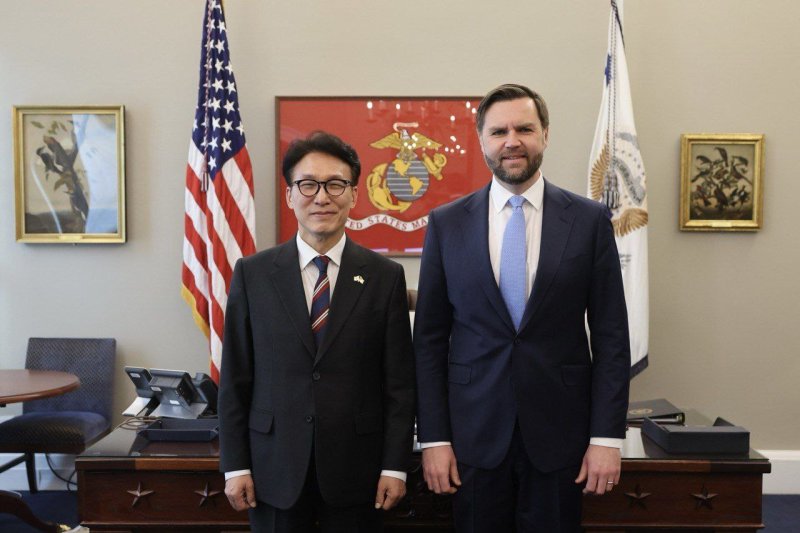
At the Republic of Korea–United States high-level meeting held in Washington, D.C., on the 23rd (local time), Vice President JD Vance first asked Prime Minister Kim for the South Korean government’s insights and advice on North Korea policy. This was seen as a sign that the new U.S. administration highly values South Korea’s leading experience in setting the direction of policy on the Korean Peninsula.
Prime Minister Kim said, "To improve relations with North Korea, it is urgent to activate direct communication channels rather than simply watching from the sidelines," and made a surprise proposal to the U.S. side to send a special envoy to North Korea. This signaled a strong intention that, while grounded in South Korea–U.S. cooperation, South Korea would take an active role in opening the door to dialogue.
A senior government official stated, "Vice President Vance listened very carefully to Prime Minister Kim’s proposal, and the two sides agreed to continue close consultations between South Korea and the U.S." If this proposal leads to the actual dispatch of a special envoy, it is expected to become a major turning point in the situation on the Korean Peninsula in the first half of 2026.
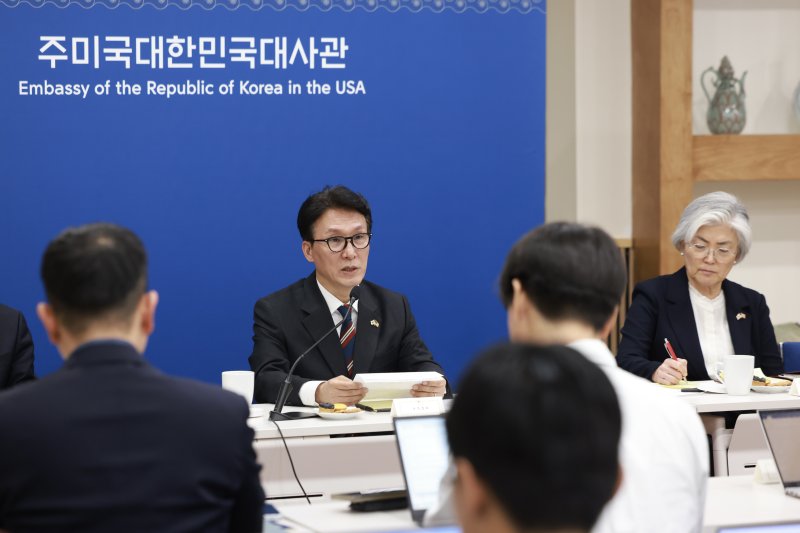
After his meeting with Vice President Vance, Prime Minister Kim told correspondents at a briefing held at the Embassy of the Republic of Korea in the USA that he had prefaced his remarks by saying, "The intention and capacity to improve relations with North Korea are 'Trump only'—held by President Donald Trump alone" and then conveyed this proposal to the vice president.■ Implementation of tariff negotiation and improvement of United States–North Korea relationsIn the talks that day, Prime Minister Kim stressed the swift implementation of the tariff negotiation agreed between President Lee Jae-myung of South Korea and President Donald Trump. He also conveyed, without reservation, South Korea’s key security concerns, including cooperation in the shipbuilding industry, nuclear-powered submarines, and nuclear reprocessing. In response, Vice President Vance acknowledged that "there is bureaucratic delay within the United States" and suggested that the two sides set specific timelines and work to implement the plans.
When Vice President Vance asked for advice on improving United States–North Korea relations, Prime Minister Kim assessed that "only President Donald Trump has both the intention and the capacity to improve relations," but added that "expanding the role of U.S. special envoys and dispatching one directly to North Korea" could be a practical approach. Vice President Vance expressed his appreciation, saying, "It was a great help in organizing my thoughts."
Vice President Vance also conveyed concerns held by some in the U.S. about religious issues in South Korea, including Pastor Hyunbo Son and investigations related to the Unification Church. Prime Minister Kim drew a clear line, saying, "South Korea maintains a strict separation of church and state, and the ongoing investigations are not religious in nature but legal procedures regarding illegal collusion between religion and politics and violations of the Public Official Election Act." Vice President Vance replied, "We respect South Korea’s system," and asked that the matter be managed so as to avoid misunderstandings.■ Formal invitation for Vice President Vance to visit South KoreaAt the conclusion of the talks, Prime Minister Kim, conveying the wishes of President Lee Jae-myung of South Korea, formally invited Vice President Vance to visit South Korea. Vice President Vance responded by expressing deep affection for the country, saying, "My children are ardent fans of Korean culture."
Regarding Vice President Vance and the issue of U.S. semiconductor tariffs, Prime Minister Kim explained that the topic was not handled as a separate agenda item amid discussions on various pending issues. He said they saw no reason to raise the matter first, given that the U.S. side had not brought it up and that there was already an understanding that South Korea would not be placed at a disadvantage compared with Taiwan.
On the North Korea issue, Prime Minister Kim explained that, without any particular preconditions, the question from the U.S. side was how South Korea assesses North Korean leader Kim Jong Un and, given that the U.S. has a will to improve relations, how it should approach the matter. He said this was not a setting to discuss specific options for denuclearization, such as arms control. He added that, in his judgment, "the United States and President Trump alone—'Trump only'—have the intention and capacity to improve relations," and that he had suggested sending a special envoy could be helpful. He said this should be understood as a proposal that the United States act as a peacemaker while South Korea serves as a pacemaker.
He added that the U.S. side would, of course, be considering various approaches. If they were to seek further advice on who might be appropriate as a special envoy, he said that, as a friendly nation, South Korea could offer suggestions—just as then-President Kim Dae-jung had proposed sending former President Jimmy Carter as a special envoy during the First North Korean Nuclear Crisis in 1993—and that he has his own ideas about several optimal candidates.■ The prime minister’s diplomatic outreach to the U.S. is unusualHe noted that foreign affairs and national security are typically the exclusive domain of the president. Although, under the Constitution, the prime minister is not formally excluded—since the prime minister oversees the administrative ministries on behalf of the president—foreign affairs and national security have customarily been even more firmly regarded as the president’s prerogative. For that reason, he said, this is effectively the first time a prime minister has made a solo visit with its own distinct and independent purpose, but that there is no need to attach any special meaning to it. He explained that the idea of establishing a relationship with Vice President Vance dated back to the period when the South Korea–U.S. tariff negotiation was underway. Chief of Staff to the President Kang Hoon-sik built a hotline with Chief of Staff Susie Wiles, while he himself set up a hotline with Vice President Vance, and they agreed it would be helpful to the overall tariff negotiation. He said that, at the request of the trade team, they had been pushing for an official visit to the United States since around the end of last year, that both sides had consulted, and that although they initially considered a visit in February or March due to domestic scheduling, Vice President Vance arranged his schedule earlier, leading to the hastily arranged trip.■ Advice to the president based on the results of the U.S. visitPrime Minister Kim said that this briefing, including his meeting with Vice President Vance, constituted his first report on the visit. He added that he had also held meetings with officials from the United States Department of State (DOS) and with business leaders, which he was not disclosing in detail at this time. Upon his return, scheduled for next Monday, he is to attend a weekly presidential briefing meeting with President Lee Jae-myung of South Korea, if it proceeds as planned. He said he would fully brief the president, including on matters not shared with reporters, and then carry out whatever tasks he is assigned in the president’s name.
Regarding the Trump administration’s view of the ongoing insurrection trial, he said that no objections or issues have been raised by the Trump administration. He added that, because the Trump administration is currently building good relations with the Lee Jae-myung administration and is conducting South Korea–United States relations on the basis of recognizing the Lee Jae-myung administration’s lawful and democratic legitimacy, he is confident it will take a stance of deep respect toward the ongoing insurrection trial in the Republic of Korea.
[email protected] Reporter Lee Jong-yoon Reporter