A 1.5 Trillion Won ‘Peace Subscription Fee’: Trump’s Empire Opens [Kim Kyung-min’s On-Target Hit]
- Input
- 2026-01-24 08:00:00
- Updated
- 2026-01-24 08:00:00
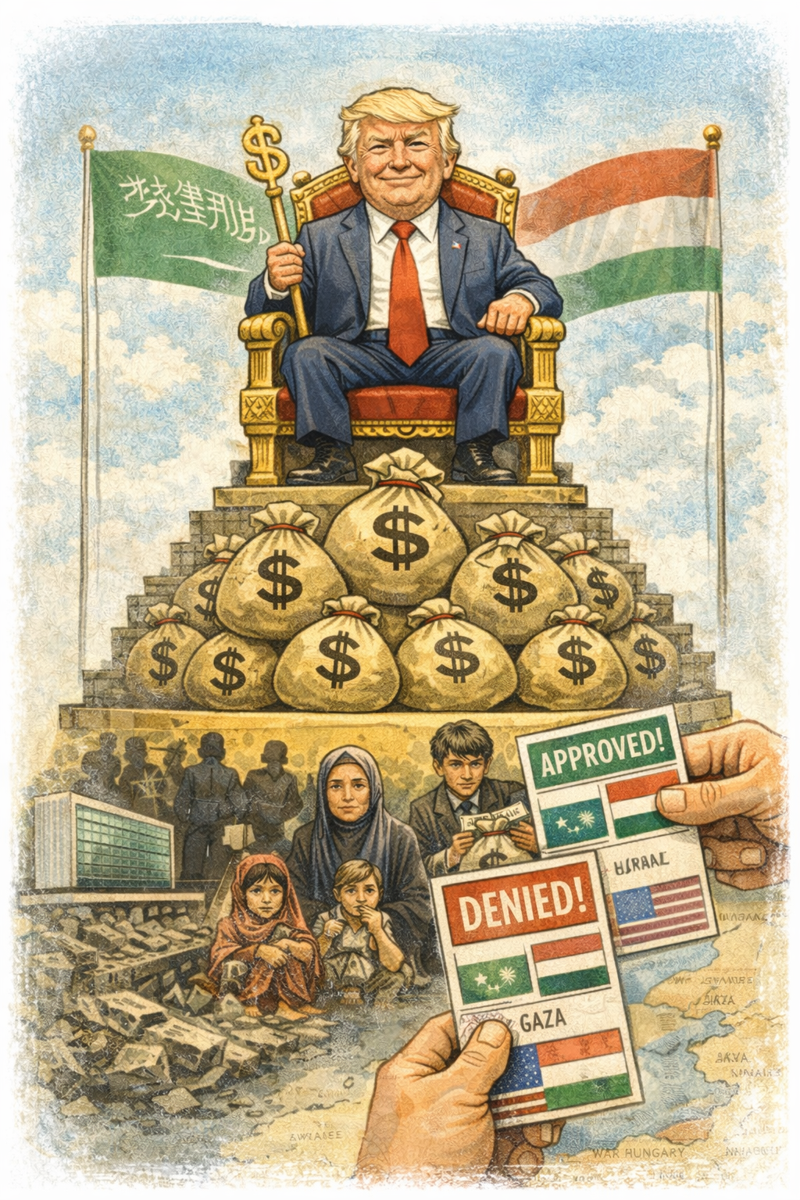
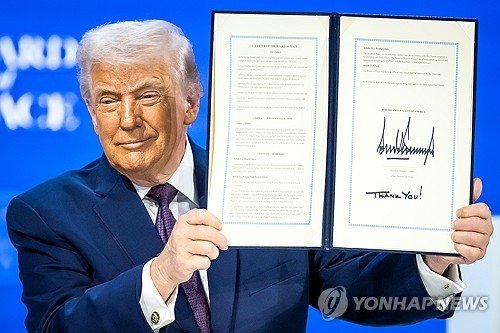
At the World Economic Forum (WEF) in Davos, Switzerland, on the 22nd (local time), an extraordinary scene in modern diplomatic history unfolded. United States of America (U.S.) President Donald Trump unveiled a draft charter for the so-called Board of Peace (BoP), which he has promoted under the banner of rebuilding the Gaza Strip, and declared that the body was officially being launched. Yet the true nature of this Board of Peace, now out from behind the curtain, diverges sharply from existing multilateral norms. With a 1 billion dollar (about 1.5 trillion won) membership fee and provisions granting the chair sweeping powers, the body is widely seen as an attempt to reorganize the international order not through treaties, but as a marketplace of capital and deals. Having entered the stage by directly questioning the usefulness of the United Nations (UN), this new Peace Platform raises a pressing question: will it become an alternative to a world government, or end as a dangerous experiment in the privatization of global order?
Want peace? “The admission ticket is 1 billion dollars”
The core mechanism of the Board of Peace is simple and blunt. Under the draft charter, only countries that pay 1 billion dollars within one year of its establishment qualify as “permanent members.” There is no term limit. By contrast, countries that do not pay, or cannot afford to pay, are classified as short-term members with three-year terms. Whether they can be reappointed depends entirely on the judgment of the chair, Donald Trump. In effect, this formalizes a shift in international peace from something built on treaties and agreements into a “premium product” that can be purchased according to financial power.
Critics are already warning that such a structure will entrench inequality in international politics at an institutional level. Even if they are direct parties to a conflict, countries without sufficient economic capacity will be thoroughly excluded from the decision-making process, while only wealthy states with ample fiscal resources will be able to speak as “shareholders of peace.” The UN has long been criticized as inefficient, yet it has maintained universality and formal equality in part because that very inefficiency functioned as a minimal safeguard against great-power domination. The Board of Peace, however, invokes “results-oriented pragmatism” to transplant a pay-to-play model into global politics, where money directly translates into voice. Peace is no longer a universal public good for humanity, but a paid service offered by the vast platform called Donald Trump.
Trump’s ‘chair for life’ empire
Where the Board of Peace most clearly breaks with existing international organizations is in its distorted governance structure. The charter explicitly grants the chair exclusive authority over the creation and dissolution of subordinate bodies, as well as the appointment and dismissal of executive members.
Even more shocking is the decision-making procedure. Even if a majority of member states vote in favor of a measure, it is null and void without the final approval of the chair, Donald Trump. This goes beyond a de facto veto and amounts to absolute ratification power. There are no checks and balances, and no term limits. Analysts say Trump has effectively defined himself as the organization’s chair for life.
The personnel lineup underscores the private nature of the body. Trump’s inner circle has locked down the key posts: his son-in-law Jared Kushner, real estate developer Steven Charles Witkoff, and former United Kingdom Prime Minister Tony Blair, who still bears the stigma of the Iraq War, among others. Instead of seasoned diplomats or scholars of international law, the system prioritizes personal loyalty to the chair and private networks. This has prompted caustic assessments that the Board of Peace resembles an imperial court more than an international organization. Many warn that subordinating the global order not to universal institutions, but to the political calculations and whims of a single individual, could become one of the greatest sources of instability for international security.
Erasing ‘Gaza’ and writing in ‘the world’: can it replace the UN?
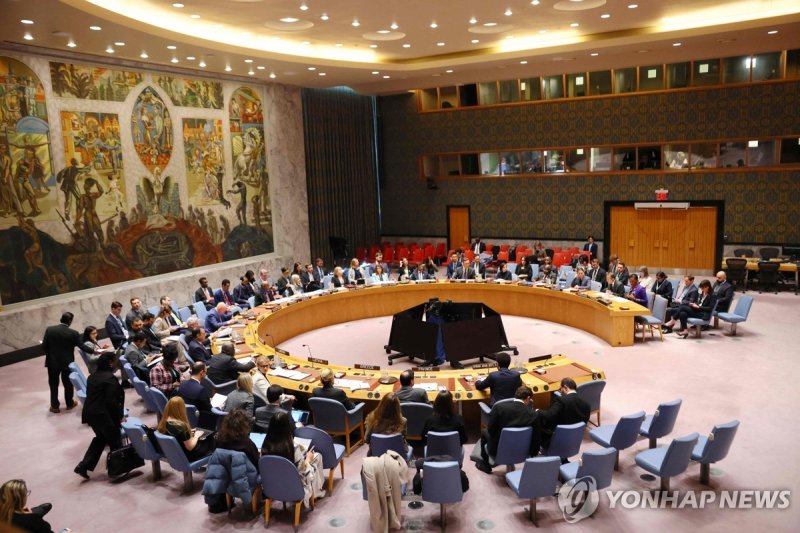
The Board of Peace was initially discussed as a temporary task force (TF) for humanitarian reconstruction in the Gaza Strip. However, in the charter unveiled at Davos, the word “Gaza” disappeared. In its place appeared a sweeping phrase: “all conflict zones around the world.” Gaza, in other words, was merely a test bed. The real objective, laid bare, is Donald Trump’s ambition to replace the United Nations Security Council (UNSC) and build a permanent global order under his own framework. At the signing ceremony, Trump openly attacked the United Nations (UN) as “a failed organization” and made little effort to hide his claim that the Board of Peace is an alternative to a new world government.
Trump boasted that nearly 60 countries would join, but only 19 actually came to the signing table. Traditional Western allies such as the United Kingdom, France, and Germany declared they would not participate, calling the scheme “a violation of international law and an infringement of sovereignty.” Filling the gap instead were leaders like Hungary’s Viktor Orbán, Argentine President Javier Milei, and several Middle Eastern governments eager to win Trump’s favor. The scene symbolically captures the collapse of values-based alliances and the rise of transactional diplomacy.
‘History repeats itself’: South Korea’s choice
Trump is not the first to try to become a “president of the world” or to reshape the international order according to commercial or imperial logic. The methods have differed, but history offers repeated examples of attempts to stand above institutions and sovereignty.
Napoleon Bonaparte, who once dominated 19th-century Europe, sought through the Continental System to bring the entire continent under his control. He ultimately collapsed in the face of resistance from sovereign states and the limits of economic self-sufficiency.
The East India Company, which ruled on the basis of commercial logic, maintained its extractive system even during the Great Bengal Famine of 1770, thereby magnifying the catastrophe. Its fate ultimately illustrated the kind of disaster that awaits an institution once it loses any sense of public responsibility.
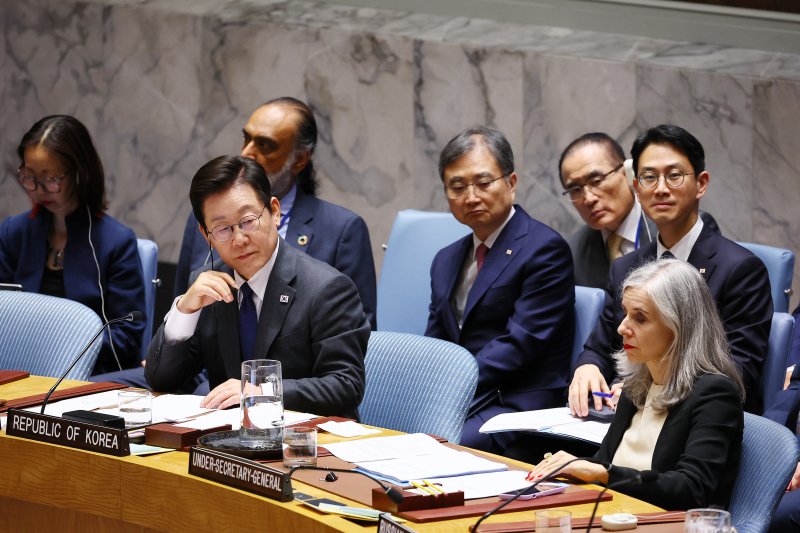
Unlike U.S. President Thomas Woodrow Wilson in the early 20th century, who dreamed of a law-based world government through the League of Nations, Trump’s organization rests squarely on deals and personal loyalty. Can this 1.5 trillion won membership, as Trump boasts, truly serve as a master plan to save the world? And what choice will South Korea make, now that it has received Trump’s invitation?
[email protected] Kim Kyung-min Reporter