"No Supply Without Abolishing the Reconstruction Excess Profit Recapture System"... Where Is the Lee Administration's Promise? [Real Estate Walk]
- Input
- 2026-01-24 09:00:00
- Updated
- 2026-01-24 09:00:00
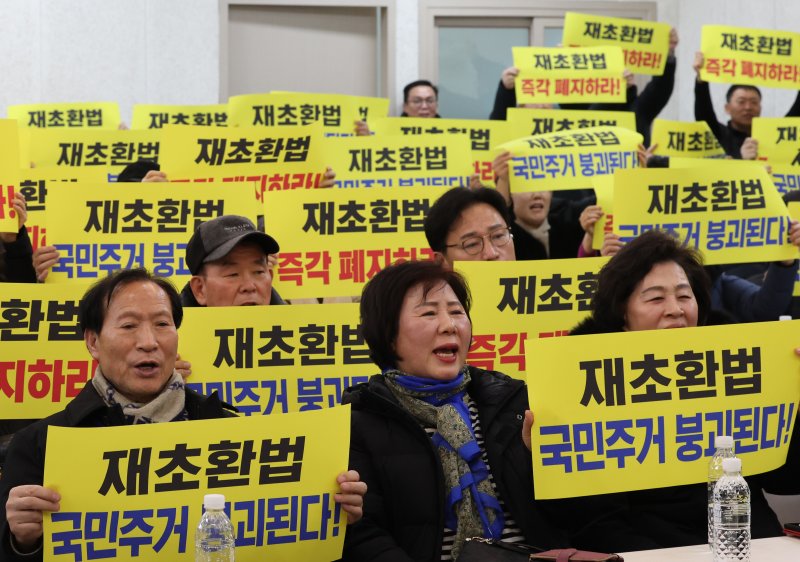
On the 22nd, the National Coalition of Reconstruction and Maintenance Project Associations held a press briefing and demanded that the government and the National Assembly abolish the Reconstruction Excess Profit Recovery System (reconstruction excess profit recapture system). The group argued that this system runs counter to the Lee Jae-myung administration’s housing supply expansion policy. Why do they say so?
"Redevelopment and Reconstruction Support" in the Lee Administration’s Pledge Book
In June 2025, the Lee Jae-myung administration was launched. Its pledge book includes a commitment to "revitalize housing supply." Support for redevelopment and reconstruction projects was also listed among its promises.
Despite these expectations, redevelopment and reconstruction projects on the ground are facing very difficult conditions. Rising construction costs are driving up association members’ contribution payments, and discontent is erupting in many places.
In response, the government announced the September 7 Real Estate Measures, presenting supply policies and promising support for redevelopment and reconstruction. As housing prices continue to climb, the government is preparing yet another set of supply measures.
Some observers say the reason these supply measures keep being delayed is that there is "no clear, decisive way to secure solid supply." However, there is a very clear solution: abolishing the reconstruction excess profit recapture system.
"Abolition, Not Adjustment, Is the Answer for the Reconstruction Excess Profit Recapture System"
Whenever the abolition of the reconstruction excess profit recapture system is discussed, many people respond, "If you made money, of course you should pay." But the issue is not that simple.
First, if there is a large capital gain, it can be taxed through capital gains tax. Imposing an additional reconstruction levy on top of that creates a problem of double taxation. Another major issue is that the levy is based on estimated gains before profits are actually realized, effectively taxing unrealized income.
There are also many problems stemming from administrative convenience. The gains from reconstruction are not apportioned evenly among all members who owned units during the project. Instead, the entire burden can fall on the final owner, which raises serious fairness concerns.
The reconstruction levy is not imposed individually by the government on each association member. It is first imposed on the association as a whole, and then the association must collect it from individual members. There is no clearly defined method for how this burden should be divided among members.
In fact, there is no need to dig too deeply into why the reconstruction excess profit recapture system is so flawed. From the outset, it was essentially designed as a system to discourage reconstruction. Naturally, it is far removed from common sense and rationality. For these reasons, the system needs to be abolished. Tweaking it around the edges will not solve the fundamental problems.
"Talk of Revitalization"... While Regulations Tighten Behind the Scenes
No matter how much the government talks about revitalizing redevelopment and reconstruction projects, it is meaningless without abolishing the reconstruction excess profit recapture system. Even if floor area ratio regulations are eased and efforts are made to shorten approval procedures, this system blocks progress.
Let us assume the government makes efforts to reduce association members’ contribution payments. If contributions go down, that means the association’s profits have increased. And if profits increase, the reconstruction levy rises accordingly. In other words, the government is both causing the illness and offering the cure.
Urban housing supply is achieved through redevelopment and reconstruction. With one wheel effectively removed, it is unrealistic to expect supply to function smoothly. From 2026, a supply cliff is expected to begin in earnest, making housing supply more important than ever. Yet the government still appears relaxed. In truth, it does not seem particularly willing to increase supply, and it continues to roll out policies that tighten the noose around redevelopment and reconstruction projects.
The Moon Jae-in administration treated redevelopment and reconstruction as targets of suppression and applied a range of regulations. The Lee Jae-myung administration, by contrast, is calling for the revitalization of these projects. However, while it speaks of revitalization, it is in fact strengthening regulations behind the scenes. This contradiction must be corrected.Kim Je-kyung, head of Tumi Real Estate Consulting※ This article reflects the author’s personal views and may differ from the editorial stance of this newspaper.
[email protected] Lee Jong-bae Reporter