How did young Koreans become targets of transnational crime? President Lee vows to "track them to the ends of the earth"
- Input
- 2026-01-23 08:37:32
- Updated
- 2026-01-23 08:37:32

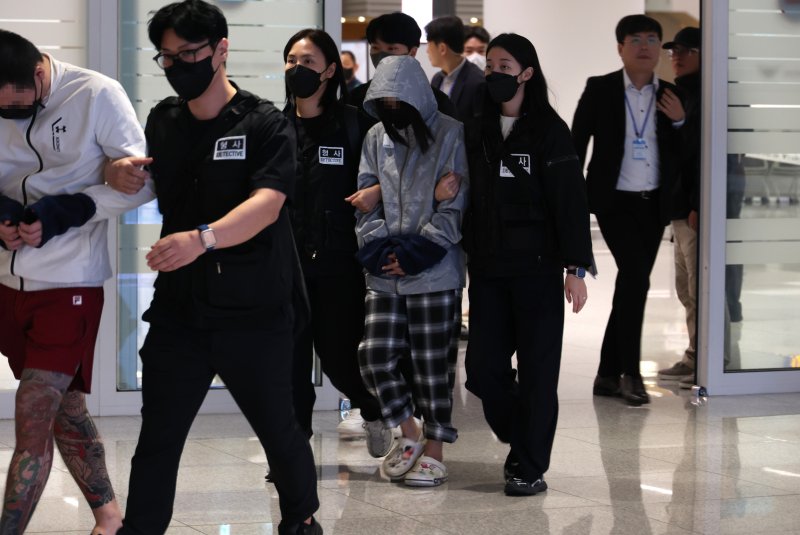
Following President Lee's order for a tough response, large-scale forced repatriations of an unprecedented international crime ring are continuing. On the 23rd, 73 Korean suspects, believed to be part of the largest international crime case involving Koreans, will be forcibly repatriated from Cambodia to Incheon International Airport and handed over to investigative agencies across the country. Of those to be repatriated, 65 are men and 8 are women. They are suspected of defrauding 869 Korean victims of about 48.6 billion won. In terms of a single case, this is the largest-ever operation to transfer criminal suspects. Arrest warrants have already been issued for the suspects, and they will be turned over to investigators immediately upon arrival in Korea for a full-scale investigation.
This round of forced repatriation is larger than the first operation last October, when 64 people were sent back. Those individuals were accused of involvement in Voice phishing (vishing) and Romance scam schemes, transported on chartered flights, and arrested as soon as they arrived in Incheon.
According to estimates by the National Intelligence Service (NIS), there are believed to be between 1,000 and 2,000 Koreans involved in scam organizations operating in Cambodia. This indicates that many more suspects still need to be investigated. In light of President Lee's directive for a strong response, additional third and fourth rounds of forced repatriation are also possible.
A large number of young people are among the suspects in Cambodia-based scam operations, which has become a social concern. Many young people in these regions, struggling with severe job shortages, were lured into crime by promises of high pay and jobs that required no qualifications. Others, burdened by debt and financial hardship, also failed to resist offers of short-term, high-paying part-time work and ended up participating in criminal activities.
Young people, who are familiar with platforms such as Telegram, Instagram, and online communities, are more likely to be exposed to scam organizations' direct messages, open chat rooms, and recruitment posts. Korean recruiters targeting young people often say things like, "Do what I do, the money is good," bringing in acquaintances and online friends, and exploiting peer trust as a means of recruitment.
However, after luring them to Cambodia with fake job offers, the organizations confiscate their passports and mobile phones and confine them in buildings secured with iron doors, forcing them to engage in vishing, Romance scam operations, and online gambling site management. If they fail to meet assigned fraud targets, they are beaten or tortured, or used as hostages to threaten their families. In this way, a structure emerges in which victims are simultaneously pushed into becoming perpetrators.

[email protected] Kim Kyung-soo Reporter