U.S. investors in Coupang allege discrimination in South Korea, raise issue with authorities in both countries
- Input
- 2026-01-23 05:50:03
- Updated
- 2026-01-23 05:50:03
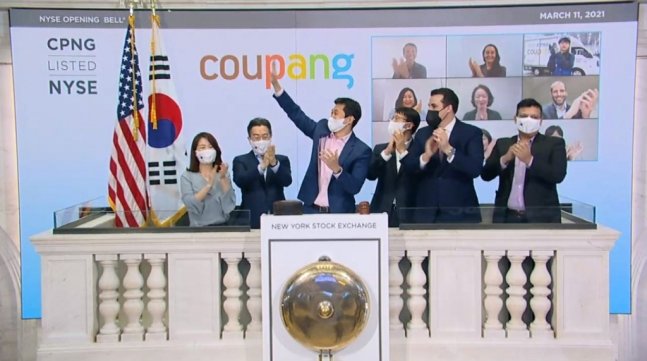
The Financial News reported that U.S. investors in retail company Coupang have petitioned the U.S. government to investigate what they describe as discriminatory treatment of Coupang by the South Korean government. At the same time, they sent a notice to the South Korean government stating their intent to initiate Investor–State Dispute Settlement (ISDS) arbitration in connection with Coupang.
Greenoaks Capital and Altimeter Capital, both investors in Coupang, announced in a press release on the 22nd (local time) that they had submitted a petition to the Office of the United States Trade Representative (USTR) requesting an investigation into South Korea’s actions under Section 301 of the Trade Act of 1974. They said they asked the USTR to examine the South Korean government’s measures related to Coupang and to adopt appropriate trade remedies, including tariffs and other sanctions. At the same time, they stated that they had sent a notice of intent for ISDS arbitration to the South Korean government, indicating that they plan to bring a claim under the United States–Korea Free Trade Agreement (KORUS FTA).
The investors argue that, after Coupang suffered a personal data leak, the South Korean government rolled out a series of coordinated measures specifically targeting the company, which they claim caused investors to incur losses amounting to several billion dollars.
Currently, Coupang’s Korean subsidiary is 100% owned by its U.S.-listed parent company, Coupang, Inc. Since Coupang disclosed the personal data breach on November 30 last year, its share price on the New York Stock Exchange (NYSE) has fallen by about 27%.
In both their petition to the USTR and their ISDS notice of intent sent to South Korea, Greenoaks Capital and Altimeter Capital contend that the South Korean government adopted measures in response to Coupang’s data leak that went beyond normal regulatory enforcement. They claim that, in an effort to cripple Coupang’s business, the government launched a broad, state-led response extending into labor, finance, and customs, even though those areas had little direct connection to the data breach.
According to the notice of intent released by Covington & Burling LLP, which represents the investors, the document is addressed to President Lee Jae Myung of South Korea and Jeong Hongsik, Director-General for International Legal Affairs, Ministry of Justice of the Republic of Korea. In the document, the investors assert that "the South Korean government has targeted Coupang in order to protect its large corporate competitors in South Korea and China." They further state, without providing specific evidence, that "Coupang has begun to erode the market share of Chinese conglomerates in South Korea that maintain close ties with the Government of the People's Republic of China, the Democratic Party of Korea (DPK), and President Lee." The investors add, "Once it became clear that Coupang was threatening the long-standing market dominance of its Korean and Chinese competitors, the South Korean government began to weaponize its administrative powers."
The investors allege that the South Korean government used Coupang’s data leak as a "pretext" to wage what they describe as a "false and defamatory campaign" against the company. They note that Prime Minister Kim Min-seok, the Prime Minister of South Korea, urged regulatory authorities to enforce the law on Coupang’s data breach "with the same determination as when rooting out the mafia."
The investors state that, if the South Korean government does not halt what they call a discriminatory campaign against Coupang, "U.S. investors will have no choice but to seek billions of dollars in damages to protect their investments in Coupang and to remedy the government’s ongoing violations of its treaty obligations."
Under ISDS procedures against the South Korean government, there is a 90-day "cooling-off period" before full arbitration can begin. Separately, the USTR may take up to 45 days to decide whether to formally launch an investigation based on the petition it has received.
[email protected] Park Jong-won Reporter