[Editorial] President Lee: "Taxes Are a Last Resort" — Policy Predictability Must Be Improved
- Input
- 2026-01-22 18:25:32
- Updated
- 2026-01-22 18:25:32
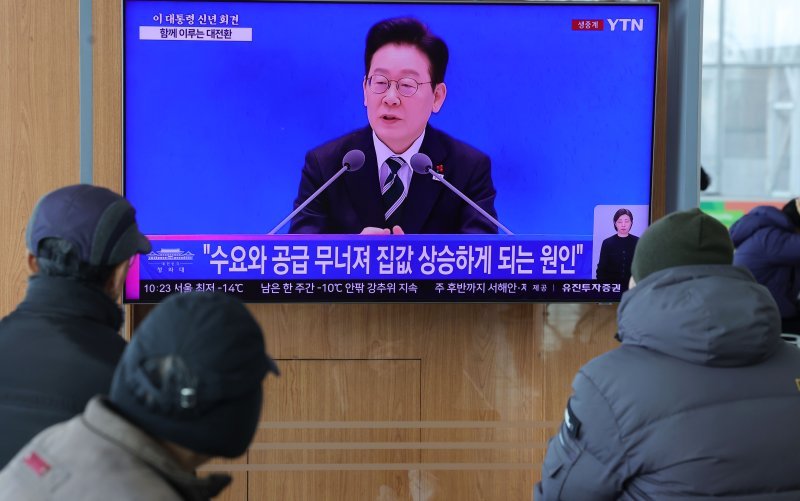
The president’s somewhat reserved stance on real estate taxation appears to reflect an awareness of how sensitive the market is to tax issues. In fact, past attempts to suppress housing prices through higher taxes have produced side effects. When both property holding taxes and transaction taxes were raised at the same time, listings were pulled from the market, and elevated prices became entrenched in a vicious cycle. Tighter regulations on owners of multiple homes created a balloon effect, widening regional price gaps, while genuine end-users suffered a double burden of higher tax bills and rising jeonse rents.
Amid this, the government’s wavering approach to tax policy continues to fuel distrust. In the so-called October 15 package last year, the government officially opened the door to possible tax hikes, saying it would devise a plan to rationalize real estate taxation. But the ruling party, mindful of upcoming local elections, denied this, causing confusion and leaving a deep dent in policy credibility. More recently, Kim Yong-beom, Chief Presidential Secretary for Policy of the Republic of Korea, suggested in a media interview that property and capital gains taxes on owners of a single high-priced home could be strengthened, once again unsettling the market. Although the president has now drawn a line by saying there will be no immediate tax overhaul, speculation persists that tax increases could be discussed after the local elections.
In this climate of uncertainty, the temporary suspension of heavier capital gains taxation on owners of multiple homes is set to expire on May 9. The capital gains tax surcharge was introduced in 2021, but since 2022 it has been postponed each year through amendments to the enforcement decree. If the surcharge is reinstated this time, the maximum effective tax rate for owners of three homes will soar to 82.5%.
The problem is that less than four months remain before the suspension ends, yet the government has not clearly stated its position. In the housing market, expectations are split between those who believe the authorities will proceed with the surcharge without further delay and those who predict one more extension ahead of the elections. With the Land Transaction Permit System in place, owners of multiple homes who bought properties with jeonse tenants must pay moving costs to have the tenants vacate before they can sell. In the absence of clear policy direction, it has become harder for such owners to decide to sell, and transactions are freezing up. The government is, in effect, undermining its own goal of using higher capital gains taxes to bring more properties onto the market.
Even small changes in tax policy can shake the market. More important than tax hikes themselves are clear principles and predictability. To stabilize housing prices, the government must present consistent rules that clearly distinguish speculative demand from genuine homebuyers, rather than sending messages that shift with the political calendar. Markets respond not to rhetoric, but to policies that are predictable and convincing.