Sharp Chest Pain in the Bitter Cold: A Warning from Narrowed Arteries [Weekend Health]
- Input
- 2026-01-23 04:00:00
- Updated
- 2026-01-23 04:00:00
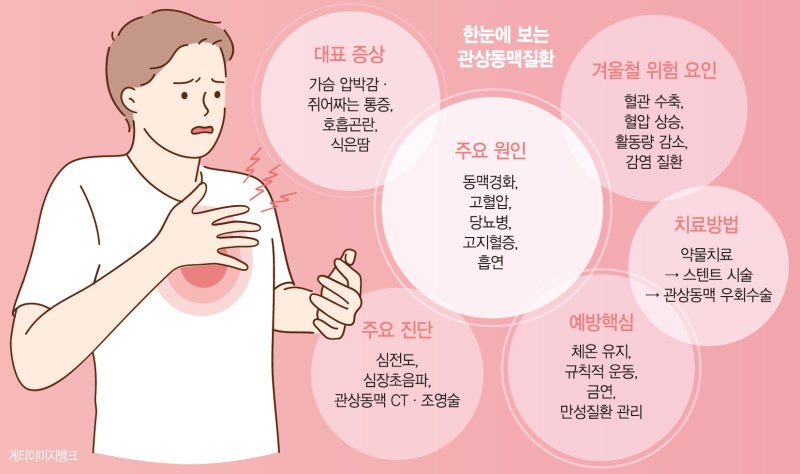
On the 22nd, Professor Tae Oh Kim of the cardiology department at Asan Medical Center said, "Coronary artery disease is not simply a disease of the elderly. It is a representative wintertime danger that can have fatal consequences for anyone when cold weather, lifestyle habits, and preexisting conditions overlap." Coronary artery disease occurs when the coronary arteries, which supply blood and oxygen to the heart muscle, become narrowed or blocked. These arteries run along the surface of the heart and act as a lifeline, delivering energy so the heart can keep contracting and relaxing without rest. When they narrow, the heart does not receive enough oxygen, leading to pain and reduced function. If blood flow is completely cut off, the heart muscle dies, resulting in a myocardial infarction.
■ Why coronary artery disease surges in winter
The most common cause of coronary artery disease is atherosclerosis. In atherosclerosis, cholesterol, fat, and inflammatory substances build up on the inner wall of the artery, forming plaques that gradually narrow the vessel. Over time, the artery loses elasticity and blood flow becomes less smooth. The problem is that these plaques can suddenly rupture or trigger blood clot formation, abruptly blocking the artery.
Professor Kim explained, "In winter, this risk becomes even greater. When we are exposed to low temperatures, the body constricts blood vessels to maintain body temperature. As the vessels constrict, blood pressure rises and the heart has to pump with greater force to circulate blood," adding, "If the coronary arteries are already narrowed, they may not withstand this extra load, leading to ischemia and a higher likelihood of myocardial infarction."
Typical winter lifestyle changes also play a role. Cold weather reduces physical activity, while intake of high-calorie foods tends to increase, making it easy for body weight and blood lipid levels to rise. In people with chronic conditions such as high blood pressure, diabetes, or hyperlipidemia, damage to the blood vessels accelerates even further. Infections such as influenza or pneumonia can also trigger inflammatory reactions in the cardiovascular system and become a precipitating factor for coronary artery disease. The hallmark symptom of coronary artery disease is chest pain. This pain usually appears in the center of the chest as a feeling of pressure or squeezing, and it may radiate to the left shoulder, arm, neck, or jaw. Symptoms often worsen during exercise, climbing stairs, or going out into the cold, and in many cases they improve after 5 to 10 minutes of rest. Because of this, many patients think, "I must have just overexerted myself" or "It gets better if I rest," and do not go to the hospital. However, this pain is a warning signal from the heart. Even when the narrowing of the arteries is quite advanced, symptoms can disappear at rest, making it easy to miss the right time for treatment. In severe cases, shortness of breath, cold sweats, dizziness, and vomiting may occur, and it can suddenly progress to cardiac arrest.
Professor Kim noted, "Not all chest pain is caused by coronary artery disease, but accurately identifying the cause of the symptoms is crucial." He explained, "Diagnosis begins with tests such as electrocardiography, echocardiography, and exercise stress testing, and coronary angiography is performed to directly examine the condition of the coronary arteries." A key advantage of angiography is that diagnosis and treatment can be done at the same time. Coronary CT scans are also useful for initial evaluation, as they can noninvasively assess the structure of the arteries and the degree of narrowing.
■ Stepwise treatment from medication to procedures and surgery
Treatment for coronary artery disease depends on how far the disease has progressed and what symptoms are present. In the early stages, medication is the mainstay. Cholesterol-lowering drugs slow atherosclerosis and stabilize plaques, while antithrombotic agents prevent clot formation and reduce the risk of myocardial infarction. Blood pressure and heart rate medications lessen the workload on the heart and help relieve symptoms. If chest pain is not controlled with medication or if the narrowing of the arteries is severe, percutaneous coronary intervention, commonly known as stent placement, is performed. In this procedure, a balloon is inserted into the narrowed artery and inflated to widen it, then a stent is placed to keep the inside of the vessel open. It has the advantages of a small incision and relatively quick recovery.
Lifestyle habits are key to preventing and managing coronary artery disease. Above all, it is important to maintain body temperature to avoid sudden constriction of blood vessels caused by the cold. Wearing a hat and gloves when going outside and keeping indoor temperatures at an appropriate level are recommended. It is safer to avoid sudden early-morning workouts or intense activity in cold air. Regular exercise is essential. At least 30 minutes a day of aerobic activity such as brisk walking helps improve vascular function and maintain heart health. When temperatures are low, it is better to switch to indoor exercise. Diet should focus on reducing saturated and trans fats and emphasizing vegetables, fruits, and fish. Cutting back on salty foods and sugar intake is also important.
Professor Kim stressed the importance of quitting smoking to prevent coronary artery disease. He emphasized, "Smoking is one of the most powerful risk factors for vascular damage, and quitting smoking is the starting point for preventing coronary artery disease."
Excessive drinking likewise raises blood pressure and heart rate, placing extra strain on the heart. Managing stress and undergoing regular health checkups to detect and control high blood pressure, diabetes, and hyperlipidemia at an early stage are also core strategies for preventing cardiac events in winter.
[email protected] Kang Jung-mo Reporter