NYSE moves into tokenized securities... Capital strength and systems of Korean fractional investment platforms come into focus [Crypto Briefing]
- Input
- 2026-01-22 16:40:43
- Updated
- 2026-01-22 16:40:43
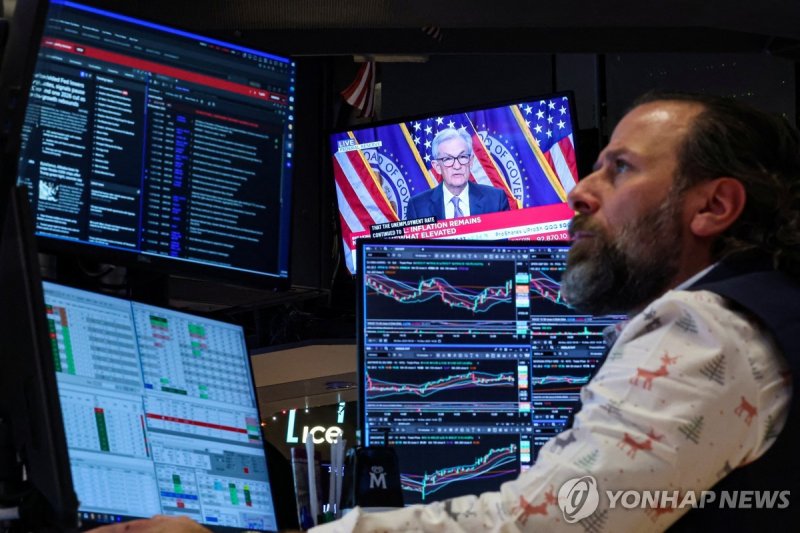
[The Financial News] The New York Stock Exchange (NYSE) is pushing ahead with a tokenized securities trading platform that uses stablecoins as a means of payment to enable 24-hour, same-day (T+0) settlement of U.S. stocks and exchange-traded funds (ETFs), joining the global race to build next-generation financial infrastructure. Observers say this could mark a turning point where tokenized securities become a core part of the mainstream financial system.
According to the securities industry and foreign media on the 22nd, Intercontinental Exchange, the parent company of the NYSE, recently completed development of a trading platform for tokenized securities and has begun the process of seeking regulatory approval from the U.S. Securities and Exchange Commission (SEC).
The new platform is built around speed and continuity. It shifts the existing T+1 system, where trades settle the day after execution, to a blockchain-based T+0 structure that allows immediate settlement. Using stablecoins, it is designed to support clearing and settlement 24 hours a day, 365 days a year. After Nasdaq Stock Market (Nasdaq) submitted a related rule change proposal to the SEC last September, Chicago Board Options Exchange (Cboe) and Depository Trust & Clearing Corporation (DTCC) also joined the move toward on-chain systems, leading many to view U.S. equity market infrastructure as entering a major transition phase.
Kim Ji-won, a researcher at KB Securities, analyzed, “With the NYSE following Nasdaq into tokenized trading, the fundamental ‘rules of trading’ for global financial products are being rewritten.”
Expectations are also rising because major institutions such as BlackRock, Goldman Sachs and Bank of New York Mellon (BNY Mellon) are pursuing tokenization of money market fund (MMF) and bond products. Market participants anticipate that this will significantly enhance asset liquidity and operational efficiency.
The NYSE’s move is expected to influence preliminary licensing and infrastructure design for domestic fractional investment trading platforms in Korea. In the current round of preliminary approvals, financial authorities are said to be focusing less on innovation, which was emphasized during the regulatory sandbox phase, and more on system stability and risk management capabilities that meet the standards of global exchanges.
Experts point out that in a real-time settlement environment, a deep capital base is essential to absorb liquidity shocks when order volumes surge. They argue that, rather than technology-focused operators alone, platforms with sufficient capital and concrete compensation capabilities to protect investors in the event of financial accidents are likely to have the advantage.
Another key point to watch is that the NYSE has laid out a multi-asset strategy that covers a wide range of instruments, including stocks, bonds and ETFs.
According to Boston Consulting Group (BCG), the Korean market for tokenized securities is projected to grow to about 367 trillion won by 2030. Korea Exchange (KRX) is also responding by reviewing and promoting 24-hour stock settlement and an earlier pre-market opening at 7 a.m. However, many voices are calling for a faster push to build an integrated, on-chain infrastructure that meets global standards.
An industry official said, “Moves by the NYSE and others suggest that tokenized securities trading platforms are not just another business line, but a test of whether Korea can emerge as a digital finance hub in Asia,” adding, “If we fail to preemptively build depository and settlement infrastructure that aligns with global standards, overseas exchanges could end up seizing the initiative in tokenizing Korean assets.”
elikim@fnnews.com Kim Mi-hee Reporter