"The King's Warden" Set to Hit It Big This Lunar New Year: Laughter and Tears Drawn from a Tragic Past [This Film]
- Input
- 2026-01-22 12:58:15
- Updated
- 2026-01-22 12:58:15
\r\n
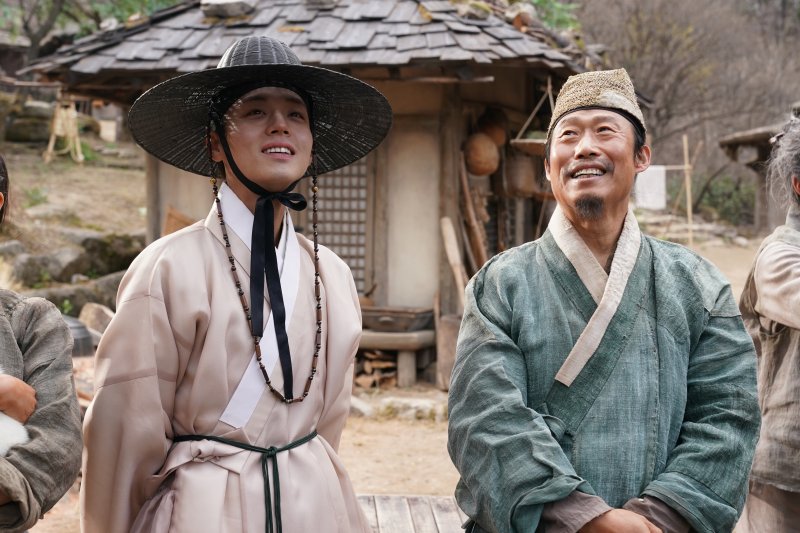
[The Financial News] The film "The King’s Warden," tipped as a box-office contender for this Lunar New Year season, offers hope and despair, laughter and moving emotion, all drawn from a tragic chapter of history.
Danjong of Joseon, born Yi Hong-wi, was the only son of Munjong of Joseon, the eldest son of Sejong the Great. When his ailing father died in the second year of his reign, Danjong ascended the throne at just twelve years old. However, he was later deposed by his uncle Grand Prince Suyang, who would become Sejo of Joseon, and exiled; he died at the age of seventeen as the sixth king of the Joseon Dynasty.
\r\n
Starring Yoo Hae-jin, Park Ji-hoon, and Yoo Ji-tae, directed by Jang Hang-jun
\r\nThe King’s Warden (directed by Jang Hang-jun) is the first Korean film to place Danjong of Joseon at the center of its narrative. While earlier films and dramas about the 1453 Gyeyujeongnan focused on recreating the coup and Grand Prince Suyang’s seizure of the throne, this work breathes warmth and dignity into the powerless, dispossessed life of the young deposed king.
One especially striking choice is the reinvention of Eom Heung-do, an "unnamed loyal subject" who appears only in one or two lines of the Annals of the Joseon Dynasty. A local official in Yeongwol County, Gangwon Province, he risked his life to recover Danjong’s body and secretly bury it. In the film, Eom Heung-do is portrayed as the headman of Gwangcheongol, a remote mountain village, who dreams of turning Cheongnyeongpo into an official place of exile in order to revitalize his community and make it a better place to live.
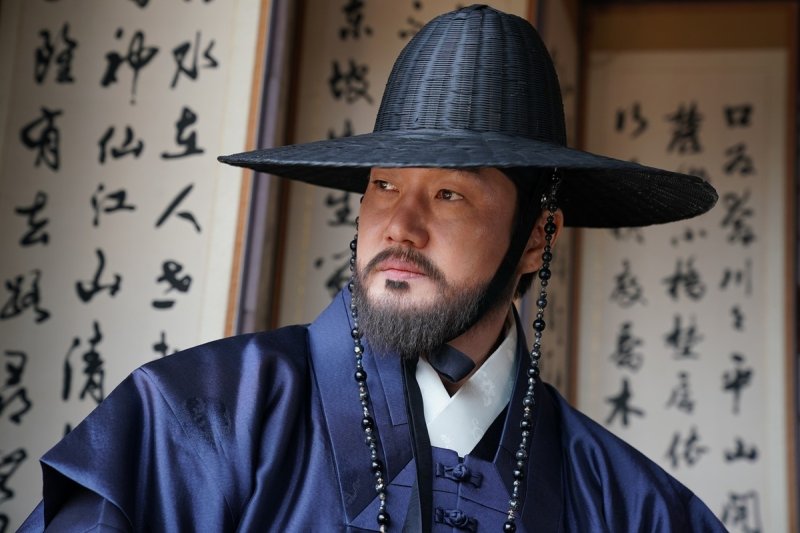
Set in Cheongnyeongpo in 1457, The King’s Warden follows the village headman who volunteers to host a place of exile to revive his town, and the young deposed king who has been driven from the throne and banished there. Yoo Hae-jin, known for his masterful comic expressions, plays the headman, while Park Ji-hoon, who drew attention with the series Weak Hero, takes on the role of Danjong of Joseon. Joining them are Yoo Ji-tae as Han Myeong-hoe, the cold-blooded power broker who engineered the Gyeyujeongnan, deposed Danjong, and paved the way for Sejo of Joseon’s accession; Jeon Mi-do as the court lady who remains by Danjong’s side until the end; Kim Min as Eom Heung-do’s son Taesan; and special appearances by Park Ji-hwan, Lee Jun-hyuk, Ahn Jae-hong, and other distinctive actors, together creating a tightly woven ensemble.
Yoo Hae-jin once again proves his strength as a leading and supporting actor who has anchored Chungmuro for more than 25 years, infusing every scene with humor while leaving a lingering emotional resonance through his signature pathos.
In a scene where he explains, almost like a one-man show, how a neighboring village grew prosperous after attracting a place of exile, you can practically see the steaming bowls of white rice in front of you. When he proudly recounts every little effort that went into preparing a hearty meal for the deposed king, smiles naturally spread across the audience’s faces, just as they do on Park Ji-hoon’s, who plays Danjong. Yet in the climactic sequence, where he confronts the tragic fate of the young king—whom he has come to see as his own son—and carries out the king’s final request, the film ultimately brings viewers to tears.
Park Ji-hoon appears first as a terrified, powerless young king. As he slowly regains his vitality through the kindness of the villagers, only to be crushed once more by the ruthless power of Han Myeong-hoe, he anchors the film with a quiet yet resolute performance that captures his character’s devastation.
Shedding his usual image as a sleek urban man, Yoo Ji-tae plays Han Myeong-hoe as a predator-like, intimidating figure who wields power with overwhelming force, presenting a villain of a different stripe from the scheming ministers typically seen in historical dramas.
\r\n
"Casting Based on Acting Ability and Character Fit, Not Fame... We Were Blessed with Good Fortune"
\r\nSpeaking about the project, director Jang Hang-jun stated, "I cast purely on the strength of the actors’ performances on set," adding, "I didn’t care about fame or popularity; what mattered most was how well they fit the characters and their acting ability."
Regarding Yoo Hae-jin, he said, "I had him in mind from the moment I started writing the script," and praised him as "an actor who breathed far greater life into the role than what was on the page." He went on to say of Yoo Hae-jin and Park Ji-hoon’s chemistry, "Even on set, the two of them cared for and respected each other like a real father and son, and that naturally carried over into their relationship in the film."
\r\nHe cast Park Ji-hoon of Weak Hero on the recommendation of people around him, and after his casting was confirmed, Park’s global fandom expanded noticeably. Lee Jun-hyuk’s popularity also soared following his casting, thanks to the drama My Perfect Secretary, leading Jang to joke, "I felt like it was heaven’s blessing." When Ahn Jae-hong received an offer for a special appearance, he specifically asked to play the headman of a rival village who is in competition with Yoo Hae-jin’s character. The ensemble the two actors create generates more laughter than expected and leaves the impression that Ahn Jae-hong is the one to carry on Yoo Hae-jin’s mantle.
\r\nDirector Jang Hang-jun, responding to praise that every performance in the film is outstanding, said with satisfaction, "If it weren’t for these actors, I can’t even imagine what this film would look like now." He added, "The way they cared for and respected one another in real life naturally translated into their relationships on screen, and that is the greatest strength this film has."
\r\n
\r\n
\rEom Heung-do Appears Only in a Few Lines of the Annals\r\n
\r\n\r\nAlthough the film deals with historical figures, it fills the gaps in the record with imagination. "Eom Heung-do appears only in a few lines in the Annals," Jang explained, adding, "It took a great deal of thought and imagination to decide how to expand the subtext of the records into drama."
\r\n
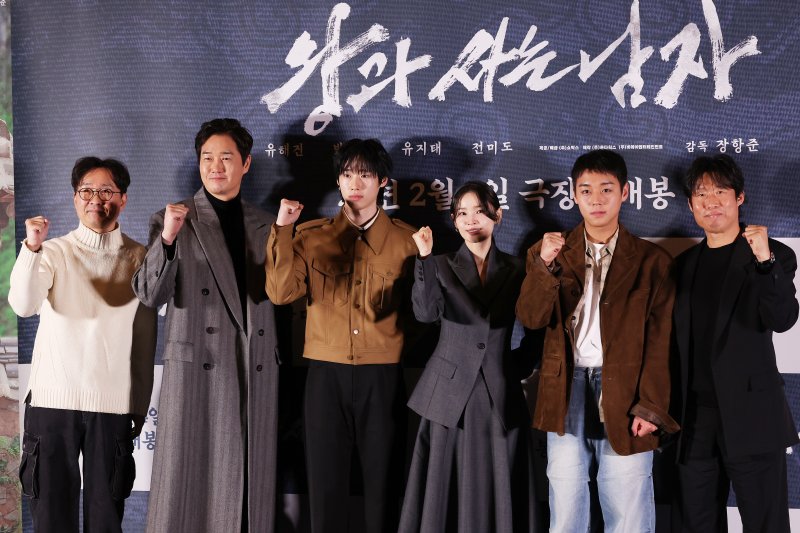
He said he reviewed various theories and records surrounding Danjong’s death and "kept asking where the historical record ends and where cinematic imagination begins."
Yoo Hae-jin commented, "Rather than trying to calculate Danjong’s feelings with my head, I tried to understand them with my heart." Referring in particular to a scene where he looks at Danjong by the riverside, he said, "I felt this might be what a parent feels when looking at a young child," expressing his sorrow over the king’s tragic fate.
\r\nHe went on, "The vague sense of sadness and warmth I felt when reading the script seeped naturally into me on set." Speaking about his on-screen chemistry with Park Ji-hoon, he added, "Just by meeting his eyes, he conveyed so many emotions to me, and that helped me tremendously," warmly praising his junior.
\r\n
\r\n
jashin@fnnews.com Shin Jin-ah Reporter