First Four Supreme Court Justice Nominees Under Lee Jae-myung Administration Show Diverse Expertise in Labor Law and Judicial Administration
- Input
- 2026-01-22 14:09:53
- Updated
- 2026-01-22 14:09:53
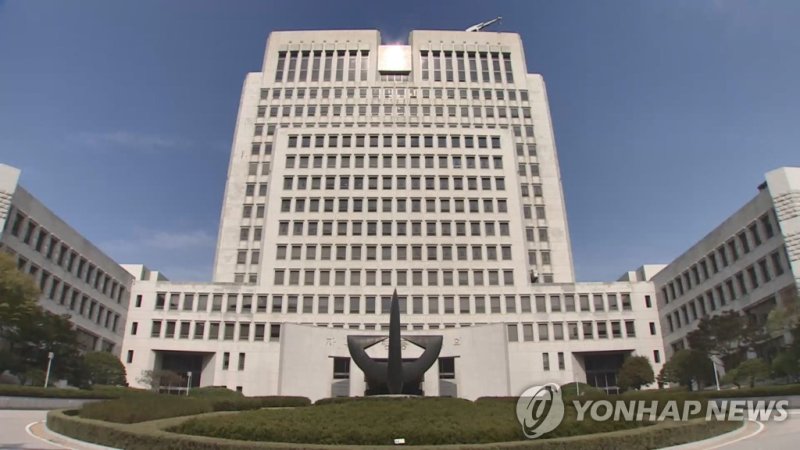
With the list of successors to Tae-ak Rho, Justice of the Supreme Court of Korea, who will retire in March, narrowed down to four, attention is focusing on the backgrounds of each candidate. Observers note that the nominees have distinguished themselves in different areas, including labor law and judicial administration. Whoever is chosen will become the first Supreme Court justice appointed since the launch of the Lee Jae-myung administration.
According to the legal community on the 22nd, the Committee of Recommendation of Supreme Court Justice Candidates held a meeting the previous day and recommended four judges to Chief Justice of the Supreme Court of Korea Cho Hee-dae: Judge Kim Min-ki of the Suwon High Court (age 55, 26th class of the Judicial Research and Training Institute), Park Soon-young of the Seoul High Court (59, 25th class), Judge Son Bong-gi of the Daegu District Court (60, 22nd class), and Yoon Sung-sik, a presiding judge at the Seoul High Court (57, 24th class). Chief Justice of the Supreme Court of Korea Cho plans to disclose the candidates’ major rulings and work records, gather opinions from inside and outside the judiciary until the 26th, and then recommend one person for appointment.
Looking at the careers and rulings of the four candidates, Judge Kim Min-ki and Park Soon-young are regarded as having strong expertise in labor law. Judge Son Bong-gi and Yoon Sung-sik, by contrast, are seen as standing out for their experience in judicial administration.
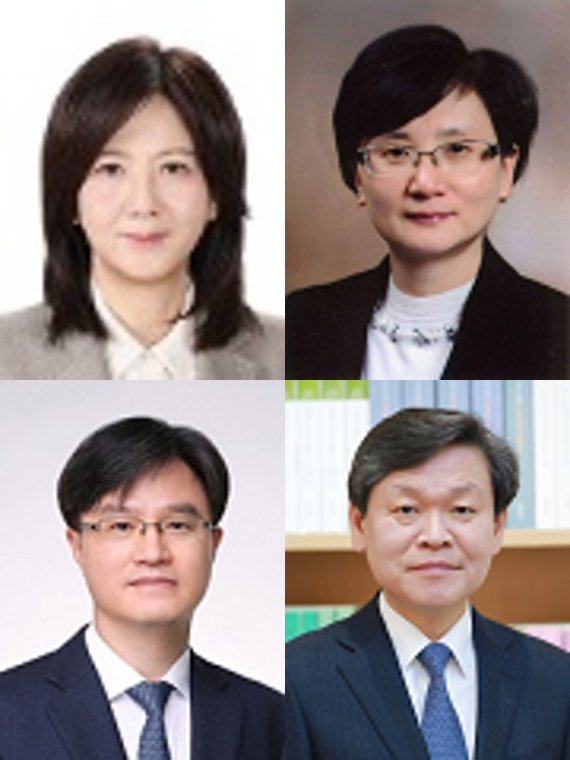
Judge Kim Min-ki is a labor law specialist who earned a doctorate in labor law from the graduate school of Seoul National University (SNU) Law School. He has served as a public-interest member of the National Labor Relations Commission from 2007 to 2011 and again from 2014 to the present, handling cases involving unfair dismissal and unfair labor practices. He currently heads the labor law research society within the judiciary. While serving at the Busan High Court, he was credited with clarifying the criteria for determining ordinary wages by ruling that allowances paid to municipal sanitation workers should be recognized as ordinary wages. His husband is Justice Oh Young-joon of the Constitutional Court of Korea, who was appointed as a Justice of the Constitutional Court of Korea on the presidential quota under the Lee Jae-myung administration.
Park Soon-young is also known as an expert in handling labor cases in practice. He served as a review committee member for the "Labor Trial Practice Handbook 2022," a practical guide for judges dealing with labor disputes. At the Seoul High Court, he was the presiding judge in the "Kia Motors Corporation dispatch" case, in which he held that workers at in-house subcontractors qualified for protection under the Act on the Protection, etc. of Temporary Agency Workers. In another case, however, he ruled that when an agreement to pay retirement benefits in installments is void, amounts already paid as retirement benefits must be returned to the employer as unjust enrichment. This has been cited as an example of his emphasis on maintaining a balanced legal approach between employers and employees.
Judge Son Bong-gi has long been responsible for trials and judicial administration in the Daegu and North Gyeongsang region. During the tenure of former Chief Justice Kim Myeong-su, he served as chief judge of the Daegu District Court under a system in which court presidents were selected through recommendations. He has also worked as a research judge at the Supreme Court of Korea and as a professor at the Judicial Research and Training Institute. In 2015, as the presiding judge in the jury trial for the Sangju pesticide-laced soda murder case, he conducted five days of hearings and sentenced the defendant to life imprisonment based on circumstantial evidence; the Supreme Court of Korea later upheld this ruling. Another notable decision of his recognized gait analysis from closed-circuit television (CCTV) footage of a murder suspect as admissible evidence supporting a guilty verdict.
Since 2023, Yoon Sung-sik has served for two years as director-general for planning and coordination at the National Court Administration, where he played a major role in overall judicial administration, including securing increased court budgets and maintaining the five-year minimum legal career requirement for appointment as a judge. He is credited with contributing to efforts to alleviate delays in court proceedings, an ongoing concern in the judiciary. He has also devoted himself to training new judges, having served three separate terms at the Judicial Research and Training Institute as a planning officer, lecturer, and chief professor. One of his notable rulings came while he was at the Suwon High Court, where he reduced the sentence in the so-called "COVID-19 Jean Valjean case," involving a man who stole a tray of eggs out of economic necessity. At the same time, he has imposed strict punishment in cases involving power-related sexual violence and political crimes, demonstrating a sense of balance tailored to the nature of each case.
A Presiding Judge at a court in the greater Seoul area commented, "All four are known to be people of excellent character," and, referring to the labor-specialist candidates Kim and Park, added, "They do tend to have a more progressive orientation." By contrast, a lawyer who previously served as a Presiding Judge said, "They are not individuals with a biased orientation."
[email protected] Choi Eun-sol Reporter